
-
-
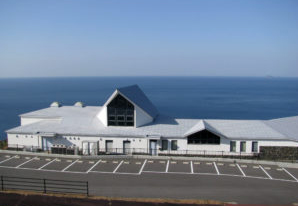
Endo Shusaku Literary Museum, in Sotome, Nagasaki
2024/07/07
MuseumsThe peaceful Sotome, the setting of Endo Shusaku’s novel Silence. Sotome area of Nagasaki city has an abundance of natural beauty in its sea, mountains and rivers. It also is blessed with a unique history and culture of Christianity. In particular, the area in which the Endo Shusaku Literary Museum stands is known as the site of a Christian village, one of Endo’s most notable work, Silence. From the literary museum, there is a magnificent view. In a sweep of eye one can see sun as it majestically sets over the sea of Goto, along with the Silence Literary Monument in Shitsu Bunka Mura. Endo Shusaku and the Sotome area are linked through Silence ; this bond has been built up starting from when Endo was writing the novel, and continues into the present day with the construction of literary museum. Following Endo Shusaku’s death, this Literary Museum was established thanks to kindness of his family, and was filled with Endo’s persona belongings, mementoes, manuscripts, and his extensive collection of books. The Museum exhibits trace the footsteps of Endo Shusaku as one of Japan’s greatest writers of literature. In addition, it has facilities for collecting, preserving, and exhibiting materials related to Endo’s public perusal and research, and operating as an information center. Note : Silence Silence is a 1966 novel of theological fiction by author Endo Shusaku, …
-

-
The 26 Martyrs Museum, in Nagasaki
2024/07/07
MuseumsThe 26 Martyrs Museum is dedicated to the 26 Christians who were executed here on February 5, 1597. They included both foreign missionaries and Japanese laymen. Missionary activities were prohibited at the time, and Japan’s ruler Toyotomi Hideyoshi staged the execution as a warning. The monument is located in a small park on a hill not far from Nagasaki Station and offers nice views over the city. A straight red line runs from the Monument across the park’s plaza in the direction of the Oura Cathedral on the opposite side of the city. Oura Cathedral is also dedicated to the 26 martyrs. The museum behind the monument is devoted to the memory of the martyrs and to Christianity in Japan in general. Its interior is reminiscent of a church with stained-glass windows, making for atmospheric viewing of the exhibits. On display are artifacts related to Christianity in Japan, including old documents, statues and jewelry.
-
-
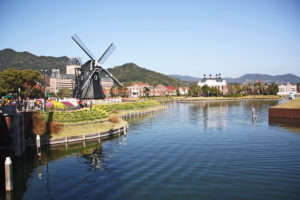
Huis Ten Bosch, in Nagasaki-prefecture
2024/07/04
Amusement parksHuis Ten Bosch is a theme park in Sasebo, which recreates the Netherlands by displaying life-sized copies of old Dutch buildings. The name Huis Ten Bosch translates into English as “House in the Woods/bush”. It is named after Huis ten Bosch in The Hague, one of the three official residences of the Dutch Royal Family.
-
-
Okawachiyama porcelain district, in Imari, Saga-prefecture
2024/07/30
Off the beaten pathImari is most notable because of Imari porcelain which has 400 years history. The city borders Arita to the south and embraces the natural port of Imari Bay. The porcelain was exported from the port of Imari specifically for the European export trade. Originally, an owner of the Imari porcelain was Nabeshima clan, in order to develop and protect its outstanding technique, he gathered skilled artisans and painters in Okawachiyama district. Now. about 30 potteries are manufacturing Imari porcelain.
-
-
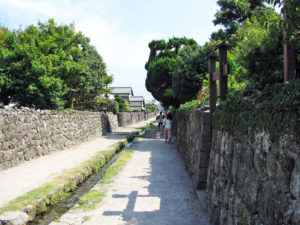
Samurai houses, in Shimabara, Nagasaki-prefecture
2024/07/25
Off the beaten pathSamurai was a term for the military nobility in pre-industrial Japan. The Samurai Houses in Shimabara along the old Samurai street nearby Shimabara Castle were built in 18th century. Three samurai houses, the Yamamoto residence, Shinozuka residence and Torita residence, are opened to the public exhibiting the life style of old Samurai.
-
-
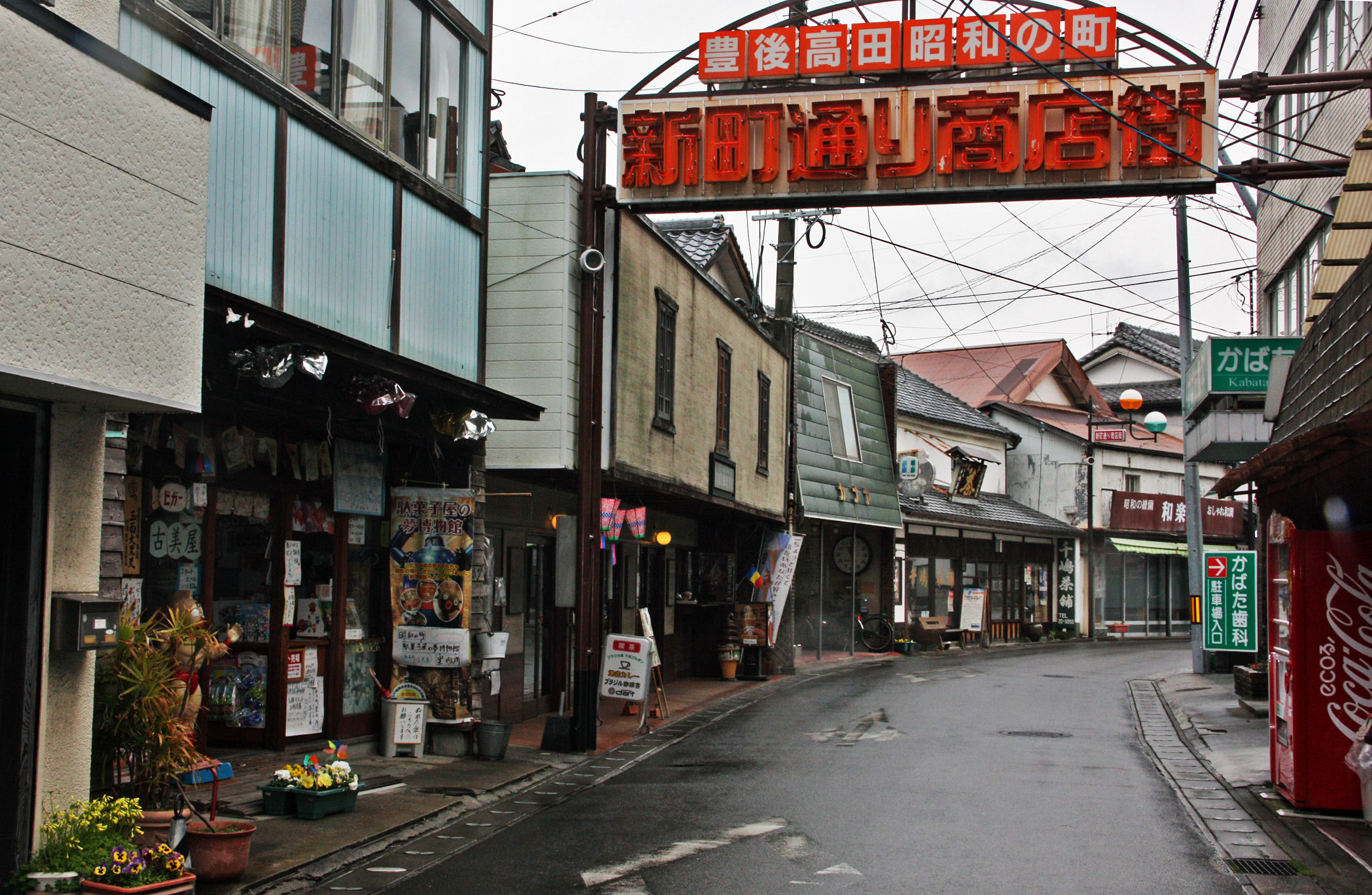
Showano-machi, in Bungo-takada, Oita-prefecture
2024/07/16
Off the beaten path, Staff BlogTime back Japan’s 60 years ago, one of worthwhile place to visit in Bungo-takada, Kunisaki Peninsula, Oita-prefecture. The era that lasted till about 30 years ago in Japanese history, Bungo-takada was the most prosperous in Kunisaki Peninsula for over 300 years from the Edo period up to 1900. Here remains various old structures and remnants of regional Japanese.
-
-
Hitoyoshi, in Kumamoto-prefecture
2024/07/29
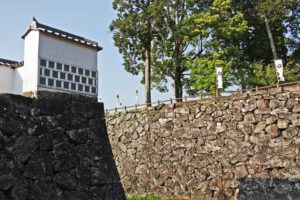
Hidden Gems in Kyushu, Staff BlogHitoyoshi is located in the northern part of Kumamoto along Kuma-gawa River. Hitoyoshi is a castle town once prosperous as a river port, and boasts the ruins of the Hitoyoshi castle and Hitoyoshi Onsen. The Hitoyoshi Onsen is the collective name for 30-add hot springs including Sagara Onsen, all of which are supplied with hot water from sources around Hitoyoshi Station and in the basin of Kuma-gawa River. The most exiting thing in Hitoyoshi is Kumasawa-kudari that is riding on a boat maneuvered by a master polar down the Kuma-gawa River, one of the three fast streams in Japan.
-
-
Amakusa, in Kumamoto-prefecture
2024/07/30
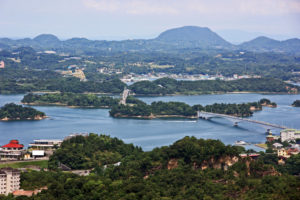
Hidden Gems in Kyushu, Staff BlogAmakusa is situated on an archipelago consisting of several island on the west side of Kumamoto. It possesses a beautiful lush green landscape and natural geological formations giving the islands the designation “national Geopark”. Marine activities such dolphin watching, boat tours, seafood & local delicacies can be enjoyed. Amakusa also has an important historical significance to Christians. Population Amakusa-city : 70,500 people, Kami-Amakusa-city : 22,500 person, Reihoku-machi : 6,400 people
-
-
Ureshino, in Saga-prefecture
2024/07/10
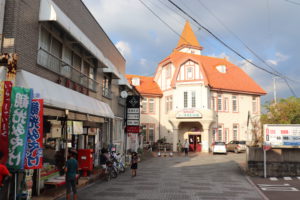
Featured destinationsUreshino Onsen is a hot spring town in south-western Saga-prefecture. Its clear Onsen waters are high in sodium bicarbonate and sodium chloride and feel extremely smooth on skin, giving rise to its popularity as a “Bihada no Yu” ( beautiful skin waters). Ureshino is famous for its tea. Terraces of tea fields sprawling out one after the next is a scene typical of Ureshino. Proper cultivation of Ureshino Tea was begun between 1648 and 1651 by tea grower, Jinbei Yoshimura, who is even sung about in the local folk songs. Tea seeds were gathered from Mount Sefuri and planted in the mountainous region of Ureshino Onsen, ideal as a tea growing area. Population : 25,000 people, Population density : 200 people / km2
-
-
Arita, in Saga-prefecture
2024/07/09
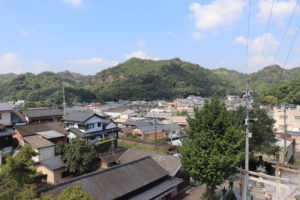
Featured destinationsArita is located in the north side of Saga and surrounding the mountain ranges. And Arita is the first place producing porcelain in Japan in the early 17th century. The pieces have bright, elegant picture drawn in transparent white porcelain. Arita porcelain was exported to Europe in the later half of 17th century and greatly influenced European pottery. The unique Arita porcelain red, green and yellow patten called Kakiemon style. It holds the largest porcelain fair in Western Japan, the Arita Porcelain Fair. This event is held from April 29 to May 5 every year and has thousands of stores and stalls lining the six-kilometre long main street. Population : 18,000 people, Population density : 280 people / km2
 WhatsApp: Chat with us