
Nagasaki UNESCO World Heritage / Industrial Revolution
The origin of Japan’s modernization is here. Under the growing sense of crisis over a foreign
menace, Nagasaki supported the introduction of Western countries technology, which started
during the last years of Japan’s National isolation period. With “ Dejima ” as the only window
to West during the period of National isolation. Nagasaki has contributed to Japan’s modernization
by serving as a place to acquire knowledge from oversea.
Nagasaki contributed for Shipbuilding and Coal Mining and 7 sites have been
registered on the UNESCO World Heritage, Sites of Japan’s Meiji Industrial Revolution.
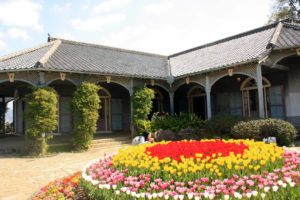
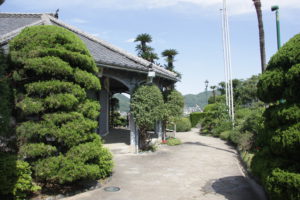
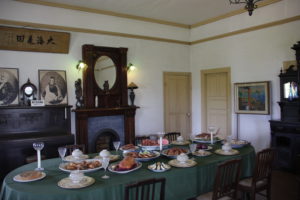
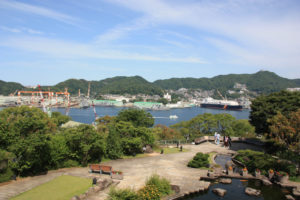
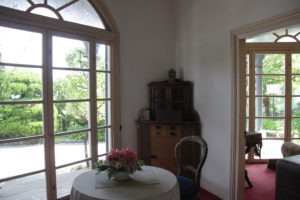
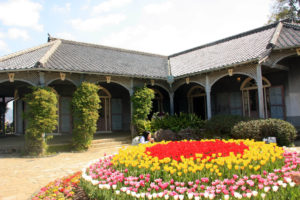
Located on Minami-Yamate hill in Nagasaki-city, Glover Garden has nine Western style buildings
including the Glover’s Residence built in 1863 by Japanese carpenter Koyama Hidenoshin. The
Glover Residence is Japan’s oldest wooden Western-style building.
|
|
|
|
 |
 |
 |
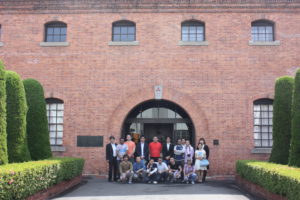
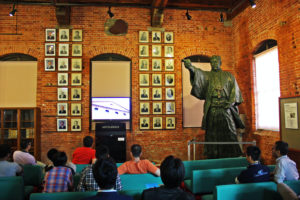
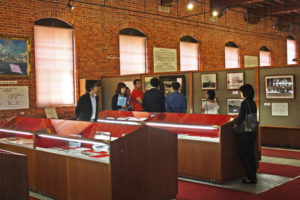
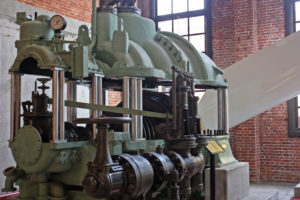
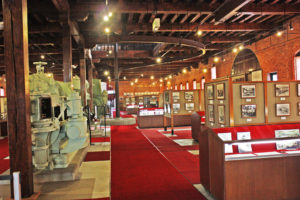
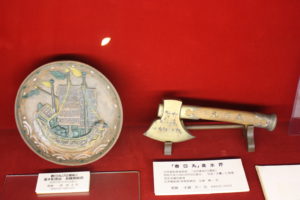
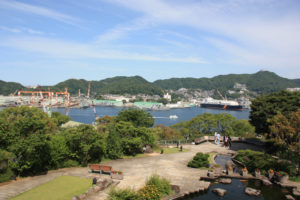
Former Pattern Shop / Shipyard History Museum
The Former Pattern Shop was built in 1898 to produce wooden patterns for castings and is the
oldest factory building in the shipyard. It is a two-storied brick building with a timber roof truss.
There is a U-shaped rail on the ceiling to transport materials. The building was refurbished to the
Shipyard History Museum in 1985 and is open to the public.
 |
 |
 |
 |
 |
 |
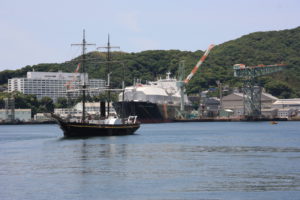
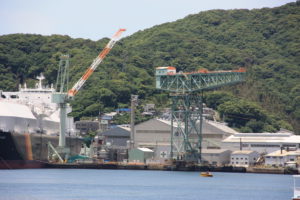
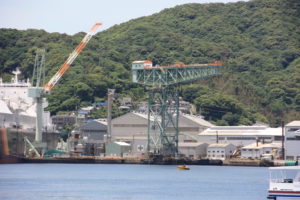
Giant Cantilever Crane
The Giant Cantilever Crane is the first electric-powered crane of its type in Japan, imported from
Scotland in 1909, which is the oldest surviving one in operation in the world. It can still lift a load
of 150 tons and is used to ship heavy goods.
 |
 |
 |
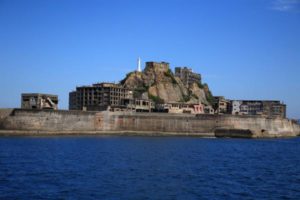
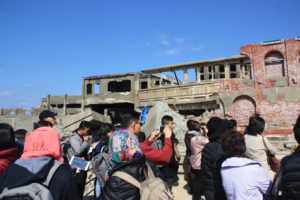
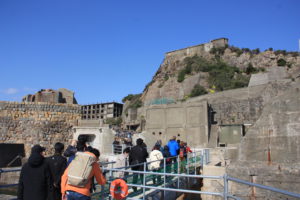
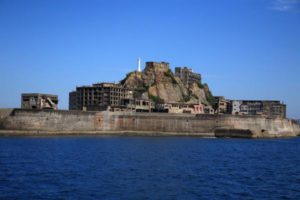
Hashima Coal Mine / Gunkan-jima island
Hashima coal mining island is an artificial reclaimed island and the site of Japan’s first major
undersea coal exploitation (1890) pioneered by Mitsubishi – and host to one of the world’s
most extraordinary former mining communities. Hashima Island is located 3 km southwest of
Takashima, and it was the success of Takashima that led Mitsubishi to purchase this island – both
islands giving access to the same undersea coal deposit. Now Hashima is a ruin called “Gunkanjima”,
so called after its resemblance to the silhouette of a battleship.
 |
 |
|
UNESCO / Sites of Japan’s Meiji Industrial Revolution
Iron and Steel, Shipbuilding and Coal Mining are a group of historic sites that played
an important part in the industrialization of Japan in the Bakumatsu during National
isolation period and Meiji periods, and are part of the industrial heritage of Japan.
The UNESCO World Heritages consist of eight areas with thirty component sites located
throughout Japan from Northern part Tohoku to Kyushu.
Kyushu has 5 areas with 16 sites as follows;
・Kitakyushu : 4 sites for Iron and Steel
・Miike (Omuta, Arao and Misumi) : 3 sites for Coal Mining
・Saga : 1 site for Shipbuilding
・Nagasaki : 5 sites for Shipbuilding and Coal Mining
・Kagoshima : 3 sites for Iron and Steel
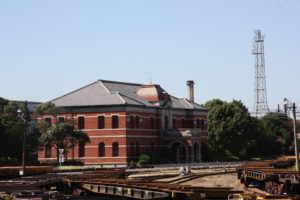
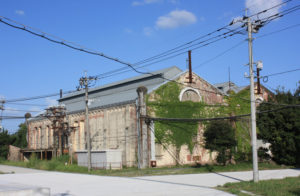
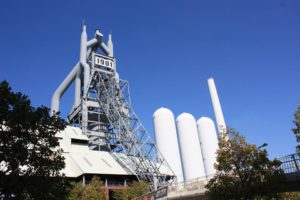
The four sites of Yawata Steel Works in Kitakyushu area have been inscribed as Iron and Steel
Industry. The buildings of The Imperial Steel Works, Japan at Yawata Works NSSMC are the
surviving components of Asia’s first successful integrated iron and steel works: the State-run
Imperial Steel Works opened in 1901. It is located in the northernmost part of Fukuoka Prefecture,
the north end of Kyushu, 8 km south of Hibiki-Nada Seashore close to the continent of China.
Their present-day setting is still a working industrial landscape set in the southe-astern section of
NIPPON STEEL Yawata Works which, for over a century, has consistently maintained a leading
role in the Japanese steel industry. Now, NIPPON STEEL is one of the world leading steel
manufacturers.
 |
 |
 |
Miike
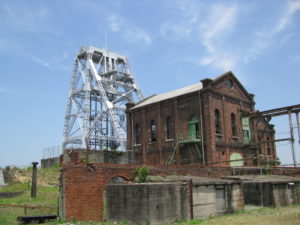
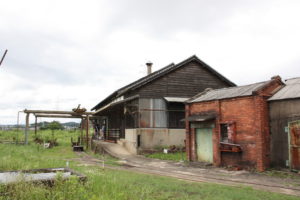
Miike Coal Mine, Railway and Port forms a Western-style linear coal mining landscape located
in the southernmost part of Fukuoka Prefecture and the northernmost part of Kumamoto Prefecture,
bordering the Ariake Sea to the west. The mines are situated in the relatively flat and low-lying area,
to the south of Omuta City and the north of Arao City which developed as industrial cities centred on
Miike Mine. Miike Coal Mine and transport infrastructure sites are physically linked and comprise.
 |
 |
|
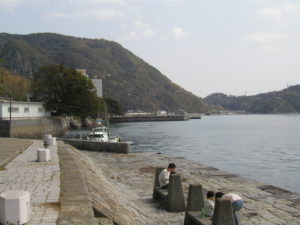
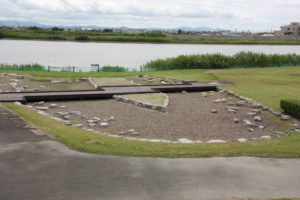
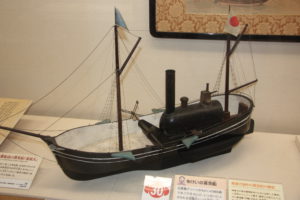
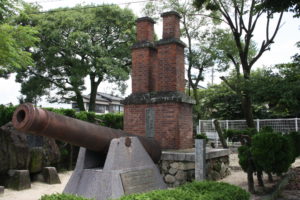
The former (1858-71) ship repair and shipbuilding yard at Mietsu is one of Japan’s pioneer
Western style maritime facilities. Most of the site is located in the present-day Riverside Park,
Hayatsue, Kawasoe-machi, on the southern outskirts of Saga City, Saga Prefecture. The site,
much of it a buried structure, lies on the western bank of a 90° meander in the Hayatsue River,
a tributary channel of the Chikugo River near its mouth, just over 6 km north of the northern
shore of the Ariake Sea. Mietsu had been a mooring facility, with warehouses, since at least
the latter half of the eighteenth century and the Ofunate-Keikosho was expanded as a training
facility for operating Western style ships in 1858.
 |
 |
 |
The natural harbour and commercial city at the mouth of the Urakami River already had a long
history of interaction with Europe, China and Southeast Asia. Throughout the Japanese isolation
period (1639-1854) Dutch traders were the principal foreign power permitted to remain in Japan,
being confined to the tiny island of Dejima. In 1854, the Tokugawa Shogunate’s response to
Perry’s visit was to build a navy. They lifted the ban on building large ships and established the
Nagasaki Naval Training Institute and Nagasaki Foundry. Following on from the Shogunate’s
foundations, Mitsubishi’s shipyard turned out many of Japan’s greatest vessels. The company
also pioneered its undersea coal mines, the first to be developed with Western technology,
and which supported the global naval and commercial network of steamships operating in
East Asia and the Pacific.
 |
 |
 |
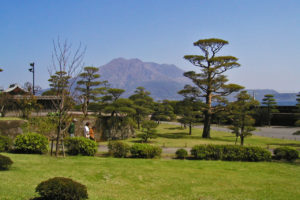
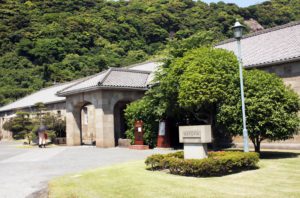
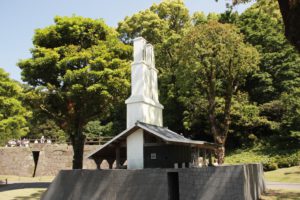
The site is located on the western side of Kagoshima (Kinko) Bay, formed from the collapsed Aira
volcanic caldera and dominated by the active Sakurajima strato volcano, and is backed by sheer
and wooded cliff faces traversed by narrow valleys. Shuseikan is a National Historic Site. Sengan-en,
the location and setting for the Shuseikan complex, was a garden created by the 19th Lord Mitsuhisa
Shimazu in 1658.
 |
 |
 |
 WhatsApp: Chat with us