
-
-
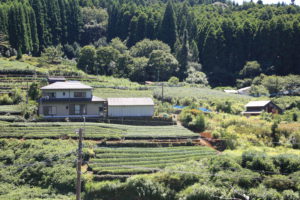
Hoshino village, in Yame
2023/12/19
Staff BlogThe most beautiful village in Japan. Located in the south-eastern part of Fukuoka Prefecture, and east side of Yame-city, at altitudes between 200 and 1,000 metres above sea level. As 84 percent of the village is covered with mountain forests, agriculture and forestry are the two main industries. Hoshino Village is one of the leading place of Gyokuro in Japan. Gyokuro is a type of green tea. When growing the leave of Gyokuro tea leaves, the tea leaves are covered to protect them from sunlight. This tea has a sweet and mellow taste.
-
-
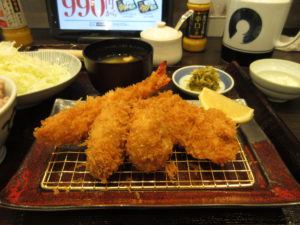
Tonkatsu, 豚カツ
2023/12/30
Japanese cuisine, Staff BlogTonkatsu is the pork cutlet, which is a Japanese dish made of thick slices of pork loin or fillet coated with flour, beaten eggs, and breadcrumbs and fried in cooking oil. The dish on the photo are Tonkatu, fried prawn and fried oyster at Hamakatsu restaurant. Hamakatsu is a tonkatsu restaurant chain.
-
-
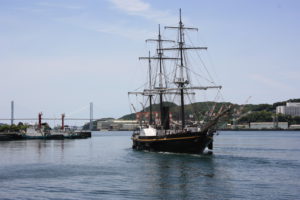
Tensho youth mission to Europe
2023/12/29
History of Japanese Christianity, Staff BlogIn 1582, four youth boarded a ship bound for Europe at Nagasaki Port. They were dispatched as representatives of Japanese Christian federal lords, and departed with Alessandro Valignano who was Jesuit missionary who planned the Youth mission. Four youth were Ito Mansho Ito, Chijiwa Miguel, Hara Martino, Nakaura Julian who were around 13 years old. The purpose of the mission is to show the four people who studied at Arima Seminario about Europe and to convey the greatness of Europe to the Japanese people. By introducing the boy raised by the Jesuits to Europe, the mission was to highlight the achievements of Japan’s missionary work and gain support from the Pope and the King of Portugal. Two years and six months after leaving Nagasaki, they finally arrived in Europe. He first had an audience with Philip II at Rispon, and was subsequently welcomed in various places. On March 23, 1585, Japan had an audience with the Pope and made its grand d ebut on the world stage. After that, they also visited various parts of Italy. When they returned to Nagasaki in 1590, Christianity was being prohibited. Therefore, their achievements were suppressed due to the ban on Christianity. It was not until 1858, when religious freedom was recognized, that their activities were evaluated. Dec. 29, …
-

-
Udon, うどん
2023/12/20
Japanese cuisine, Staff BlogUdon is a representative dish of Japan that has been eaten for a long time and is one of the popular lunch menus. Udon is made by adding water to wheat flour and kneading it into noodles. Cooking methods, ingredients used, and side dishes vary depending on the region. Udon on the photo is Sukesan Udon restaurant which is popular Udon restaurant Udon chain established in Kitakyushu.
-
-
Tonkotsu ramen, 豚骨ラーメン
2023/12/29
Japanese cuisine, Staff BlogTonkotsu ramen is a local dish representing Fukuoka-prefecture. Meaning of Tonkotsu ramen is pork born soup noodle created in Kurume, Fukuoka-prefecture. Toppings include roast pork, wood ear mushrooms, and boiled eggs, etc. The restaurant on the photo is Toryuken in Kitakyushu.
-
-
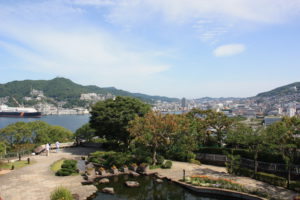
Opening the port created Christian town Nagasaki
2023/12/28
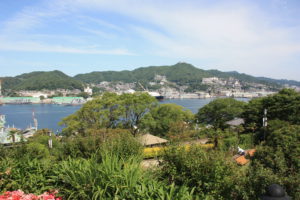
History of Japanese Christianity, Staff BlogNagasaki Port was opened in 1570 by Sumitada Omura, who was the first feudal lord in Japan to be baptized as a Christian. At that time, there was a Christian family who immigrated with Figueiredo. Many of them were people fleeing persecution, coming from Shimabara, Iki, Goto, Hirado, and Yamaguchi. This was the beginning of the Christian town Nagasaki. Sumitada Omura donated the territories of Nagasaki and Mogi to the Jesuits in order to fend off attacks from nearby enemies. In 1580, Japan Society of Jesus established its headquarters in Nagasaki. Dec. 28, 2023
-
-
National isolation in the Edo period
2024/04/30
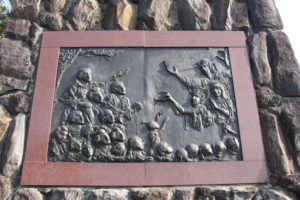
Japanese historyEdo period ruled by the Tokugawa Shogun and was a period of 265 years from 1603 to 1867. The national isolation of the Edo period is that prohibited Japanese people from traveling abroad and returning home. And, Nagasaki became the only place for foreign trade, and restricted to Dutch trading posts and Chinese ships.
-
-
Christian missionary work in Nagasaki
2023/12/27
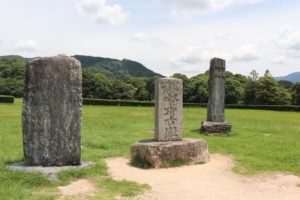
History of Japanese Christianity, Staff BlogChristian missionary activities in Japan began after Francis Xavier came to Hirado in 1550. The Jesuit missionaries who accompanied Francis Xavier carried out missionary activities in Hirado, Omura, Nagasaki, Goto, Kuchinotsu, Shimabara, Iki, Amakusa, Bungo, etc. And then many people converted to Christianity. main missionaries; Cosme de Torres (Spanish), Juan Fernandes (Spanish), Luis de Almeida (Portuguese), Gaspar Vilela (Portuguese), Luis Frois (Portuguese), Melechor de Figueiredo (Portuguese), Alessandro Valignano (Italian) Dec. 27, 2023
-
-
Dazaifu was the western capital of Japan from 7th century
2024/05/13
Japanese historyFrom the late 7th century to the late 12th century, Dazaifu was the western capital of Japan and controlled Kyushu as an administrative institution. Geographically, it served as the front line of Japan’s diplomacy and defense, as well as it is gate way to the Asian continent. Dazaifu Tenmangu Shrine was built in 919 and Dazaifu is now Fukuoka most important tourist destination with more than 8.5 million tourists visiting annually.
-
-
How was the great nature of Aso created?
2023/12/26
Staff BlogAso possesses the world’s largest Caldera with 18km west-east and 24 km north-south, created by 4 times of explosive volcanic activity in the ancient time, 3 million years ago. Surrounding the caldera is the world’s largest outer mountain, and there are 5 mountains included Mt. Naka which is still active volcano in the outer mountain. The 4 times volcanic activities in the ancient time also affected the surrounding area of Aso, resulting in the formation of the following nature. Takachiho Gorge, Nabegataki water fall, Harajiri water fall, Keya cave Dec. 26, 2023
 WhatsApp: Chat with us