
History of Japanese Christianity
1549: St. Francis Xavier arrives in Kagoshima as the first Christian missionary, marking
the dawn of Christianity in Japan.
1550: St. Francis Xavier travels to Hirado to continue his missionary work.
1551: The first Catholic church in Japan is established in Hirado.
1557: Catholicism is introduced to Ikitsuki and Kasuga in the Hirado region.
1563: Omura Sumitada becomes the first Japanese feudal lord (Daimyo) to
convert to Christianity.
1569: Father Gaspar Vilela establishes the “Todos os Santos” Church, the first
in Nagasaki.
1571: Lord Omura Sumitada opens the Port of Nagasaki to Portuguese trade.
1580: Lord Arima Harunobu converts to Christianity; the first Seminario (seminary)
in Japan is established in Kuchinotsu.
1582: The Tensho Embassy—the first Japanese mission to the Pope in Rome—is
dispatched by Christian lords Otomo Sorin, Omura Sumitada, and Arima Harunobu.
1587: Toyotomi Hideyoshi issues the first official edict banning Christianity.
1590: The Tensho Embassy returns to Nagasaki, bringing Western printing technology
and music.
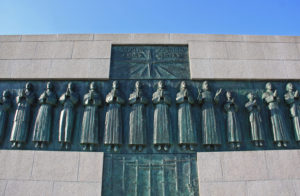
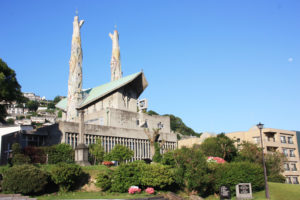
1597: The Twenty-Six Martyrs of Japan are executed by crucifixion in Nagasaki.
Their sacrifice remains a profound cornerstone of Catholic history in Japan
 |
 |
 |
1603: The Tokugawa Shogunate is established, eventually leading to the national
isolation policy (Sakoku).
1614: The Tokugawa Shogunate issues an edict strictly prohibiting Christianity
throughout Japan.
1622: Five Christians are martyred at Nakae-no-shima Island in Hirado.
1624: Three more Christians face martyrdom at Nakae-no-shima Island in Hirado.
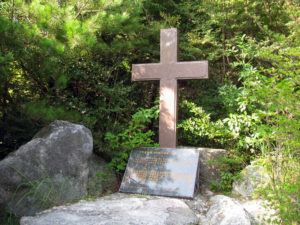
1627: Twenty-seven Christians are martyred at Unzen Jigoku (“Unzen Hell”) amidst
severe persecution.
1637: The Shimabara Rebellion: A massive peasant uprising led by Amakusa Shiro
against the Shogunate’s religious persecution.
1637: Lorenzo Ruiz from the Philippines is martyred at Nishizaka Hill in Nagasaki.
He later becomes the first Filipino saint.
1641: Dejima, a small artificial island in Nagasaki, is established as the sole Dutch
trading post during the isolation period.
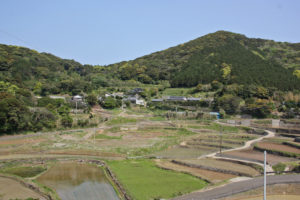
1644: The last Christian missionary in Japan is martyred, marking the beginning of
the era of “Hidden Christians” (Kakure Kirishitan)
 |
 |
 |
1853: Commodore Matthew C. Perry of the U.S. Navy arrives in Uraga, playing a pivotal
role in ending Japan’s era of isolation.
1854: The Treaty of Kanagawa is signed between the USA and Japan, officially opening
the country to the world.
1858: Treaties of Amity and Commerce are signed with the USA, the Netherlands,
Russia, Great Britain, and France, allowing religious freedom within designated
foreign residential areas.
1862: The 26 Martyrs of Japan are canonized by Pope Pius IX at Nishizaka Hill, Nagasaki.
1865: Oura Cathedral is established in Nagasaki as a basilica dedicated to the 26 Martyrs.
1868: The Meiji Restoration marks the end of over 250 years of Tokugawa Shogunate rule,
restoring imperial power and heralding a new era of modernization.
1873: The long-standing ban on Christianity is finally lifted.
1882: Construction of Shitsu Church in Sotome begins, based on the visionary designs
of Father de Rotz.
1909: Shitsu Church is completed.
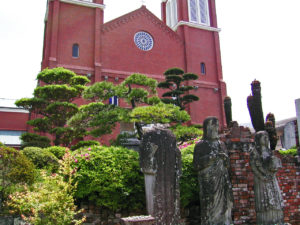
1914: Urakami Cathedral is completed in Nagasaki; at the time, it was the largest Catholic
church in East Asia.
1912: Yamada Church in Hirado is constructed.
1917: Tabira Church in Hirado is constructed.
1920: Kurosaki Church is completed, another masterpiece designed by Father de Rotz.
1931: St. Francis Xavier Memorial Church in Hirado is established at its current location.
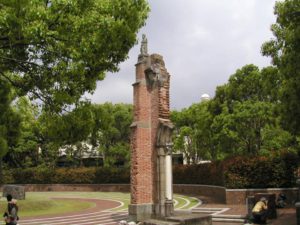
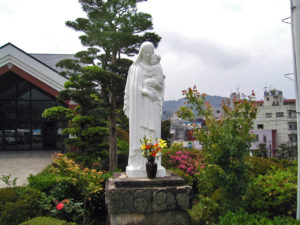
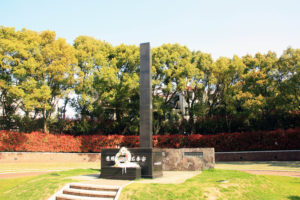
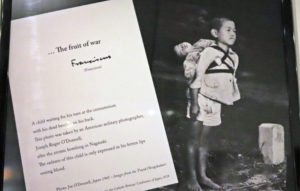
1945: On August 9, the atomic bomb is dropped on Nagasaki, devastating the city and
claiming countless lives. Urakami Cathedral is completely destroyed.
An estimated 73,000 people died instantly, with another 60,000 injured
 |
 |
 |
1950: Pope Pius XII designates Nishizaka Hill in Nagasaki—the site of the 26
Martyrs—as an official Catholic pilgrimage site.
1959: The reconstruction of Urakami Cathedral is completed, standing once
again as a symbol of faith and resilience.
1981: Pope John Paul II makes a historic visit to Nagasaki, delivering a powerful
message of peace.
1982: Saint Teresa of Calcutta (Mother Teresa) visits Nagasaki, touching the
hearts of the local community.
18 Oct 1987: Saint Lorenzo Ruiz is canonized at the Vatican, becoming the first Filipino
Saint and forever linking the histories of the Philippines and Nagasaki.
2000: The Shusaku Endo Literary Museum opens in Sotome, dedicated to the author
of the world-renowned novel, Silence.
2018: The “Hidden Christian Sites in the Nagasaki Region” are officially inscribed on
the UNESCO World Heritage List, recognizing their unique and profound cultural
value to humanity
 |
 |
 |
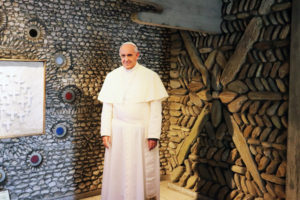
2019: Pope Francis visits Nagasaki on November 24. At Ground Zero, he delivers a
profound apostolic message, calling for a ‘world without nuclear weapons’ and
urging humanity to pursue a future of lasting peace
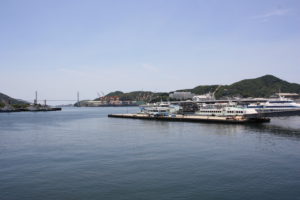
Nagasaki was a small Rome in 1569
Todos os Santos Church, the first church in Nagasaki, was built in 1569.
The feudal lord Omura Sumitada and the Jesuits reached an agreement in 1570 to
develop Nagasaki into a port for Nanban trade (with Portugal and Spain).
Nagasaki Port opened in 1571, the same year the first Portuguese ship arrived.
Following this, the development of the “Town of the Cape” began as a Christian
settlement, and the small Church of São Paulo was constructed at the tip of the cape.
 |
 |
 |
- Misericordia Headquarters Church (1583)
- Santa Maria Church (1600)
- Santa Clara Church (1603)
- Santiago Church (1604)
- San Juan Bautista Church (1605)
- San Antonio Church (1606)
- San Pedro Church (1607)
- San Francisco Church (1611)
- San Agustin Church (1612)
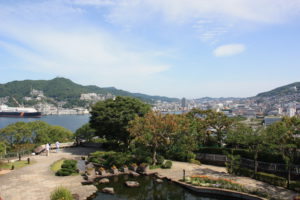
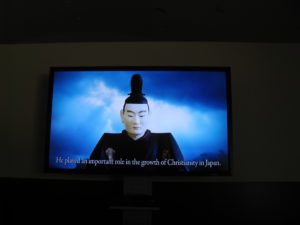
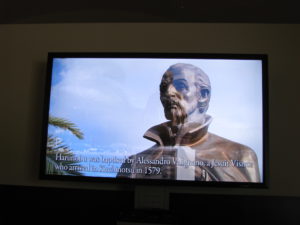
Opening the port created Christian town Nagasaki in 1570
 |
 |
 |
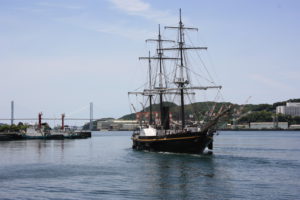
Tensho youth mission to Europe in 1582
 |
 |
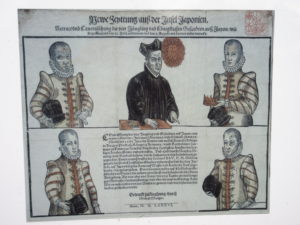 |
The purpose of the mission is to show the four people who studied at Arima
Seminario about Europe and to convey the greatness of Europe to the
Japanese people.
By introducing the boy raised by the Jesuits to Europe, the mission was to
highlight the achievements of Japan’s missionary work and gain support from
the Pope and the King of Portugal.
Two years and six months after leaving Nagasaki, they finally arrived in Europe.
He first had an audience with Philip II at Rispon, and was subsequently welcomed
in various places.
On March 23, 1585, Japan had an audience with the Pope and made its grand d
ebut on the world stage. After that, they also visited various parts of Italy.
When they returned to Nagasaki in 1590, Christianity was being prohibited.
Therefore, their achievements were suppressed due to the ban on Christianity.
It was not until 1858, when religious freedom was recognized, that their activities
were evaluated.
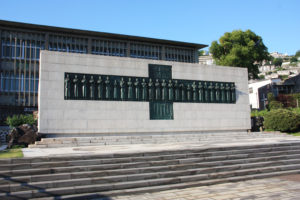
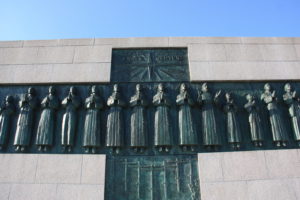
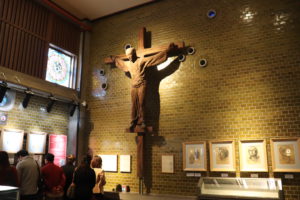
26 Saints were the first martyrs in Japan in 1597
 |
 |
 |
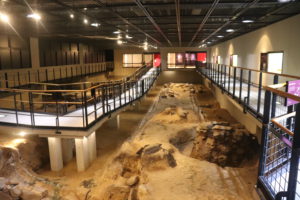
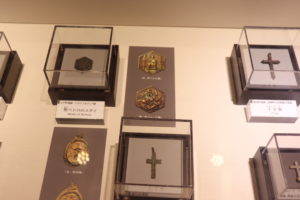
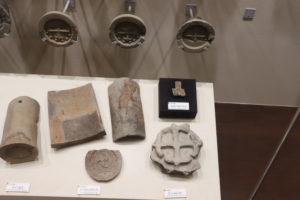
Santo Domingo Church, built in 1609
Santo Domingo Church was built in Nagasaki in 1609 by the Dominican Father
Francisco de Morales, using materials from a demolished church in Kagoshima.
 |
 |
 |
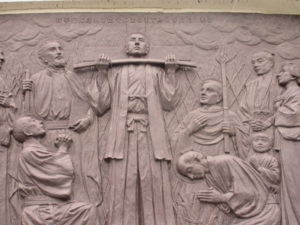
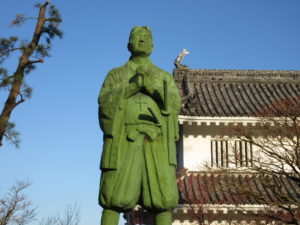
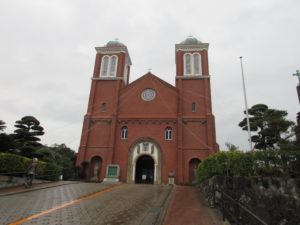
Ban on Christianity in 1612
The number of Christians in Japan continued to grow, reaching approximately
300,000 by 1614. Fearing that this increasing influence could lead to rebellion,
the Tokugawa Shogunate issued a ban on Christianity in Nagasaki in 1612, f
ollowed by a nationwide ban in 1614.
 |
 |
 |
After that, the history of martyrdom began in various places.
・in 1617, 4 missionaries were martyred in Omura
・in 1622, Genna great martyrdom (55 Christians) at Nishizaka
・in 1622-24, Ikutsuki and Nakae-no-shima island martyrdom
・from 1627, Unzen jigoku martyrdom
・1633, Nakaura Julian martyred in Nishizaka
・in 1637, Shimabara Rebellion
・in 1644, Konishi Manjo martyrdom, Domestic priests become absent
・in 1657, Persecution of Christians in Omura
・in 1790, Persecution of Christians in Urakami
・in 1839, Persecution of Christians in Urakami
・in 1856, Persecution of Christians in Urakami
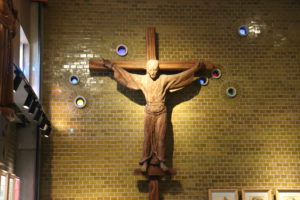
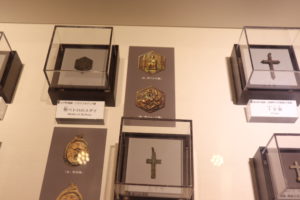
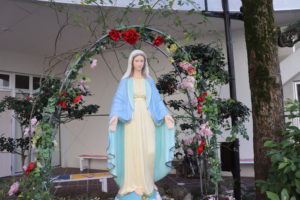
Hidden Christians from 1612
 |
 |
 |
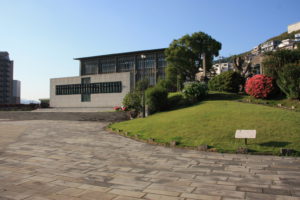
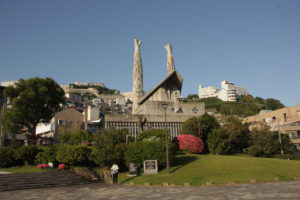
Genna great Martyrdom in 1622
Twenty-five years after the martyrdom of the 26 Saints, the blood of Christians
was once again shed on the hill of Nishizaka in Nagasaki.
 |
 |
A total of 55 Christians were martyred, having been arrested at Suzuta
Prison in Omura and Kurusu Prison in Nagasaki.
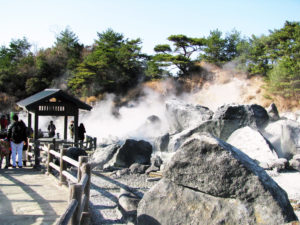
Unzen jigoku Martyrdom from 1626
 |
 |
 |