
Churches and Cathedrals
Nagasaki Port was opened and the first Portuguese ship arrived in 1571. And development
of the town of cape was started as Christian town in 1571 and many Churches were
constructed in Nagasaki.
However, due to the Tokugawa Shogunate’s Ban on Christianity in 1614, most of the
church buildings were destroyed.
Since ban on the Christianity was lifted in 1873, new Christian history in Japan has begun
and many Churches and Cathedrals have been constructed.
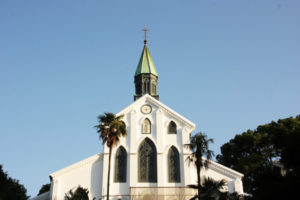 |
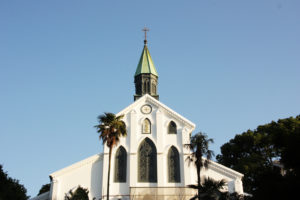
The Cathedral is one of the significant Christian Pilgrimage site in Japan. Established 1865, this church is officially known as “Oura Cathedral, the Church of 26 Martyrs.” It was built by the French priest Bernard Petitjean of Fier who had been dispatched by the Foreign Missionary Church of Paris to dedicate prayers to the 26 saints martyred on Nishizaka hill. |
Urakami Cathedral, in Nagasaki
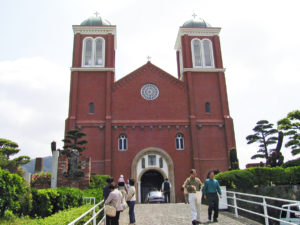 |
Construction of the original Urakami Cathedral, a brick Romanesque building, began in 1895, after a long-standing ban on Christianity was lifted. When completed in 1914, it was the largest Catholic church in East Asia. |
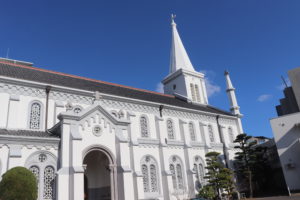 |
The church is located near JR Nagasaki Station which was constructed for Japanese Christians in 1986. The church was dedicated to the 16 Saints of Nagasaki (St. Thomas and the 15 Martyrs) in 1988, and the monument honoring them was erected in the premise. The 16 Saints were martyred in Nagasaki from 1633 to 1637. |
Saint Filippo de Jesus Church ( Japan 26 Saints Memorial Church )
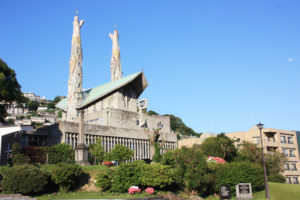 |
This is a church with Gaudi-style twin tower designed by Kenjiro Imai, built next to the Nishizaka Martyrdom site. When there was a plan to build a memorial hall for the 26 Japanese Saints next to Nishizaka Martyrdon site, a large donation was made from Mexico, and the Church was built in 1962. |
Hongochi Church, Saint Kolbe Museum, in Nagasaki
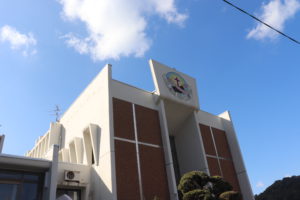 |
Father Maximilian Kolbe was born in Poland in 1894 and was a priest of the Conventual Order of St. Francis. He had been active in promoting the veneration of the Immaculate Virgin Mary. He came to Japan in 1930 and began educating seminarians and publishing a monthly magazine ” the veneration of the Immaculate Virgin Mary.” |
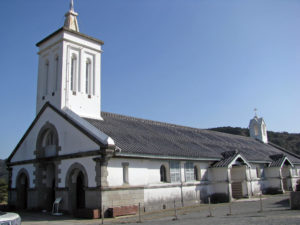 |
Built in 1882 by Father de Rotz, this low-ceiling church features a brick exterior, wood interior and stone entranceway. The roof itself is low in order to limit damage done by strong winds. The church’s bell was brought here from France by a priest and rings out beautifully every morning. The location is famous as the place where the movie “Gege” was filmed. |
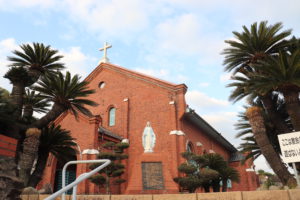 |
The Church is located in Kurosaki district, where was place of the setting for Endo Shusaku’s novel Silence. In 1897, the foundations were laid down according to Father de Rotz’s design. Construction followed and in 1920 the church was completed. |
Design Your Kyushu Trip
We arrange custom Nagasaki & Kyushu Christian Pilgrimage Tours.
Connect below via your preferred method:
Christian sacred sites
Christianity in Japan was spread in Nagasaki region. However, unparalleled hidden Cristian history
was started from when Toyotomi Hideyoshi Shogunate proclaimed Christian ban in 1587. During ban
on Christianity, people secretly continued to faith while surviving in the midst of the conventional
society and Japanese religions. And many Christians were also martyred during this period.
Here we introduce the history of the ban on Christianity, including the places of martyrdom and
museums.
Martyrdom of the 26 Saints of Japan, in Nagasaki
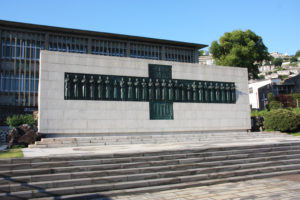 |
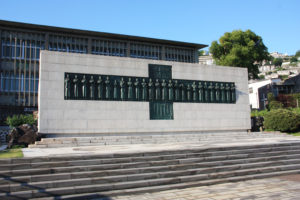
The 26 Martyrs of Japan were a group of Catholics who were executed by crucifixion on February 5, 1597. The Twenty-six Christians, were arrested in Kyoto and Osaka on the order of Toyotomi Hideyoshi, the National ruler, for preaching Christianity. They were marched 800 km through the snow to Nagasaki and crucified in front of large crowd on Nishizaka hill on Feb. 5, 1597. |
The 26 Martyrs Museum in Nagasaki
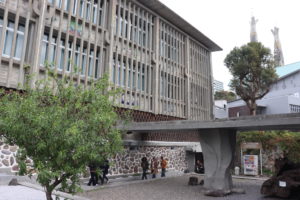 |
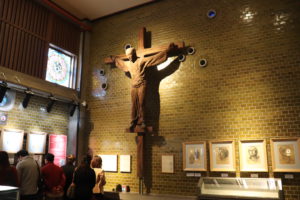
The museum behind the monument is devoted to the memory of the martyrs and to Christianity in Japan in general. Its interior is reminiscent of a church with stained-glass windows, making for atmospheric viewing of the exhibits. On display are artifacts related to Christianity in Japan, including old documents, statues and jewelry. |
St. Andrew’s Seminary at Dejima, in Nagasaki
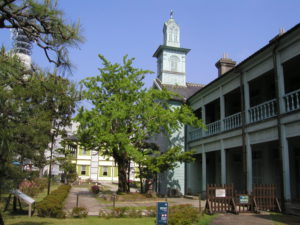 |
After the ban on Christianity lifted in 1873, Burnside who was the British Church Missionary created a cram school at his home to teach the English Bible. In 1877, the school was moved to the Dejima English-Japanese School building at Dejima, and St. Andrew’s Seminary was opened. It was then used as the Seminary until 1886. |
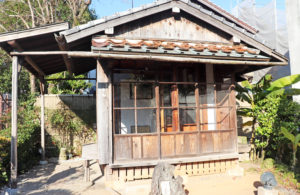 |
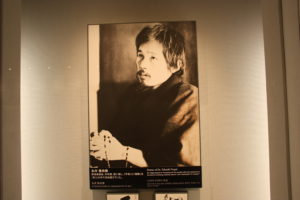
Dr. Nagai Takashi (3 February 1908 – 1 May 1951) was a Catholic physician specializing in radiology, an author, and a survivor of the atomic bombing of Nagasaki. His subsequent life of prayer and service earned him the affectionate title “saint of Urakami”. Nyokodo, which is adjacent to the Nagai Takashi Memorial Hall, is Dr. Takashi Nagai’s hospital room and study. This 2-tatami building was built as a new home for the doctor, with the generosity of the people of Urakami and fellow Catholics who were left penniless by the atomic bombing. |
Unzen jigoku Martyrdom, in Unzen
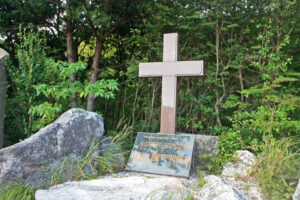 |
When Matsukura Shigemasa became the new federal lord of Shimabara in 1616, many people were Christians. Initially, he acquiesced in Christianity, because he needed people’s cooperation to build Shimabara Castle. However, this situation was known to Tokugawa Shogunate, and he strongly commanded Christians in Shimabara to convert. |
Hara Castle ruin, in Minami-Shimabara
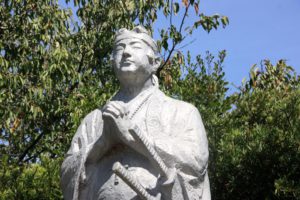 |
The Christian pilgrimage site, registered on UNESCO’s World Heritage Site as Hidden Christian Sites in the Nagasaki Region. The site is located in Minami-arima in Minami-Shimabara City and the Battle field of Shimabara Rebellion which was a peasant uprising against bakufu’s persecution of Christians under the leadership of Amakusa Shiro in 1637. |
Hory Mary-Kannon of Hara Castle, in Minami-Shimabara
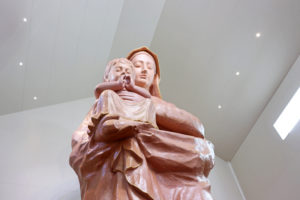 |
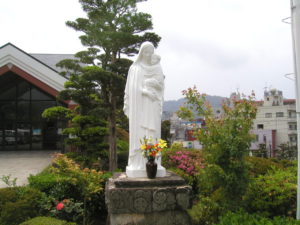
The world’s tallest wooden Holy Mary statue, with 10 meters in height. This statue was made by sculptor Oyamatsu Eiji over a period of 40 years and was completed when he was 90 years old. The statue is located in Minami-Shimabara City, 10 minutes drive from |
Arima Christian Heritage Memorial Museum, in Minami-Shimabara
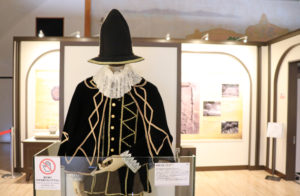 |
The museum is a guidance facility showcasing the history of Christianity in Minami-Shimabara City, centered around the Hara Castle Ruins, a component of the “Hidden Christian Sites in the Nagasaki Region,” which was registered as a World Heritage Site in 2018. |
Hidden Christian
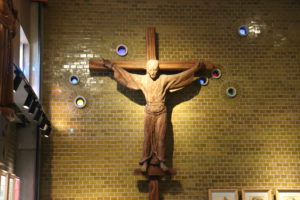
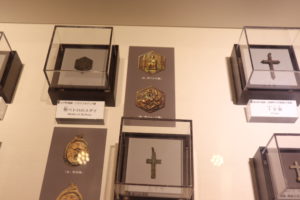
Oppression against Christians began with the Tokugawa shogunate’s ban on Christianity.
The missionaries were expelled to oversea countries, and those who remained secretly
in Japan were also captured and martyred.
 |
 |
 |
Konishi Mansho who was the last Priest during the ban on Christianity, was also martyred
in 1644. In the absence of priests, believers pretended to be Shinto or Buddhist ostensibly
in order to protect their faith.
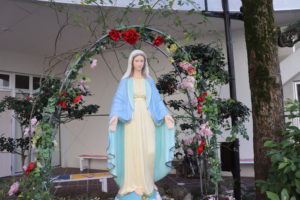
The Christian organizations were created in each village to continue the Christian faith and
the faith was passed down from parents to children and from children to grandchildren.
Hidden Christian
Even after lifted ban on Christianity, people who continue to practice their
faith in the same way as before are called “Hidden Christians”.
Hidden Christians in Nagasaki have been passed down since the ban on
Christianity in Hirado, Ikitsuki, the Goto Islands, Sotome, and around Nagasaki.
Home Our Services Tailor-made guided tour Christian Pilgrimage tour Golf tour
Kyushu Travel Guide Kyushu Photo Collection Off the beaten path What our Customers have to say
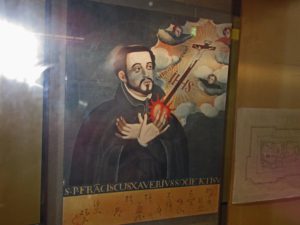
St. Francis Xavier
Christian missionary activities in Japan began after Francis Xavier came to
Hirado in 1550.
The Jesuit missionaries who accompanied Francis Xavier carried out missionary
activities in Hirado, Omura, Nagasaki, Goto, Kuchinotsu, Shimabara, Iki,
Amakusa, Bungo, etc. And then many people converted to Christianity.
 |
 |
 |
Main missionaries;
Cosme de Torres (Spanish), Juan Fernandes (Spanish), Luis de Almeida (Portuguese),
Gaspar Vilela (Portuguese), Luis Frois (Portuguese), Melechor de Figueiredo
(Portuguese), Alessandro Valignano (Italian)
Home Our Services Tailor-made guided tour Christian Pilgrimage tour Golf tour
Kyushu Travel Guide Kyushu Photo Collection Off the beaten path What our Customers have to say
Japanese Christianity
Japanese Christianity has a unique history of continuing faith while coexisting with Japanese
Religion Shinto and General society.
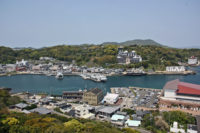
Nagasaki Port was opened and the first Portuguese ship arrived in 1571. And development of the
town of cape was started as Christian town in 1571 and many Churches were constructed in
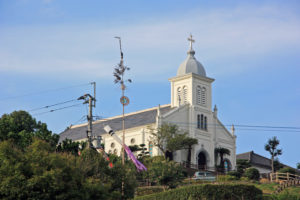
Nagasaki. However, due to the Tokugawa Shogunate’s Ban on Christianity in 1614, most of the
church buildings were destroyed. Since ban on the Christianity was lifted in 1873, new Christian
history in Japan has begun and many Churches and Cathedrals have been constructed.
 |
 |
 |
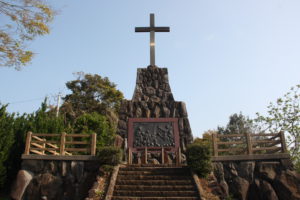
Then Christianity was spread in Nagasaki region. However, unparalleled hidden Cristian history was
started from when Toyotomi Hideyoshi Shogunate proclaimed Christian ban in 1587. During ban on
Christianity, people secretly continued to faith while surviving in the midst of the conventional society
and Japanese religions. And many Christians were also martyred during this period. Here we
introduce the history of the ban on Christianity, including the places of martyrdom and museums.
 |
 |
 |
Martyrdom of the 26 Saints of Japan
26 Christians arrested in Kyoto who were consisted of 20 Japanese, 4 Spaniards, 1 Mexican, and
1 Portuguese. They walked from Kyoto to Nagasaki in January and February 1597. How great
were the physical and mental suffering of those 26 men who were forced to march all the way
from Kyoto to Nagasaki during these cold winter days, and they all ascended to heaven at
Nishizaka Hill on Februay 05.
 |
 |
 |
History of Japanese Christianity
Christian history in Japan was started when St. Francis Xavier came to Japan as a first Christian
missionary in 1549. Here we introduce the history of Christianity from the time it spread to Japan
until the present day.
 |
 |
 |
Home Our Services Tailor-made guided tour Christian Pilgrimage tour Golf tour
Kyushu Travel Guide Kyushu Photo Collection Off the beaten path What our Customers have to say
 WhatsApp: Chat with us