
Confucius Shrine
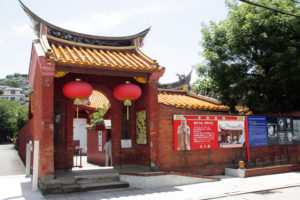
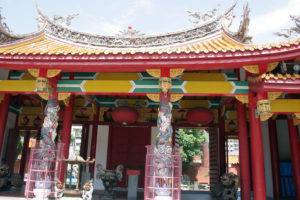
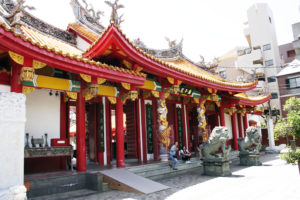
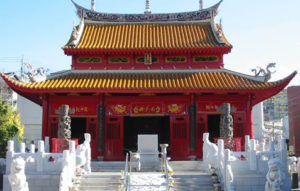
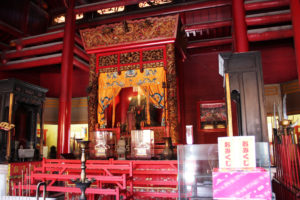
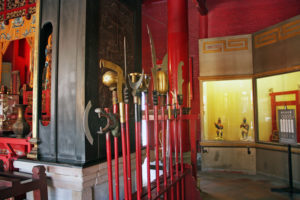
The Nagasaki Confucius Shrine is the world’s only Confucian
shrine built outside China by Chinese hands. First constructed
in 1893 by Chinese residents of Nagasaki with the support of
the Qing Dynasty government, the shrine was designed to
serve as a place of worship and learning for the Chinese
community, housing both a Confucian sanctuary and a primary
school.
 |
 |
 |
The buildings were severely damaged by the Atomic bomb explosion
on August 9, 1945 and were not restored and opened to the public
until September 1967. The shrine was extensively renovated in 1982.
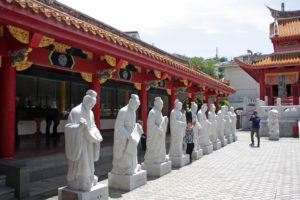
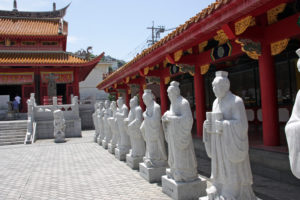
Standing outside the shrine are 72 statues representing the 72
followers of Confucius.
 |
 |
 |
A building at the rear of the shrine houses the Museum of Chinese
History and Palace Museum. It features large illuminated photographs
of the old Silk Road and models of early Chinese inventions such
as the world’s first seismograph. Displayed on the second floor are
more than 80 treasure-class articles of varying antiquity on loan
directly from the Chinese National Museum and Palace Museum
in Beijing.
 |
 |
 |
 WhatsApp: Chat with us