
Industrial Heritage
 |
 |
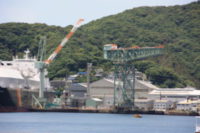 |
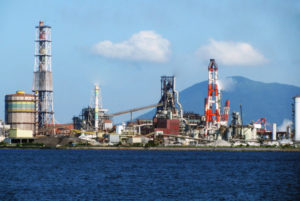
Centering on the three core pillars of Iron and Steel, Shipbuilding, and Coal Mining,
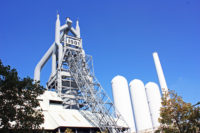 |
Blast Furnace is a Steel plant for making the pig iron from iron ore and coke. Higashida No.1 Blast Furnace is only the Blast Furnace in the world which preserved as it was. The birth place where Japan’s steel industry began in 1901. |
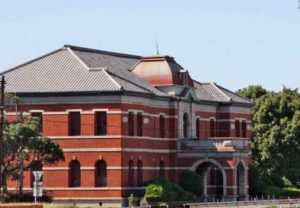 |
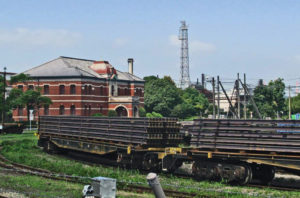
First Head Office of the Steel Works The the building for the Head office of the Imperial Steel Works was constructed in 1899, two years before commencement of Japan’s Steel Industry. The design of the building is a harmony of Europea and Japanese architectural styles. |
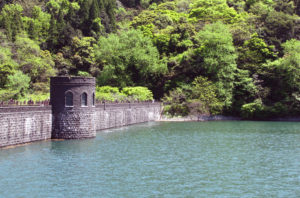 |
The first-class civil construction heritage completed in 1927, The Kawachi Reservoir was constructed for the industrial water supply to Yawata Steel Works. The dam was constructed at the Okura River and upper stream of the dam was expanded and making the 7milion cubic metre reservoir |
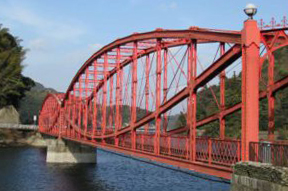 |
The only remaining lenticular truss bridge in Japan ( lens type truss
bridge), located at the south side of Kawachi Reservoir and it was
designed by Hisanori Numata. This shape and color really
harmonize with nature and become a symbol of the Iron town Yahata.
|
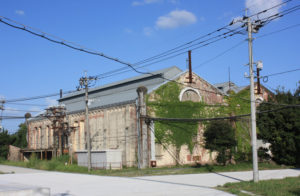 |
Onga River Pump Station / UNESCO World Heritage Built in 1910 on the east bank of the Onga River. It served, and still serves, to deliver industrial water to Yawata via an 11.4 km pipeline. The site has been registered on the UNESCO World Heritage, |
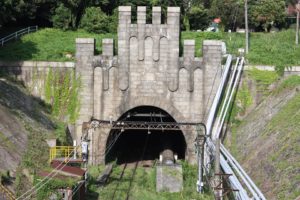 |
Dedicated Railway for Yawata Steel Works. The railway connected between Yawata and Tobata, completed in 1930. The most difficult and hard work was making Miyatayama tunnel with a total length of 1180 m due to suffering from floods. The gates of the Miyatayama tunnel are decorated with stately designs. |
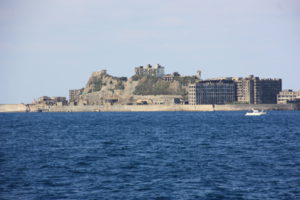 |
Hashima is a ruins called “Gunkanjima”, so called after its resemblance to the silhouette. Hashima Island is located 3 km southwest of Takashima, and it was the success of Takashima that led Mitsubishi to purchase this island, both islands giving access to the same undersea coal deposit. |

Other ways to contact us:
For a quick discussion or preliminary questions, you are also welcome to reach out via:
・Email : info@japan-kyushu-tourist.com
・WhatsApp : +81-90-1349-2929 
・Telephone : +81-93-521-8897
Japan KYUSHU Tourist Co., Ltd
3-8-1 Asano, Kokurakita-ku, Kitakyushu, Fukuoka 802-0001, Japan
Licensed Travel Agency: Fukuoka Prefecture Registration No. 3-688
 WhatsApp: Chat with us