
-
-
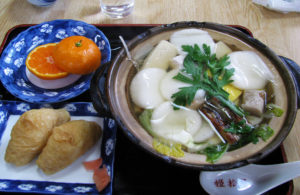
Guzoni restaurant Himematsu-ya, in Shimabara
2024/03/03
Featured restaurantsGuzoni is said to created during the Shimabara Rebellion of 1637. When Christians were fought under the leadership of Amakusa Shiro, they brought various ingredients such as rice cake, fishes and vegetables, and made a stew. This is the origin of Guzoni.
-
-
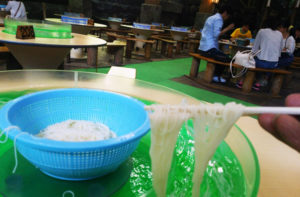
Somen nagashi, in Ibusuki
2024/03/03
Featured restaurantsThe unique Somen nagashi in Tosenkyo ravine in Kaimon open throughout the year serving cold Somen noodle that swim in the revolving container.
-
-
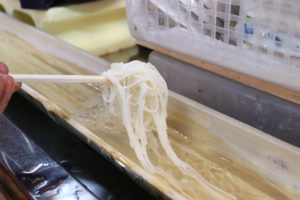
Somen nagashi, in Takachiho
2024/03/03
Featured restaurantsSomen is a kind of noodle which is made by wheat and is usually eaten by dipping style. Somen nagashi is the way of eating Somen with waterslide traditionally made by bamboo like as video below. Nagashi means flowing.
-

-
Takamori Dengaku-no sato, in Aso
2024/03/03
Featured restaurantsEnjoy Aso beef and local cuisines. The restaurant uses the old private house with thatched roof built more than 200 years ago. Bake the meat and local ingredients with charcoal at a Japanese traditional style fire place.
-
-
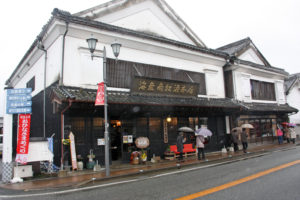
Authentic Japanese restaurant, Shirakabe, in Ukiha
2024/03/03
Featured restaurantsThe chef who makes that cuisines also has experienced the imperial family’s cook. The restaurant Shirakabe is in the former merchant’s building constructed in 1928. Japanese cuisines using best local ingredients that vary by season can be enjoyed.
-
-
Seiro-mushi, Kagura, in Yufuin
2024/03/03
Featured restaurantsSeiro-mushi is prepared with large bamboo baskets in front of diners. Featured by the enriched flavor with warmth and fragrance of the cypress basket (seiro). Live the lively, hot spring steam-like, “Jigoku steams” (literally hell’s steams) dishes right in front of you with the traditional local taste of Oita-prefecture.
-
-
Imamura Cathedral, in Fukuoka-prefecture
2024/03/02
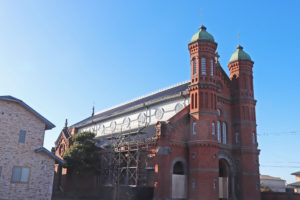
● Churches and CathedralsImamura Cathedral is located in Tachiarai, Fukuoka-prefecture. A Christian group was born in this region in the late 16th century. When Christianity was banned, I continued my faith as a hidden Christian. The twin-towered Romanesque-style brick Cathedral planned by Father Tamotsu Honda and completed in 1923 with financial aid from foreign countries. It was designed and constructed by Yosuke Tetsukawa, who was a master church builder at the time. The Cathedral has been designated as a national important cultural property.
-
-
Imamura Cathedral, in Fukuoka-prefecture
2024/03/02
Staff BlogImamura Cathedral is located in Tachiarai, Fukuoka-prefecture. A Christian group was born in this region in the late 16th century. When Christianity was banned, I continued my faith as a hidden Christian. The twin-towered Romanesque-style brick Cathedral planned by Father Tamotsu Honda and completed in 1923 with financial aid from foreign countries. It was designed and constructed by Yosuke Tetsukawa, who was a master church builder at the time. The Cathedral has been designated as a national important cultural property.
-
-
Ban on Christianity was abolished in 1873
2024/03/28
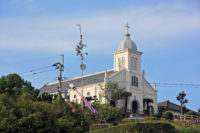
Japanese historyIn 1873, the Meiji government abolished the ban on Christianity. Believers who had been in hiding returned to Catholicism, and churches in various villages were built with a variety of designs that combined Japanese and Western techniques. Although many Hidden Christians returned to Catholicism, there are still people in the Nagasaki region who did not return to Catholicism and still preserve and pass on the unique religious rituals of the Hidden era, and they are called “Hidden Christians.”
-
-
Shinto shrine
2024/03/14
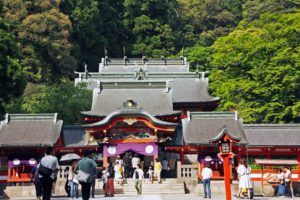
Shinto ShrineThere are over eighty thousand Shinto shrines in Japan, and they represent the oldest architectural style in the country. Shinto is a religion unique to Japan. Respect for land and nature is its basic premise. Usually there is a mirror in the case inside each Shrine. This is the symbol of Shrine’s deity. Shinto customs are common in Japanese life. Some people household altars and pray for good health, success and happiness every day. The entrance to the Shrine is marked by a huge gate called a Torii. There are usually made of wood or stone, some painted bright red. A pair of stone statues called Komainu guard the entrance to Shrine and its building. They are mythical creature. One’s mouth is usually open while the other’s is closed.
 WhatsApp: Chat with us