
-

-
8-Day Kyushu Private Tour for Malaysian Travelers
2024/04/05
● What our Guests have to sayNumber of participant : 19 persons Schedule : March 27 to April 3, 2024 Transportation : Chartered bus English speaking tour guide What our Customer have to say Dear Masa san, Yes! My group is safely return home but I still stay in Japan until 16th April. Thank you so much for your company service. Hope we will works together again in future. Thank you
-
-
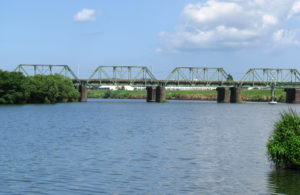
Onga River Pump Station
2024/04/02
UNESCO World HeritagesThis site is registered on UNESCO World Heritage as Japan’s Meiji Industrial Revolution site in 2015 Built in 1910 on the east bank of the Onga River. It served, and still serves, to deliver industrial water to Yawata via an 11.4 km pipeline. This supply is integral to the steel production process and was necessary to cope with the 1st phase expansion of the Imperial Steel Works.
-
-
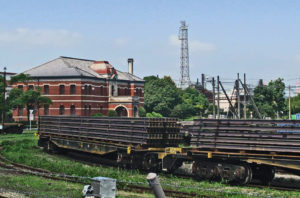
First Head office of the Steel Works
2024/04/01
UNESCO World HeritagesThis site is registered on UNESCO World Heritage as Japan’s Meiji Industrial Revolution site in 2015. The the building for the Head office of the Imperial Steel Works was constructed in 1899, two years before commencement of Japan’s Steel Industry. The design of the building is a harmony of European and Japanese architectural styles. The construction of the structure below the roof is a European style and uses red bricks for the outside walls. Aiming to symbolize a Good future for Japan, the roof was designed with a traditional Japanese triangular shape and Japanese tiles were used to complete the roof. The building was initially used as a Head office until 1922, however with the expansion of production facilities, the Head Office was moved to another place due to lack of space. After that, the building was used for various purposes such as a Research and Developing Center for Steel Products.
-
-
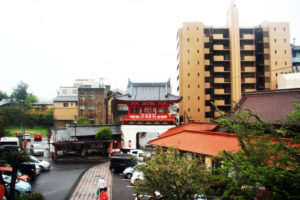
Takeo, in Saga-prefecture
2024/08/04
Hidden Gems in KyushuTakeo is a Onsen Resort, located west of Saga–city, and has 1200 years history. The hot spring temperature is 18 to 52 degrees. Spring quality is smooth with alkaline simple hot spring. It is said that the color is colorless and transparent and has an outstanding effect on recovery from fatigue. The landmark of Takeo Onsen. Romon Gate, which was designed by a renowned architect in the Meiji Era, Kingo Tatsuno, and is at the entrance of the Onsen area. Population : 47,000 people, Population density : 240 people / km2
-
-
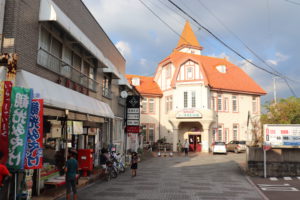
Ureshino, in Saga-prefecture
2024/07/10
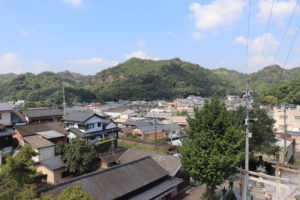
Featured destinationsUreshino Onsen is a hot spring town in south-western Saga-prefecture. Its clear Onsen waters are high in sodium bicarbonate and sodium chloride and feel extremely smooth on skin, giving rise to its popularity as a “Bihada no Yu” ( beautiful skin waters). Ureshino is famous for its tea. Terraces of tea fields sprawling out one after the next is a scene typical of Ureshino. Proper cultivation of Ureshino Tea was begun between 1648 and 1651 by tea grower, Jinbei Yoshimura, who is even sung about in the local folk songs. Tea seeds were gathered from Mount Sefuri and planted in the mountainous region of Ureshino Onsen, ideal as a tea growing area. Population : 25,000 people, Population density : 200 people / km2
-
-
Arita, in Saga-prefecture
2024/07/09
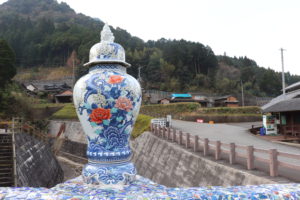
Featured destinationsArita is located in the north side of Saga and surrounding the mountain ranges. And Arita is the first place producing porcelain in Japan in the early 17th century. The pieces have bright, elegant picture drawn in transparent white porcelain. Arita porcelain was exported to Europe in the later half of 17th century and greatly influenced European pottery. The unique Arita porcelain red, green and yellow patten called Kakiemon style. It holds the largest porcelain fair in Western Japan, the Arita Porcelain Fair. This event is held from April 29 to May 5 every year and has thousands of stores and stalls lining the six-kilometre long main street. Population : 18,000 people, Population density : 280 people / km2
-
-
Imari, in Saga-prefecture
2024/07/08
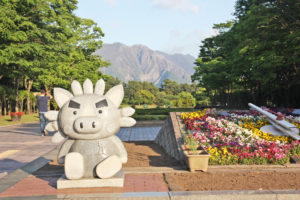
Featured destinationsImari is most notable because of Imari porcelain which has 400 years history. The city borders Arita to the south and embraces the natural port of Imari Bay. The porcelain was exported from the port of Imari specifically for the European export trade. Okawachiyama porcelain district Originally, an owner of the Imari porcelain was Nabeshima clan, in order to develop and protect its outstanding technique, he gathered skilled artisans and painters in Okawachiyama district. Now. about 30 potteries are manufacturing Imari porcelain. Population : 50,700 people, Population density : 200 people / km2
-
-
Kagoshima, in Kagoshima-prefecture
2024/05/25
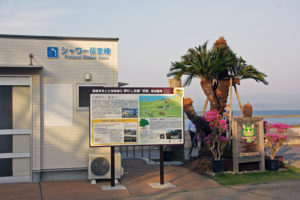
Featured destinationsThe southern most major city in Kyushu and from here you can see Sakura-jima Island and it’s active volcano from which smoke and steam rise across Kagoshima Bay. Kagoshima prospered in the Edo period as a castle town. Tenmonkan is the biggest shopping arcade and here you can dine on local cuisines, especially succulent meats and also enjoy the vibrant night life, bars and restaurants. Population : 586,000 people, Population density : 1,070 people / km2
-
-
Ibusuki and Satsuma peninsula, in Kagoshima-prefecture
2024/05/25
Featured destinationsIbusuki is known for it’s hot spring Onsen Resort, and it’s famous natural steam sand baths located on Kinko bay. To the east the Satsuma peninsula offers spectacular ocean views and this peaceful rural area is know as the “home of the sweet potato”. Population : 37,000 people, Population density : 250 people / km2
-
-
Chiran, in Kagoshima-prefecture
2024/03/31
Hidden Gems in KyushuChiran is a small town in the middle of the Satsuma Peninsula in Kagoshima-prefecture. It is called a “small Kyoto” and has a preserved Samurai district including a collection of Samurai houses and gardens. Another interesting place to visit is the Chiran Peace Museum. Population : 13,000 people
 WhatsApp: Chat with us