
-
-
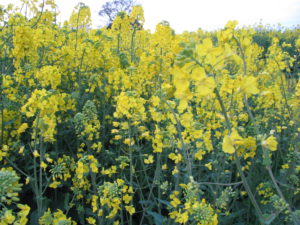
Rape blossoms
2024/03/15
Flowers in Japan, Staff BlogRape blossoms (Nanohana in Japanese) is a general term for flowers of the Brassica family. Rape blossoms are one of the flowers that herald the arrival of spring, and the yellow flowers spread all over the place are spectacular.
-
-
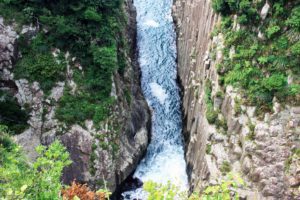
Umagase, in Hyuga, Miyazaki Prefecture
2026/01/31
Discover the Natural Wonders of KyushuExciting scenery created by the raging waves of the Hyuga Sea. The coastline here is a ria coastline, marked by intricate waterways sandwiched between steep cliffs. The cliffs reach 70 meters in height, and the sight of waves crashing against them is truly spectacular. The bare rock faces of the cliffs feature columnar joints, which were formed when magma from a volcanic eruption cooled and hardened. The name “Umagase” is thought to come from the fact that the color of the rocks resembles that of a horse’s back.
-

-
Cruz Sea, in Hyuga, Miyazaki Prefecture
2026/01/30
Discover the Natural Wonders of KyushuWhere your wishes come true. The Sea of Cruz is a coastal area that appears to form a cross when viewed from the observatory. This cape is part of a ria coastline; the “cross shape” was created by the narrow terrain being eroded by the sea and rivers, resulting in a cross-shaped waterway. Because this shape resembles the Japanese kanji character “叶” (meaning “to grant a wish”), it is widely believed that if you make a wish here, it will be granted
-
-
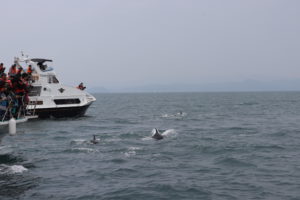
Dolphins watching cruise, in Shimabara, Nagasaki-prefecture
2024/06/15
ExperiencesLet’s meet wild Dolphins. Approximately 300 wild Dolphins live in the sea between the Shimabara Peninsula and Amakusa. The dolphin watching cruises have become increasingly popular for all ages, especially because it is possible to see the dolphins so close that you could almost touch them. frolicking in the sea.
-
-
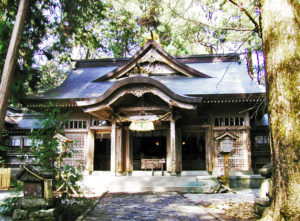
Takachiho Shrine, in Takachiho
2024/03/13
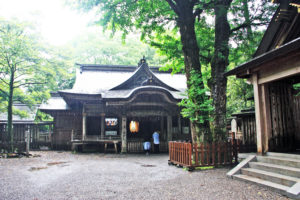
Shinto ShrineThe shrine has long history, established 1900 years ago, worship the deity of agriculture, marriage, traffic safety and protection against misfortunes. Located just west of the town center, is nestled in a grove of tall cedars. During the day the shrine’s nondescript, unpainted buildings blend in naturally with the surrounding trees. The light that filters through, brings with it an air of calm, peaceful reverence. Today this legend is reenacted as Yokagura in a series of 33 episodes depicting the divine quarrel as well as other deeds of the gods. On winter weekends, people gather to watch all-night performances of these episodes at different locations each week, sometimes at private homes. The performances are held on Saturday evenings from mid November to mid February.
-
-
Amano Iwato Shrine, in Takachiho
2024/03/13
Shinto ShrineTakachiho is a birth place of Japanese indigenous religion, Shinto. There is a story of Shinto origin in the Cave behind of Amano Iwato Shrine, and Amano Yasugawara. In the story, Amaterasu, the Shinto sun goddess, became so outraged by her brother’s cruel pranks that she hid herself in a cave, refusing to come out and depriving the world of her life-giving light. All of the other gods and goddesses gathered to lure her out. They tried everything they could think of to no avail until one goddess performed an outrageously ribald dance that caused the other gods to roar with laughter. Amaterasu left the cave to see what all the fun was about, and in doing so she returned her light to the world. Amano Iwato Shrine About ten kilometers outside of central Takachiho, Amano Iwato Shrine was built near the Cave where Amaterasu is said to have hid herself away. The cave cannot be approached, however, there is an observation deck behind the shrine’s main building from where you can gaze across the river. In order to access the observation deck, you need to inquire at the shrine entrance, and a priest will give you a quick guided tour. Amano Yasukawara A short walk down the road from Amano Iwato Shrine is a path that leads down to the river below. After a few minutes on this path you will see neat little piles of stones stacked along the river by previous visitors to mark their pilgrimage to this “power spot”. Farther along, the stacks become more numerous until you are surrounded by literally thousands of them as far as you can see. Eventually the path leads to a simple shrine inside a cave known as Amano Yasugawara. This is said to be the cave where the gods and goddesses met to discuss their strategy of luring Amaterasu out of hiding. The natural beauty of …
-
-
Kirishima Shrine, in kirishima
2024/03/13
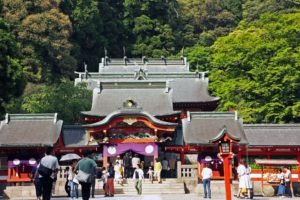
Shinto ShrineOne of the most beautiful shrine in Kyushu, and is surrounded by forest. The Shrine buildings were constructed in 1715 and designated as Important Cultural Property of Japan.
-
-
Hashima coal mining island, operated from 1875
2024/03/25
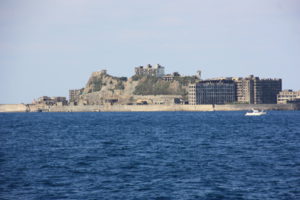
Japanese historyHashima coal mining island is an artificial reclaimed island and the site of Japan’s first major undersea coal exploitation pioneered by Mitsubishi Heavy Industry– and host to one of the world’s most extraordinary former mining communities. Hashima Coal mining began operation in 1875. From 1890, the Coal mining was managed by Mitsubishi Heavy Industry and had been developed as a modern Coal mining. Since, mined coal at the Hahima have high quality, it was mainly supplied to the Yawata Steel Works for steel making.
-
-
Wakato bridge in Kitakyushu-city, constructed in 1962
2024/01/13
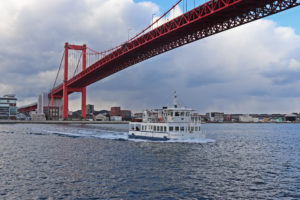
Japanese historyWakato bridge is Japan’s first suspension bridge over the Dokai Bay, connecting Wakamatsu and Tobata, and was completed in 1962. At the time of its completion, it was the largest suspension bridge in the East, and due to problems with welding reliability, it was constructed using riveted joints. 24,000 tons of steel used manufactured at Yawata Steel Works.
-
-
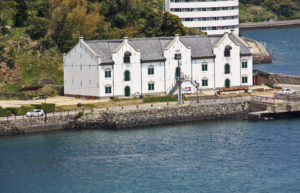
Hirado Dutch Trading Post, established in 1609
2024/04/25
Japanese historyThe Hirado Dutch Trading Post was a trading base in East Asia that was established in Hirado by the East India Company in 1609. Hirado was developed as a trading center until 1641, when the trading post was moved to Dejima, Nagasaki.
 WhatsApp: Chat with us