
-
-
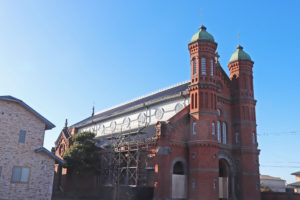
Imamura Cathedral, in Fukuoka-prefecture
2024/03/02
● Churches and CathedralsImamura Cathedral is located in Tachiarai, Fukuoka-prefecture. A Christian group was born in this region in the late 16th century. When Christianity was banned, I continued my faith as a hidden Christian. The twin-towered Romanesque-style brick Cathedral planned by Father Tamotsu Honda and completed in 1923 with financial aid from foreign countries. It was designed and constructed by Yosuke Tetsukawa, who was a master church builder at the time. The Cathedral has been designated as a national important cultural property.
-
-
Imamura Cathedral, in Fukuoka-prefecture
2024/03/02
Staff BlogImamura Cathedral is located in Tachiarai, Fukuoka-prefecture. A Christian group was born in this region in the late 16th century. When Christianity was banned, I continued my faith as a hidden Christian. The twin-towered Romanesque-style brick Cathedral planned by Father Tamotsu Honda and completed in 1923 with financial aid from foreign countries. It was designed and constructed by Yosuke Tetsukawa, who was a master church builder at the time. The Cathedral has been designated as a national important cultural property.
-
-
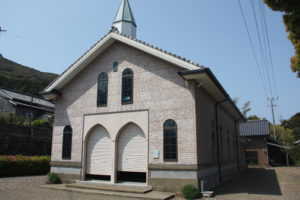
Yamano Church, in Hirado
2026/04/10
Hirado travel guideYamano Church was built in 1924 in the Yamano area, where is halfway of Mount Yasuman. Most people living in this area are Christians. The ancestors of the Yamano village fled persecution from Nishisonogi and Sotome to Goto island during ban on Christianity. However, they were unable to live on Goto island, so they moved to this area of Hirado Island between 1820 and 1830.
-
-
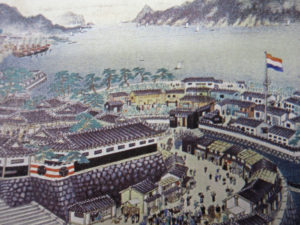
Naval training school in Nagasaki established in 1855
2024/04/05
Japanese historyFaced with crises from overseas countries, the Shogunate established the Naval training school in Nagasaki in 1955 with support from the Dutch. Excellent people from all over the Japan were gathered in Nagasaki, and Katsu Kaishu was among them. At the training school, practical education was provided on steam engines, navigation, operational techniques, physics, as well as artillery training and short sea navigation.
-
-
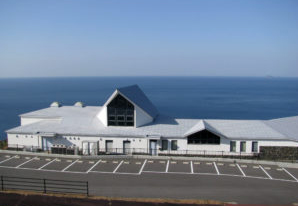
Endo Shusaku Literary Museum
2024/02/28
● Christian Pilgrimage sitesThe peaceful Sotome, the setting of Endo Shusaku’s novel Silence. Sotome area of Nagasaki city has an abundance of natural beauty in its sea, mountains and rivers. It also is blessed with a unique history and culture of Christianity. In particular, the area in which the Endo Shusaku Literary Museum stands is known as the site of a Christian village, one of Endo’s most notable work, Silence. From the literary museum, there is a magnificent view. In a sweep of eye one can see sun as it majestically sets over the sea of Goto, along with the Silence Literary Monument in Shitsu Bunka Mura. Endo Shusaku and the Sotome area are linked through Silence ; this bond has been built up starting from when Endo was writing the novel, and continues into the present day with the construction of literary museum. Following Endo Shusaku’s death, this Literary Museum was established thanks to kindness of his family, and was filled with Endo’s persona belongings, mementoes, manuscripts, and his extensive collection of books. The Museum exhibits trace the footsteps of Endo Shusaku as one of Japan’s greatest writers of literature. In addition, it has facilities for collecting, preserving, and exhibiting materials related to Endo’s public perusal and research, and operating as an information center. Note : Silence Silence is a 1966 novel of theological fiction by author Endo Shusaku, …
-

-
Beppu Hell tour, in Beppu, Oita-prefecture
2024/05/13
ExperiencesBeppu’s most hyped attraction, Hell (Jigoku Meguri ) tour that is a collection of hot spring where the water bubbles forth from underground, often with unusual result. Five of the hells are located in the Kannawa district where over 4 km northwest of Beppu station, and two in the more remote Shibaseki district. Kannawa district : 5 hells are located within walking distance of each other in this area. Umi-Jigoku Sea Hell, it resemble of sea, this 200 metre deep, cobalt blue pond of boiling water emerge 1200 years ago after a volcano explosion. Oniishi Bouzu-Jigoku Oniishi shaving Head Hell, large and small bubble of hot gray mud that boiling up here look like the shaven head of monks. Shiraike-Jigoku White Pound Hell, the colorless water that naturally spouts from the ground mysteriously turn creamy white. Kamado-Jigoku Oven Hell, a bright demon standing on an enormous cooking pots is the mascot of the site, temptingly divided into six unique, pots of murky, budding thumping boiling water. Oniyama-Jigoku Devil’s Mountain Hell, the force of the steam produced at this Spring can pull one and a half train cars. This hellish site is the happy home of a variety of crocodile and alligator who slither down breeding water into the warm. Shibaseki district It takes about 5 minutes by car or bus from Kannawa district to this Shibaseki district. Chinoike-Jigoku Blood Pull Hell, the clay is steaming hot point that the steam is red. Japan’s oldest natural Jigoku as written about in the Bungo Topography …
-
-
Santo Domingo Church, built in 1609
2026/02/15
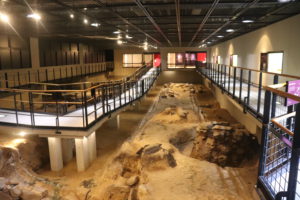
History of Japanese ChristianitySanto Domingo Church was built in Nagasaki in 1609 by the Dominican Father Francisco de Morales, using materials from a demolished church in Kagoshima. The ruins of the church were discovered in 2002 during an archaeological excavation conducted for the reconstruction of Sakuramachi Elementary School. Today, the site is home to the Santo Domingo Church Ruins Museum, where visitors can view the excavated remains alongside Christian artifacts and historical materials discovered across Nagasaki.
-
-
Kirishiama
2024/01/30
Onsen resortLocated on the lower slopes of the Kirishima Mountain with a distant view over Kagoshima Bay and Sakurajima below. The area is made up of over a dozen Onsen, of which the largest and best know is Maruo Onsen. With its high concentration of hotels and central location, Maruo Onsen is the representative resort town of the entire Kirishima Onsen area. The hot spring towns around Kirishima Onsen are dotted with Ryokan and hotels of various sizes
-
-
Tsukiji Reflectance Furnace, in 1850
2024/04/13
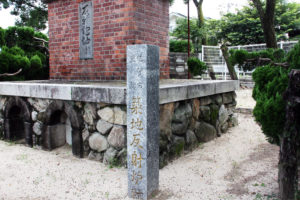
Japanese historyThis is the Japan’s first constructed Reflectance Furnace. In the late Edo period when the necessity of maritime defence increased, the Saga clan built the Tsukiji Reflectance Furnace for making cast iron-made Western cannons and completed in 1850. And then, the cast iron cannon was manufactured the first time in Japan in 1851. The reflectance furnace was greatly contributed for initial stage of Japan’s Industrial Modernization.
-
-
Yoshinogari Remains, the 3rd century B.C.
2024/05/17
Japanese historyThe largest archeological remains in Japan. Lie on the spacious hilly area in the north-eastern part of Saga. Remains of a ringed-dugout settlement presumably dating back to the 3rd century B.C. were unearthed there, and excavation is still underway at the site. They are among the largest archeological remains in Japan.
 WhatsApp: Chat with us