
-
-
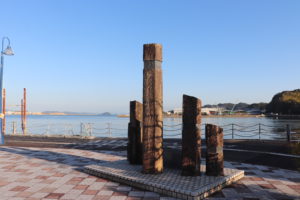
26 Saints Pilgrimage route on February 05 in 1597
2025/08/13
● Martyrdom of the 26 Saints of Japan26 Christians arrive at Tokitsu Port by the boat on the cold night of February 4, in 1597 and stayed one night on the boat. At dawn on February 5, they got off the ship with a cold b ody and landed at Togitsu Port. Then they began walking the 12km path to Nishizaka, the place of martyrdom. Passed through the mountain pass, and through Michinoo, Akasako, and Urakami, and arrived at Nishizaka at 10 o’clock. And as soon they arrived, they were all crucified on the cross. Paul Miki said from the Cross All of you who are here, please listen to me. I did not come from the Philippines, I am a Japanese by birth, and a brother of the Society of Jesus. I have committed no crime, and the only reason why I am put to death is that I have been teaching the doctrine of our Lord Jesus Christ. I am very happy to die for such cause, and see my death as great blessing from the Lord. At this critical time, when you can rest assured that I will not try to deceive you, I want to stress and make it unmistakably clear that man can find no way to salvation other than the Christian way. The Christian law commands that we forgive our enemies and …
-
-
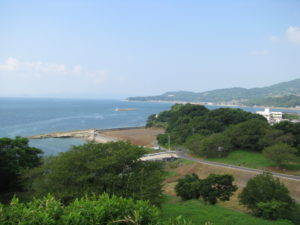
Shimabara Rebellion in 1637
2026/02/09
History of Japanese ChristianityThe site is located in Minami-Arima, Minami-Shimabara City. It was the primary battlefield of the Shimabara Rebellion in 1637—a large-scale peasant uprising against the Shogunate’s persecution of Christians, led by the young leader Amakusa Shiro. 。 The castle was founded by Arima Takazumi in 1496. It was a flatland castle (hirajiro), utilizing a natural fortress created by the cliffs facing the Ariake Sea and the rising tides. The castle was abandoned after Matsukura Shigemasa, the feudal lord of Shimabara, built Shimabara Castle following the downfall of the Arima family. In 1637, Christian farmers rose in revolt, driven by their grievances against Shigemasa’s brutal oppression. The Shogunate viewed this uprising as a Christian rebellion and dispatched a punitive force. In response, the rebels entrenched themselves in the abandoned Hara Castle, fighting against the Shogunate under the leadership of Amakusa Shiro Tokisada. On February 27, 1638, Amakusa Shiro fell in battle, and the castle fell the following day. All 37,000 Christians, including women and children, perished in the massacre. In 2018, the site was registered as a UNESCO World Heritage Site as part of the “Hidden Christian Sites in the Nagasaki Region.
-
-
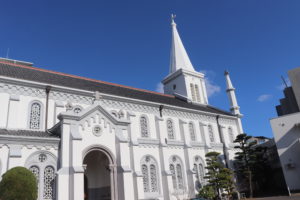
Nakamachi Church, in Nagasaki
2025/08/01
● Churches and CathedralsNakamachi Church is located near JR Nagasaki Station which was constructed for Japanese Christians in 1986. The church was dedicated to the 16 Saints of Nagasaki (St. Thomas and the 15 Martyrs) in 1988, and the monument honoring them was erected in the premise. The 16 Saints were martyred in Nagasaki from 1633 to 1637. The 16 martyrs became Saints in 1987, since 26 Saint. Dominic Ibáñez de Erquicia Pérez de Lete, Spanish, 1633, Dominican Priest Antonio Gonzalez, Spanish, 1637, Dominican Priest Jordan Ansalone, Italian, 1634, Dominican Priest Luke of the Holy Spirit Alonso Gorda, Spanish, 1633, Dominican Priest Michael de Aozaraza, Spanish, 1637, Dominican Priest Guillaume Courtet, French, 1637, Dominican Priest Jacobo Kyushei Gorōbyōe Tomonaga de Santa María, Japanese, 1633, Dominican Priest Thomas Rokuzayemon Nishi, Japanese, 1634, Dominican Priest Vincent Shiwozuka, Japanese, 1637, Dominican Priest Francis Shōyemon, Japanese, 1633 Matthew Kohioye, Japanese, 1633 Lorenzo Ruiz, Filipino, 1637 Marina of Omura, Japanese, 1634 Magdalene of Nagasaki, Japanese, 1634 Michael Kurobioye, Japanese, 1633 Lazarus of Kyoto, Japanese, 1637
-
-
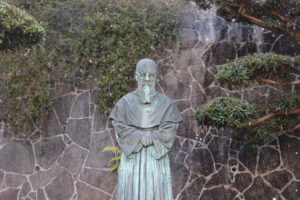
Saint Kolbe Memorial Museum, at Hongouchi Church, in Nagasaki
2025/02/14
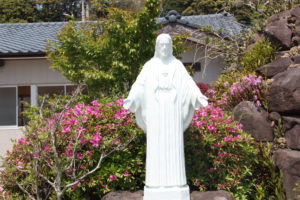
● Churches and CathedralsFather Maximilian Kolbe was born in Poland in 1894 and was a priest of the Conventual Order of St. Francis. He had been active in promoting the veneration of the Immaculate Virgin Mary. He came to Japan in 1930 and began educating seminarians and publishing a monthly magazine ” the veneration of the Immaculate Virgin Mary.” After that, the number of Japanese people who understood God’s teachings increased, and Hongouchi Church was established in 1931. After six years in Japan, he returned to Poland for health reasons. And then, he volunteered to die in place of a man named Franciszek Gajowniczek in the German death camp of Auschwitz, located in German-occupied Poland. Saint Kolbe Memorial Museum was built to commemorate his canonization in 1986.
-
-
History of Japanese Christianity
2026/02/24
History of Japanese ChristianityChristianity in Japan holds a profound and unique history unlike any other in the world. Its journey began in 1549 with the arrival of Francis Xavier, the first missionary, leading to the rapid spread of the faith—primarily in the Nagasaki region. However, a centuries-long ban by the Shogunate forced believers into hiding, where they practiced their faith in secret despite severe persecution and martyrdom. Following the lifting of the ban in 1873, a new chapter of Japanese Christianity began. Our tour invites you to explore this remarkable legacy by visiting the historic sites and sacred cathedrals of the Nagasaki region. 1549: St. Francis Xavier arrives in Kagoshima as the first Christian missionary, marking the dawn of Christianity in Japan. 1550: St. Francis Xavier travels to Hirado to continue his missionary work. 1551: The first Catholic church in Japan is established in Hirado. 1557: Catholicism is introduced to Ikitsuki and Kasuga in the Hirado region. 1563: Omura Sumitada becomes the first Japanese feudal lord (Daimyo) to convert to Christianity. 1569: Father Gaspar Vilela establishes the “Todos os Santos” Church, the first in Nagasaki. 1571: Lord Omura Sumitada opens the Port of Nagasaki to Portuguese trade. 1580: Lord Arima Harunobu converts to Christianity; the first Seminario (seminary) in Japan is established in Kuchinotsu. 1582: The Tensho Embassy—the first Japanese mission to the Pope in Rome—is dispatched by Christian …
-

-
Saint Filippo de Jesus Church ( Japan 26 Saints Memorial Church ), in Nagasaki
2024/02/14
● Churches and CathedralsThis is a church with Gaudi-style twin tower designed by Kenjiro Imai, built next to the Nishizaka Martyrdom site When there was a plan to build a memorial hall for the 26 Japanese Saints next to Nishizaka Martyrdon site, a large donation was made from Mexico, and the Church was built in 1962. This church is dedicated to Mexican Filippo de Jesus, who is one of the 26 Saints. Filippo de Jesus was a Franciscan Catholic missionary who became one of the 26 Martyrs of Japan, the first Mexican Saint.
-
-
Kurose no Tsuji, martyrdom site of Gaspar Nishi Genka
2024/02/10
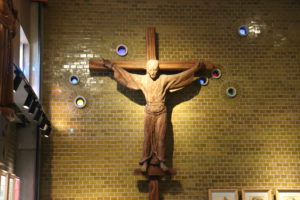
● Christian Pilgrimage sitesThe site where Christian Gaspar Nishi Genka was martyred in 1609, located on Kurose Hill overlooking Nakae no shima between Hirado and Ikitsuki. The tomb facing the sea is called Gaspar-sama and is a revered place for Ikitsuki’s Hidden Christians. The cross-shaped “Kurose no Tsuji Martyrdom Monument” was erected by Catholics in 1991, and Mass is held every year around November 14th. Gaspar Nishi Genka was the first martyr of Ikitsuki and the father of Thomas Rokuzaemon Nishi who was one of the 16 Saint of Nagasaki, dedicated in Nakamachi Church in Nagasaki.
-
-
Hidden Christians from 1612
2026/02/13
History of Japanese ChristianitySevere oppression began with the Tokugawa Shogunate’s ban on Christianity. Missionaries were expelled overseas, while those who remained in secret were captured and martyred. Konishi Mansho, the last remaining priest during this period, was also martyred in 1644. In the absence of priests, believers maintained their faith by ostensibly pretending to be Shinto or Buddhist. Christian organizations were formed in each village to preserve their teachings, and the faith was passed down from parents to children, and from children to grandchildren for generations. “Kakure Kirishitan” (Hidden Christians) Even after the ban on Christianity was lifted, some believers chose to continue practicing their faith in the traditional way passed down through the generations, rather than returning to the Catholic Church. These people are known as “Kakure Kirishitan.” The traditions of the Kakure Kirishitan have been preserved in regions such as Hirado, Ikitsuki, the Goto Islands, Sotome, and areas surrounding Nagasaki.
-
-
Hidden Christian site, Kasuga Village
2024/02/12
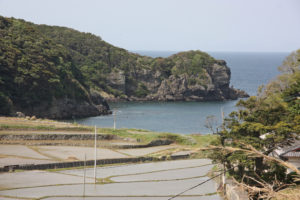
● Christian Pilgrimage sitesKasuga Village and Mount Yasugatake is a Christian Pilgrimage site and is registered on the World Heritage as Hidden Christian Sites in the Nagasaki Region. This idyllic, remote village was refuge to a small community of Hidden Christians who practiced here for centuries, far from the prying eyes of the government. After the ban on Christianity was lifted, the local villagers decided to continue practicing their own unique brand of the religion rather than rejoin the Catholic Church. As a result, churches were not erected in the village, and the religion remains outwardly invisible.
-
-
Japan’s first Seminary
2024/02/14
● Christian Pilgrimage sitesIn 1579, Priest Alessandro Valignano of Jesus from Portugal came to Japan to inspect the situatin of missionary work in Japan. Valignano believed that training Japanese priests and monks was the key to the success of missionary work in Japan. And then, he made the Japan’s first Seminary in Shimabara peninsula in 1580, where was the Hinoe Castle town of Arima Harunobu. Among the first students, included member of Tensho youth mission to Europe who were Ito Mansho Ito, Chijiwa Miguel, Hara Martino and Nakaura Julian. Note : Seminary is an educational institution established in Japan by the Society of Jesus between 1580 and 1614 to train Jesuit priests and monks.
 WhatsApp: Chat with us