
-
-
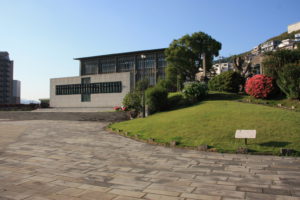
Genna great Martyrdom in 1622, 元和の大殉教
2024/01/12
History of Japanese Christianity, Staff Blog25 years after the martyrdom of the 26 Saints, the blood of Christians was shed once again at Nishizaka in Nagasaki. 55 Christians were martyred who were arrested at Suzuta Prison in Omura and Kurusu Prison in Nagasaki. These included Italian missionary Carlo Spinola and Portuguese missionary Domingos Jorge.
-
-
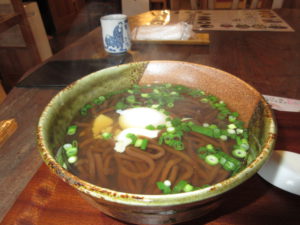
Rokubei, 六兵衛
2024/01/11
Japanese cuisine, Staff BlogRokubei is a local cuisine in Shimabara. In 1792, Shimabara Disaster was occurred that Mt. Mayuyama exploded and caused major damage due to landslides entire area of Shimabara. After that, the Shimabara Peninsula experienced a food crisis, and sweet potatoes became the staple food. Rokubei is a noodle dish using sweet potatoes invented by farmer Rokubei. The sweet potatoes were powdered, yams were added, and kneaded in boiling water to make udon-like noodles.
-

-
Mathew C Perry came to Uraga in 1853
2024/04/10
Japanese history, Staff BlogIn 1853, Mathew C Perry came to Uraga; the Commodore of the US navy, who played a significant role in Japanese history, succeeded in opening Japan to foreign countries. Japanese industry was 200years behind European countries at that time, and Japanese’s industrial revolution started in Saga, Kagoshima, Nagasaki, Kitakyushu and other places in Japan.
-
-
Ban on Christianity in 1614
2024/08/18
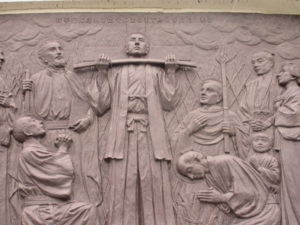
History of Japanese ChristianityThe number of Christians in Japan continued to increase, and reaching 300,000 in 1614. Fearing the ever-increasing number of Christian rebellions, Tokugawa Shogunate finally issued a ban on Christianity in Nagasaki in 1612, and two years later in 1614 throughout the country in Japan. After that, the history of martyrdom began in various places. ・in 1617, 4 missionaries were martyred in Omura ・in 1622, Genna great martyrdom (55 Christians) at Nishizaka ・in 1622-24, Ikutsuki and Nakae-no-shima island martyrdom ・from 1627, Unzen jigoku martyrdom ・1633, Nakaura Julian martyred in Nishizaka ・in 1637, Shimabara Rebellion ・in 1644, Konishi Manjo martyrdom, Domestic priests become absent ・in 1657, Persecution of Christians in Omura ・in 1790, Persecution of Christians in Urakami ・in 1839, Persecution of Christians in Urakami ・in 1856, Persecution of Christians in Urakami
-
-
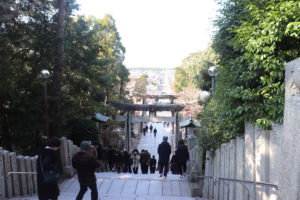
Hatsu-moude, 初詣
2024/01/09
Japanese Culture, Staff BlogHatsu-moude is one of Japanese custom that first visit of the year to Shrines or/and Temples. Literal meaning of Hatsu is first and moude is pray. Most Japanese people visit Shrines and/or Temples at the beginning of the year to pray for happiness for the year. What they pray are variety such as safety and health of family, business prosperity, traffic safety, a good harvest in agriculture, a big catch in the fishing industry, prevention of natural disasters, etc.
-
-
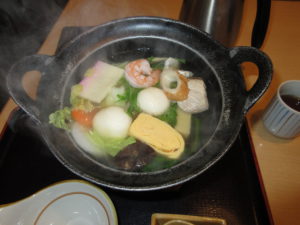
Guzoni, 具雑煮
2024/01/08
Japanese cuisineGuzoni is a local cuisine in Shimabara. It is said to create during the Shimabara Rebellion of 1637. When Christians were fought under the leader ship of Amakusa Shiro, they brought various ingredients such as rice cake, fishes and vegetables, and made a stew. This is the origin of Guzoni.
-
-
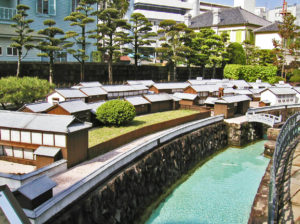
History of Dejima from 1636
2024/04/20
Japanese history, Staff BlogDejima was the fan-shaped artificial island in the bay of Nagasaki where was used as a trading port during Japan’s National isolation of Edo period. In 1636, the artificial island, Dejima was constructed to accommodate Portuguese who lived in Nagasaki and to prohibit Christian missionary work. In 1638, trade with Portugal was prohibited and Dejima becaome an uninhabited island. In 1641, the Dutch trading post in Hirado was moved to Dejima, and then the history of trade with the Netherlands began at Dejima as only the gateway to European in Japan.
-
-
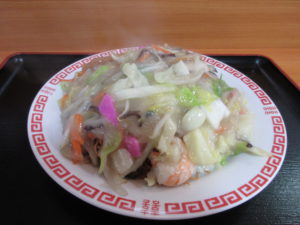
Sara-udon, 皿うどん
2024/01/07
Japanese cuisineSara-udon is a local cuisine in Nagasaki and The literal meaning is udon (udon noodle) on a plate (sara). It is a dish with stir-fried ingredients such as pork, seafood, and plenty of vegetables, placed on top of thin noodles fried in oil.
-
-
Nagasaki was a small Rome
2024/01/07
History of Japanese Christianity, Staff BlogTodos os Santos Church, the first church in Nagasaki, was built in 1569. Federal lord Omura and the Jesuits made an agreement to make Nagasaki a port for trade with Nanban. (Portugal and Spain) in 1570. Nagasaki Port was opened and the first Portuguese ship arrived in 1571. And development of the town of cape was started as Christian town in 1571 and the small Church of San Paulo was constructed at the tip of cape. After that following Churches were constructed. Misericordia Headquarters Church in 1583 Santa Maria Church in 1600 Santa Clara Church in 1603 Santiago Church in 1604 San Juan Petista Church in 1605 San Antonio Church in 1606 San Pedro Church in 1607 San Francisco Church in 1611 San Agustin Church in 1612 For 45 years after the first church was built, Nagasaki developed as a Christian town, and by 1614, most of the 25,000 people were Christians. It was as if Nagasaki was a small Rome. However, due to the Tokugawa Shogunate’s Ban on Christianity in 1614, most of the church buildings were destroyed within 15 days from November 3rd.
-
-
Nagasaki Port opened in 1571
2024/05/05
Japanese historyNagasaki is Japan’s first international city with a history of trading with many countries since Nagasaki port opened to Portugal in 1571. Afterwards, artificial islands such as Dejima in 1636 and Shin Jizo (near present-day Chinatown) were built in 1702, and greatly contributed as trading port place only in Japan during the period of national isolation.
 WhatsApp: Chat with us