
Japan’s Daily Soul Food
Eat exactly like a local. Discover the honest, everyday meals that fuel Japanese life
at hidden neighborhood gems and storied shops passed down through generations.
Dive into a world of flavor—from a deeply satisfying bowl of Udon or Ramen to the
comforting warmth of a Donburi rice bowl and slow-simmered Oden.
These aren’t just meals; they are the timeless tastes of Japan.
Rokubei
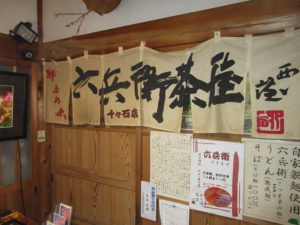
Rokubei is a local cuisine in Shimabara.
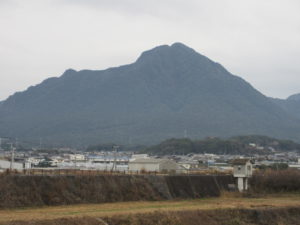
In 1792, Shimabara Disaster was occurred that Mt. Mayuyama exploded and caused
major damage due to landslides entire area of Shimabara.
After that, the Shimabara Peninsula experienced a food crisis, and sweet potatoes
became the staple food.
 |
 |
 |
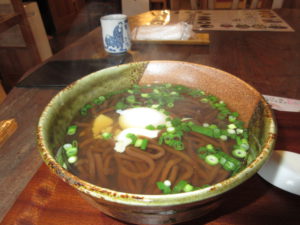
Rokubei is a noodle dish using sweet potatoes invented by farmer Rokubei.
The sweet potatoes were powdered, yams were added, and kneaded in boiling
water to make udon-like noodles.
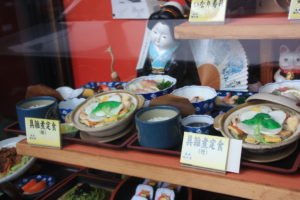
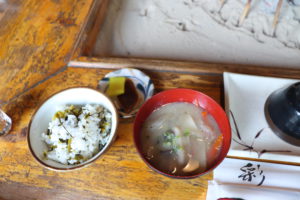
Guzoni
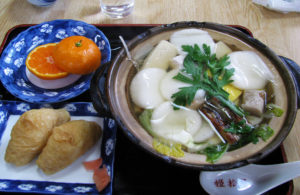
Guzoni is a historical local dish from Shimabara with roots dating back to the
Shimabara Rebellion of 1637. It is said that Amakusa Shiro, the young leader
of the uprising, instructed his followers to gather whatever ingredients they
could find—mochi (rice cakes), wild vegetables, and seafood—and stew them
together in a large pot.
 |
 |
 |
This hearty meal provided the rebels with the strength and nutrients needed to
endure the long, harsh siege at Hara Castle.
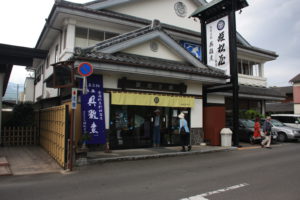
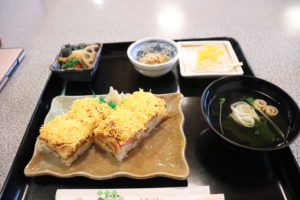
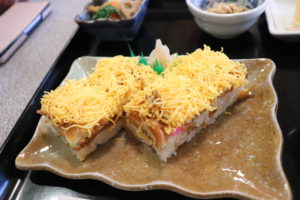
Omura Sushi
A local dish that has been passed down in Omura since ancient times.
During the ancient time, when feudal lord Omura Sumikore, who had been
defeated in battle and had his territory taken away, fought back and regained
his territory, the people of his territory made pressed sushi and served it to
celebrate.
 |
 |
 |
It is said to have originated. The reason why it was pressed sushi was because
there weren’t enough tableware to feed a large number of soldiers. It is said that
the people spread large quantities of freshly cooked rice in a shallow wooden
box and quickly made pressed sushi with double toppings, which the soldiers
then ate by cutting it into squares with a wakizashi. Due to this tradition, the locals
have called it “Omura sushi, which means sushi to celebrate winning battles,
and it is still valued as an indispensable dish for celebrations.
Tonkotsu ramen
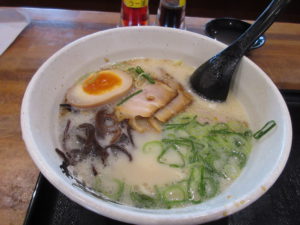
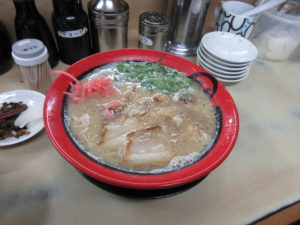
Tonkotsu ramen is the soul food of Fukuoka. The name literally means ‘pork bone ramen.
Its signature is the creamy, cloudy white broth, which is made by boiling pork bones for
many hours until the marrow dissolves into a rich, savory soup. It is typically served with thin,
straight noodles and topped with tender chashu (braised pork belly), crunchy wood ear
mushrooms (kikurage), and a soft-boiled marinated egg.
 |
 |
 |
A unique part of the Fukuoka ramen experience is the ‘Kaedama’ system, where you can
order a second serving of noodles to finish your leftover soup. You can also customize the
texture of your noodles, ranging from ‘Barikata’ (very firm) to ‘Futsu’ (regular).
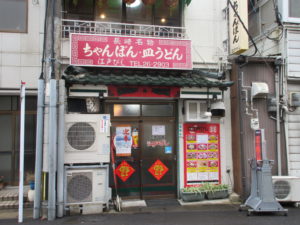
Sara-udon
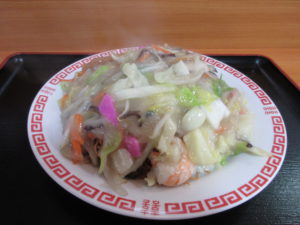
Sara-udon is a signature local dish from Nagasaki. While its name literally means ‘udon
on a plate,’ it actually comes in two distinct styles. The most popular version features crispy,
deep-fried thin noodles.
 |
 |
 |
However, you can also enjoy it with thick, soft noodles—the same type used in
Nagasaki Chanpon—which are pan-fried to give them a chewy texture.
Both are topped with a thick, savory sauce filled with stir-fried pork, seafood,
and a generous variety of vegetables.
Chanpon
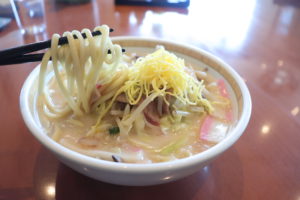
Chanpon is a Japanese cuisine created in Nagasaki.
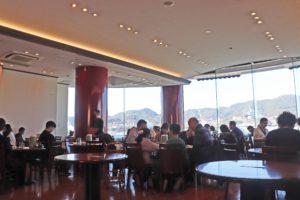
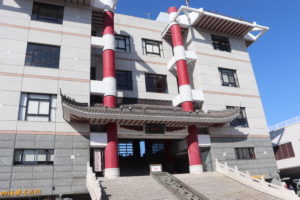
It was invented to provide a cheap and nutritious meal by the Chinese chef at Shikairo
restaurant in 1899 originally for Chinese students visiting Japan at that time, which is
a noodle dish made with chicken bone and pork bone soup and plenty of seafood and
vegetables from Nagasaki.
 |
 |
 |
Now, it is one of the popular Japanes cuisine which you can eat any place in Japan.
Aso Akausih beef
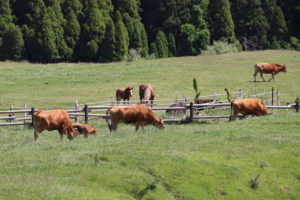
Aso Akaushi beef (Japanese Brown cattle ) is the finest in all of Kyushu.
Raised in the vast, pristine nature of Aso, its lean meat is incredibly flavorful and tender.
 |
 |
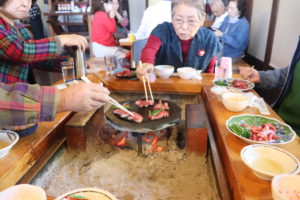 |
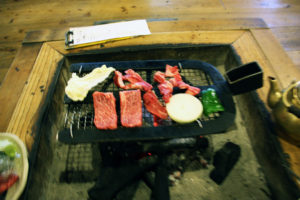
To fully appreciate its quality, you must try it charcoal-grilled—the high heat and smoky aroma
bring out its rich umami like no other cooking method
Takamori Dengaku
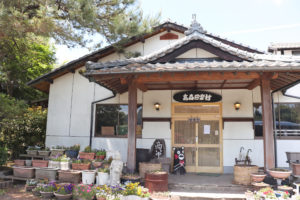
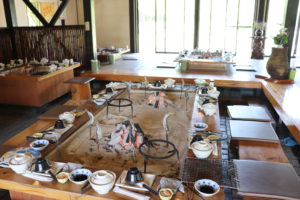
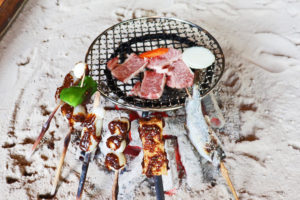
Takamori dengaku is the local cuisine in Aso, which a dish created to make the sweet potatoes,
which can only be grown in this region, more delicious and last longer.
As part of Takamori’s culinary culture, it has remained the same since then, with the addition
of some ingredients.
 |
 |
 |
 |
 |
 |
What we are particular about is that the condiments in Dengaku miso
are exposed to the sun and contain a lot of minerals that have been absorbed, making it
a dish that not only fills your stomach but also maintains your health by eating it.
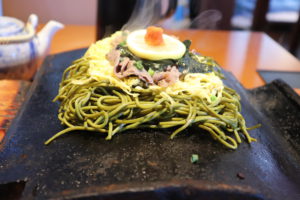
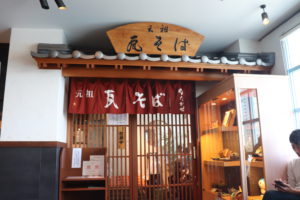
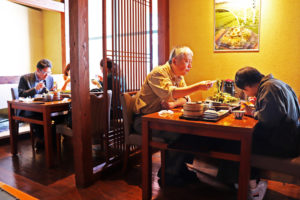
Kawara soba
Kawara soba is a local cuisine which Soba noodles and meat are cooked together on a Kawara
(stone roof tile) and dipped into a special sauce when eating it.
 |
 |
 |
It is said that the hints were obtained from the time when during the Seinan civil war in 1877,
soldiers of Satsuma who surrounded the Kumamoto castle used kawara (stone roof tiles) to
cook wild plants and meat.