
-

-
Mifuneyama-rakuen Garden, in Takeo
2024/03/07
Japanese gardenBeautiful Japanese Garden, located in the south-western foot of Mifuneyama. Construction of the garden took about 3 years and completed in 1845, the area is about 5ha. The dynamic cliffs of Mifuneyama Mountain can be seen from the garden.
-
-
First Head office of the Steel Works, in Kitakyushu-city
2024/03/07
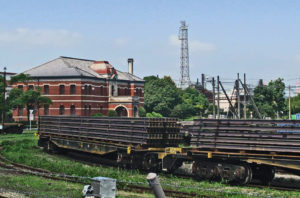
Industrial HeritagesThe the building for the Head office of the Imperial Steel Works was constructed in 1899, two years before commencement of Japan’s Steel Industry. The design of the building is a harmony of European and Japanese architectural styles. The construction of the structure below the roof is a European style and uses red bricks for the outside walls. Aiming to symbolize a Good future for Japan, the roof was designed with a traditional Japanese triangular shape and Japanese tiles were used to complete the roof. The building was initially used as a Head office until 1922, however with the expansion of production facilities, the Head Office was moved to another place due to lack of space. After that, the building was used for various purposes such as a Research and Developing Center for Steel Products.
-
-
Kurogane Railway, in Kitakyushu-city
2024/03/07
Industrial HeritagesDedicated Railway for Yawata Steel Works. The railway connected between Yawata and Tobata, construction work took three years, and completed in 1930. The most difficult and hard work was making Miyatayama tunnel with a total length of 1180 m due to suffering from floods. The gates of the Miyatayama tunnel are decorated with stately designs.
-
-
Onga River Pump Station, in Nakama
2024/03/07
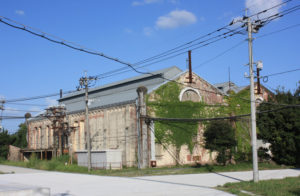
Industrial HeritagesBuilt in 1910 on the east bank of the Onga River. It served, and still serves, to deliver industrial water to Yawata via an 11.4 km pipeline. This supply is integral to the steel production process and was necessary to cope with the 1st phase expansion of the Imperial Steel Works. The site has been registered on the UNESCO World Heritage, Sites of Japan’s Meiji Industrial Revolution
-
-
Minami Kawachi-bashi bridge, in Kitakyushu-city
2024/03/07
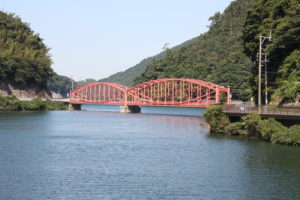
Industrial HeritagesThe only remaining lenticular truss bridge in Japan ( lens type truss bridge), located at the south side of Kawachi Reservoir and it was designed by Hisanori Numata and completed in 1926. This shape and color really harmonize with nature and become a symbol of the Iron town Yahata.
-
-
Higashida No.1 Blast Furnace, in Kitakyushu-city
2024/03/07
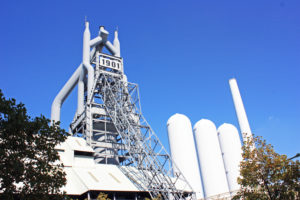
Industrial HeritagesBlast Furnace is a Steel plant for making the pig iron from iron ore and coke. Higashida No.1 Blast Furnace is only the Blast Furnace in the world which preserved as it was. The birth place where Japan’s steel industry began in 1901. It contributed greatly to the development of the Japanese steel industry and was used until 1972, and has been preserved just as it was. The big signboard at the top of the Blast Furnace displaying “1901” indicates the year in which the Blast Furnace commenced operation. Equipment and tools which were actually used are exhibited in the square, and you can see the iron-making process from the raw material (ore and coke)to production of pig iron.
-
-
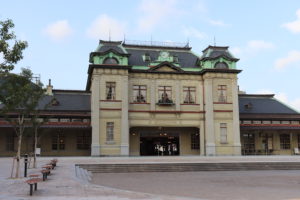
Mojiko Station, in Kitakyushu-city
2024/03/07
Featured ArchitecturesIt is the only Station building that is designated as an Important National Cultural Property together with Tokyo Station. Mojiko Station is a beautiful station built in the Renaissance style and modeled on the Termini Station in Italy. Kyushu Railway (nowadays JR Kyushu) began rail services between Mojiko Station and Takase Station in 1891 and the Station building was built in 1914. This was the first railway in Kyushu and subsequently Mojiko prospered greatly as a gateway to the Kyushu region after that. This was the first railway in Kyushu and subsequently Mojiko prospered greatly as a gateway to the Kyushu region after that.
-
-
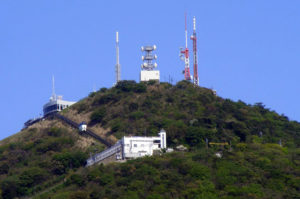
Mount Sarakura, in Kitakyushu-city, Fukuoka-prefecture
2024/03/07
Off the beaten pathMount Sarakura is the best scenic spot in Kitakyushu-city. The height of the mountain is 622 meters from sea level. At the top you are presented with a magnificent and spectacular view of Kitakyushu. In 10 minutes, you can reach the summit from the Cable Car Station using the Cable car and the Slope car. We offer the most dynamic night view in the World. The dynamic city where one million people are living and working, is creating the beautiful Night view which you have never seen before. The night view from the mount Sarakura is chosen the three major Night View in Japan along with Nagasaki from Mount Inasa. The area of Night view is the largest in the World ; about 40km east to west and 10km south to north And also the number of lighting to create the night view is the largest in the World.
-
-
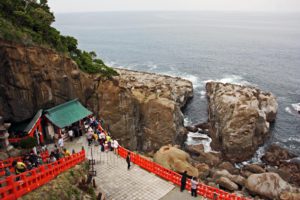
Udo Shrine, in Miyazaki
2024/03/06
Shinto ShrineBeautiful and exciting Shine. Udo Shrine is a Shinto shrine in the cave of the cliff side facing the Pacific Ocean. It is located about 35 km south of Miyazaki city. In legend, a goddess of sea built a hut to give birth to a great god here. Then it is said that Empress Suiko (554-628) built the shrine there. The priest of Tendai Buddhism built a Buddhist temple in 782, on the order of Emperor Kanmu. In the middle ages, this area had been the training place for mountain priests because of the steep rocky cliffs.
-
-
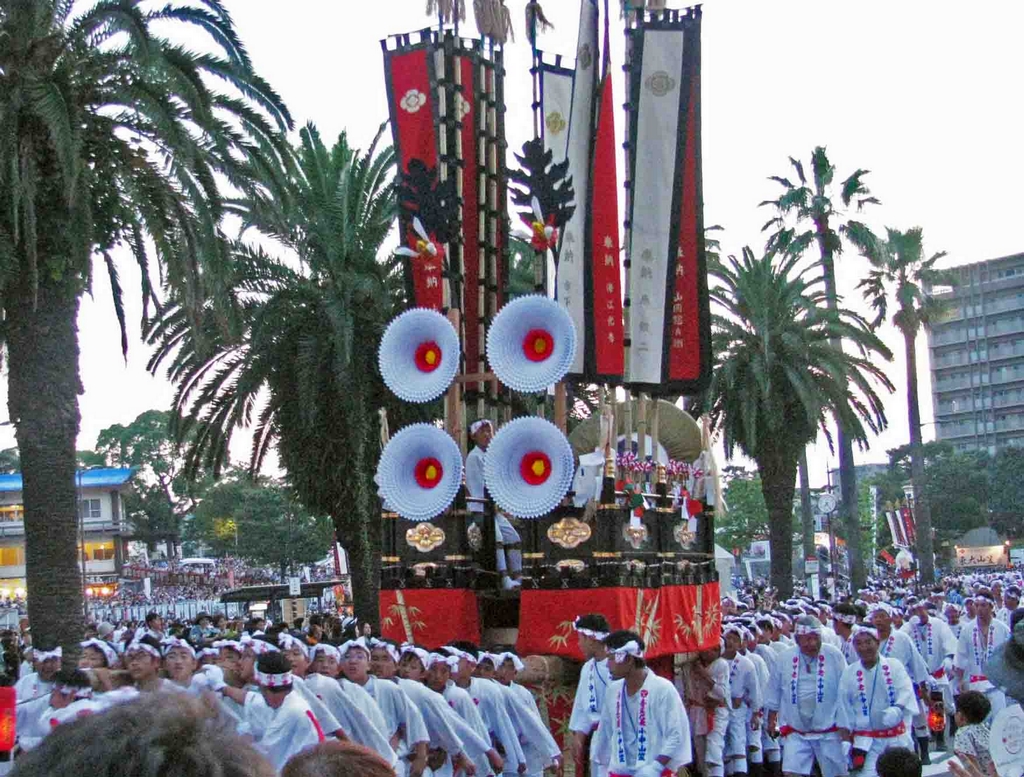
Tobata Gion Yamagasa, in Kitakyushu-city
2024/03/07
Festivals and EventsFloat Festivals including Tobata Gion Yamagasa inscribed on UNESCO Intangible Heritage List in 2016. The festival has a lot of energy and is very dynamic as is the case with festivals such as the Hakata Gion Yamagasa,with young men wearing the happi (festival costume) and hachimaki (head band), carrying the Yamagasa (festival float) and walking around the town shouting “yoitosa yoitosa”. What is remarkable is the way the character of the Yamagasa changes from daytime, with the Nobori Yamagasa (festival floats with flags); to nighttime with the Chochin Yamagasa ( festival floats with lanterns). The highlight is the Chochin Yamagasa Contest held in Tobata Ward Office on Saturday night. The Nobori Yamagasa used during the daytime is dismantled, and the 10 metre-high Chochin Yamagasa,with its 309 lanterns arranged in 12 tiers, is assembled and carried along in a race by dozens of young people crying “yoitosa yoitosa”.
 WhatsApp: Chat with us