
-
-
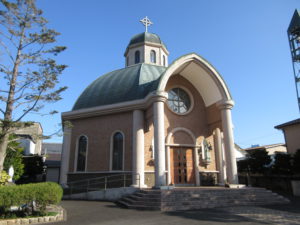
Shimabara Church
2026/04/04
Shimabara travel guideThis Church is house of prayer for tens of thousands Christians who were martyred between 1612 and 1658 throughout the Shimabara Peninsula. It was built in 1997 to commemorate the 400th anniversary of the martyrdom of 26 Japanese Saints and the 360th anniversary of the Shimabara Rebellion. The Cathedral is a beautiful octagonal building with a large octagonal dome.
-
-
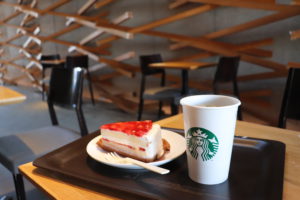
Starbucks at Dazaifu Shrine approach path
2024/02/08
Japanese cuisine, Staff BlogCoffee break under the traditional atmosphere. The restaurant was designed by renown architecture designer Kengo Kuma in 2011. The concept of the design is Harmony of Modern and traditional by natural material; 2000 cedar timber is assembled in a traditional wood structure without using nails. Enjoy the luxurious time in the warmth of wood and the scent of coffee.
-
-
26 Saints Pilgrimage route on January 28 in 1597
2024/02/07
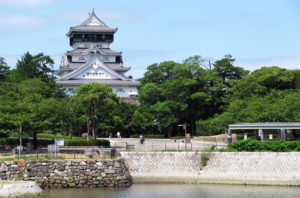
History of Japanese Christianity, Staff BlogThe route of this day was from Kokura in Kitakyushu to Akama in Munakata via Koyanose , the distance was 34.5 km. Started at Kokura accommodation around Kokura Castle, and walked to Tobata port along the Kanmon Strait. Transfered to Wakamatsu from Tobata by a boat. Walked to Akama through Ashiya and Koyanose, and then stayed at Akama.
-

-
26 Saints Pilgrimage route on January 27 in 1597
2024/02/06
History of Japanese Christianity, Staff BlogThere were 24 martyrs when they started Kyoto, but two more martyrs were added in Shimonoseki, then became 26 martyrs in total. The route of this day was from Karato in Shimonoseki to Kokura in Kitakyushu. Rode on the boat at Karato, and transfer to Dairi in Kitakyushu Karato Kanmon Strait Dairi They landed at Dairi and walked 6 km along the coastline of Kanmon Strait to Kokura, where was the place to stay. It is said that they stayed around Kokura Castle.
-
-
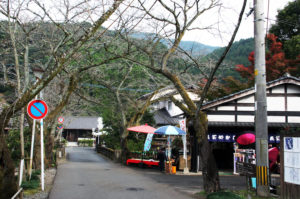
Akizuki, in Asakura
2024/02/05
Staff BlogAkizuki is a former Castle town located in northern part of Asakura. It is a famous spot for cherry blossom in spring and fall foliage in autumn. You can enjoy the harmony of countryside landscape and former castle town scenery that makes the atmosphere like a time of 400 years ago.
-
-
Japan’s first Seminary
2024/02/02
History of Japanese Christianity, Staff BlogIn 1579, Priest Alessandro Valignano of Jesus from Portugal came to Japan to inspect the situatin of missionary work in Japan. Valignano believed that training Japanese priests and monks was the key to the success of missionary work in Japan. And then, he made the Japan’s first Seminary in Shimabara peninsula in 1580, where was the Hinoe Castle town of Arima Harunobu. Among the first students, included member of Tensho youth mission to Europe who were Ito Mansho Ito, Chijiwa Miguel, Hara Martino and Nakaura Julian. Note : Seminary is an educational institution established in Japan by the Society of Jesus between 1580 and 1614 to train Jesuit priests and monks.
-
-
Japan’s modern Steel industry in 1901
2024/03/15
Japanese history, Staff BlogJapanese industry at the end of 19th century was 200 years behind. After Mathew C Perry came to Japan in 1853, Japan’s industrial Revolution was started. Japan’s modern Steel industry was started as Yawata Steel Works at Higashida district in Kitakyushu in 1901. Since then, the Steel Works greatly contributed to Japan’s industrial modernization. And Japan became the world’s leading industrialized country in only 100 years.
-

-
Atomic bomb in Nagasaki in 1945
2024/01/13
Japanese history, Staff BlogDisastrous War must not be repeated. The plutonium atomic bomb exploded about 500m over the central monument at 11:02 a.m. on August 9, 1945. The most part of Nagasaki was destroyed, and a tremendous number of lives were lost. And about 70,000 of Nagasaki’s 240,000 residents died instantly, and up to 60,000 were injured. The radius of total destruction was about 1.6km, followed by fires across the northern portion of the city to 3.2km south of the bomb. The total number of residents died may have been as many as 80,000, including those who died from radiation poisoning in the following months. Even now, many atomic bomb survivors are suffering. The list of names of the atomic bomb victim who died up to now is stored in the monument.
-
-
Hidden Christian site, Kasuga Village
2024/01/31
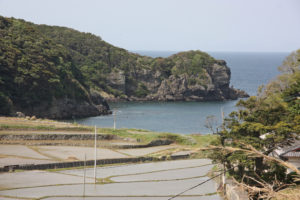
History of Japanese Christianity, Staff BlogKasuga Village and Mount Yasugatake is a Christian Pilgrimage site and is registered on the World Heritage as Hidden Christian Sites in the Nagasaki Region. This idyllic, remote village was refuge to a small community of Hidden Christians who practiced here for centuries, far from the prying eyes of the government. After the ban on Christianity was lifted, the local villagers decided to continue practicing their own unique brand of the religion rather than rejoin the Catholic Church. As a result, churches were not erected in the village, and the religion remains outwardly invisible.
-
-
Hidden Christians
2024/01/30
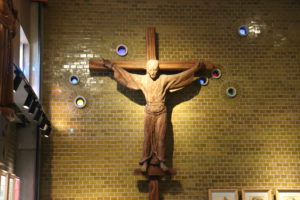
History of Japanese Christianity, Staff BlogOppression against Christians began with the Tokugawa shogunate’s ban on Christianity. The missionaries were expelled to oversea countries, and those who remained secretly in Japan were also captured and martyred. Konishi Mansho who was the last Priest during the ban on Christianity, was also martyred in 1644. In the absence of priests, believers pretended to be Shinto or Buddhist ostensibly in order to protect their faith. The Christian organizations were created in each village to continue the Christian faith and the faith was passed down from parents to children and from children to grandchildren. Hidden Christian Even after lifted ban on Christianity, people who continue to practice their faith in the same way as before are called “Hidden Christians”. Hidden Christians in Nagasaki have been passed down since the ban on Christianity in Hirado, Ikitsuki, the Goto Islands, Sotome, and around Nagasaki.
 WhatsApp: Chat with us