
Environmental Future city Kitakyushu
This Tourist information is created by Japan KYUSHU Tourist for enjoyment
of your travel. We are a Travel Agent in Fukuoka specializing in Kyushu.
When you have an idea or a plan for traveling in Kyushu, Japan, please contact
us by sending an Enquiry.
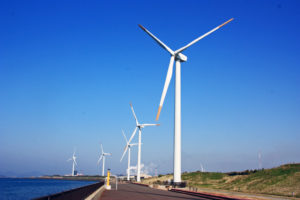
Kitakyushu is the city of leading Global Environment
Kitakyushu-city has the long history of Environmental improvement since the pollution problem
experienced in 1960′. Now Kitakyushu-city is leading World environment as the Environmental
Future City selected by Japanese Government and also designated as the first ‘ Model City for
Green Growth ‘ in Asia by the Organization for Economic Co-operation and Development
(OECD) in 2011.
 |
 |
 |
The history of Environmental improvement
The History has commenced in 1901. The city once experienced the worst air pollution in Japan
and saw Dokai Bay turned into a “sea of death.” But it regained blue skies after overcoming its
pollution problem by the efforts of city, companies as well as the women’s association. Kitakyushu
City, once known as a “town of pollution,” now plays the role of the driving force in creating a
recycling-oriented society in Japan making use of the experience and know-how it accumulated
in the process of overcoming its pollution in order to provide international cooperation.
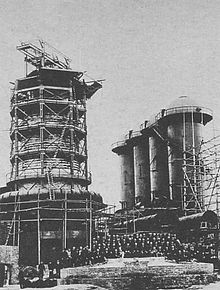
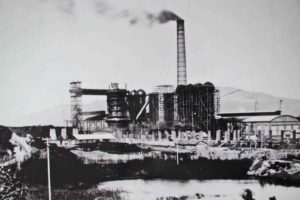
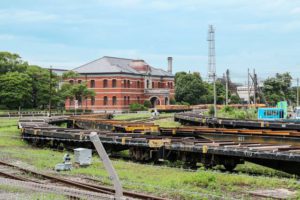
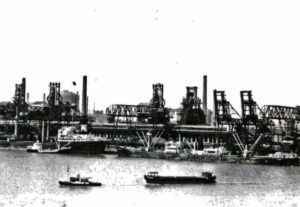
The city grew as an industrial city after the establishment of Yawata Steel Works in 1901.
It led Japan during the period of modernization and high economic growth with a focus
placed on heavy industry.
 |
 |
 |
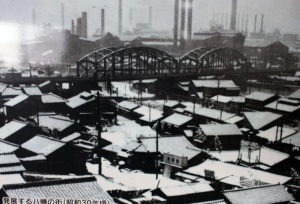
Back then, plumes of smoke coming out of the steelworks were referred to as “seven-colored
smoke” which was sung as part of the lyrics of the song of former Yahata City as it was regarded
as a symbol of prosperity. However, the prosperity of industries brought about severe pollution
and quite naturally the “seven-colored smoke” polluted the air and caused dust deposition.
 |
 |
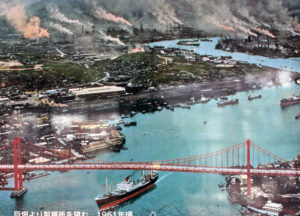 |
In the 1960s, air pollution in the Kitakyushu area was the worst in Japan and Dokai Bay was turned
into a “sea of death” due to effluent from factories. It was citizens who first noticed this problem of
pollution. The city started to hear the voices of its residents saying such things as, “my house is
becoming sandy” and “the laundry gets dirty” from around 1950.
The Women’s Association in Tobata area stood up, investigated the problem themselves and asked
the council, administration and companies to take measures against pollution. ‘I Want Blue Sky’, a
documentary film produced by the Tobata Women’s Association in 1965 was what symbolized the
citizens’ campaign calling for measures against pollution.
Pushed by the voices of its citizens, the Kitakyushu administration started to take action to grasp
the actual situation by measuring the level of air pollution. It then gave instructions and conducted
on-site inspections at these companies urging them to take measures to improve the situation.
Finally, the city concluded a pact on pollution prevention with each plant and established the Council
on Air Pollution Prevention made up of the city, Fukuoka Prefecture, then Regional Bureaus of
International Trade and Industry and about 30 companies in the city.
These companies responded by putting pollution control facilities in place as well as improving the
process of production.
In the meantime, the Air Pollution Control Act and Noise Regulation Act came into force in 1968 and
the following year, in 1969, a smog alert was issued for the first time in Japan. Fourteen pollution
control related bills passed the so-called ‘Pollution Diet’ in 1970. Thus, public concern towards
pollution problems grew high throughout Japan while in Kitakyushu, the city and companies worked
hand in hand to tackle the pollution problem which resulted in rapid improvement in the environment.
 |
 |
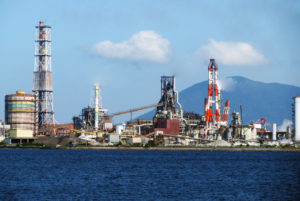 |
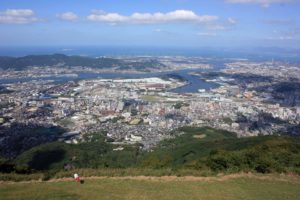
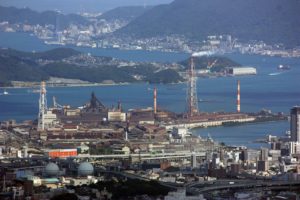
As a result, by around 1980, the blue sky came back to the town once covered with ‘ seven-colored
smoke.’ Furthermore, over 100 species of fish live in Dokai Bay which was once nicknamed the ‘sea
of death’ where not even bacteria could live. In 1985, the Organization for Economic Co-operation
and Development (OECD) introduced Kitakyushu in its White Paper on the environment as a city
that transformed itself from a ‘Gray Town’ into a ‘Green Town.’ Also the city was selected as one of
the ‘Starry Towns’ with a favorable atmospheric environment in the ‘Starry Town Contest’
held by the Environment Agency in 1987.
These initiatives by Kitakyushu City are highly recognized by the global society. In 1990, the city
received the ‘Global 500 Award’, which is given by the UN Environment Program (UNEP) to
individuals and organizations that combat environmental issues, and was the first local government
to win the Award in Japan. At the Earth Summit held in Rio de Janeiro, Brazil in 1992, Kitakyushu
City was honored with the ‘Local Government Honors Award. The city is the only local government
to win the Award in Japan.
 |
 |
 |
In addition, the initiative towards a better environment was enhanced and it started the sorted
collection of cans and bottles in 1993. In 1998, a system in which residents are obliged to use
designated plastic bags for municipal waste started. In 2001, ‘Kitakyushu Expo-Festival 2001’
with the environment as a theme was held at Higashida area, an idle land owned by Nippon
Steel Corporation, where infrastructure improvement work was going on based on the concept
of ‘Kitakyushu Renaissance. Then, the concept of a ‘Green Village’ in Yahata Higashida began
in 2003. Thus, efforts towards a better environment advanced further.
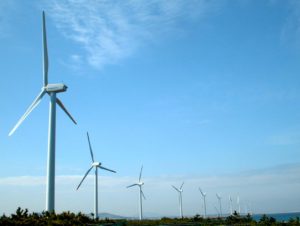
As mentioned above, Kitakyushu was recognized as the ‘Environmental Model City’ together with
12 other local governments in 2008. The ‘Kitakyushu Asian Center for Low Carbon Society’ was
opened in 2010, and in 2011 the city was selected as a ‘Environmental Future City’ and also as
the first ‘Model City for Green Growth’ in Asia by the Organization for Economic Co-operation and
Development (OECD).
 |
 |
 |
A new challenge as the driving force towards realizing a global low carbon society has started
in Kitakyushu City where Japanese industry started.
Plastic PET Bottle recycling
This Tourist information is created by Japan KYUSHU Tourist for enjoyment
of your travel. We are a Travel Agent in Fukuoka specializing in Kyushu.
When you have an idea or a plan for traveling in Kyushu, Japan, please contact
us by sending an Enquiry. Make an Enquiry
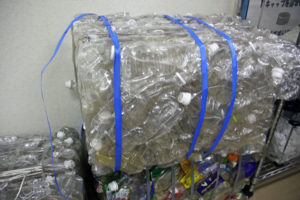
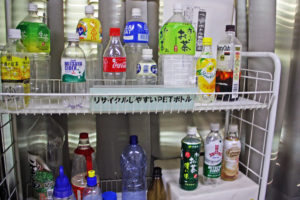
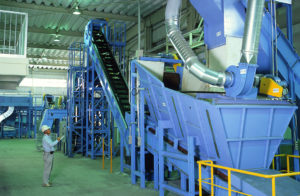
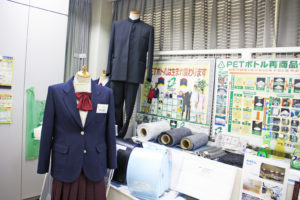
Plastic PET Bottle recycling by Nishi-Nippon PET Recycling. Based on the “Law for Recycling
of Containers and Packaging,” plastic (PET: polyethylene terephthalate) bottles are sorted by
municipalities and recycled into pellets/flakes, which can be used as raw materials for polyester
fibers, egg cartons.
 |
 |
 |
 |
 |
 |
General information
| Address | 1-62 Hibikimachi Wakamatsu, Kitakyushu-city, Fukuoka-prefecture |
| Access | A 30 minutes ride a vehicle from JR Kokura Station |
| Days of visit | Weekdays except Saturdays, Sundays and National Holidays |
| Fee | No visiting fee is required |
| Booking | Japan KYUSHU Tourist can arrange the tour |
Kitakyushu Eco-Town Center
This Tourist information is created by Japan KYUSHU Tourist for enjoyment
of your travel. We are a Travel Agent in Fukuoka specializing in Kyushu.
When you have an idea or a plan for traveling in Kyushu, Japan, please contact
us by sending an Enquiry. Make an Enquiry
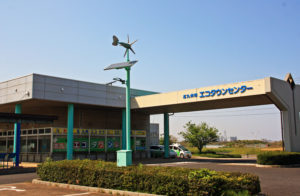
Eco Project information center that supports the Eco-town. It introduces initiatives and activities
implemented in Eco-town to encourage people to proactively used the facility for such activities
as environmental study sessions and interaction amongst visitors.
Kitakyushu Eco-Town is a project being developed after the city received approval from the central
government. It is composed of two main areas; a corporate park (Comprehensive Environmental
Industrial Complex, Hibiki Recycling Area) located in Hibikinada area in Wakamatsu Ward where the
majority of the companies engaged in the recycling business based on the Eco-Town Project, and a
practical research area where enterprises and universities conduct research.
 |
 |
 |
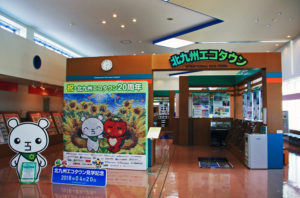
First Eco-Town Center in Japan opened in June, 2001
With an eye to building a “resource-recycling society,” Kitakyushu-city is engaged in the
‘Kitakyushu Eco-Town Project’ in which an environmentally-friendly society is formed by bringing
together recycling plants and research institutes. The Kitakyushu Eco-Town Center plays the role of
an information center that supports the Eco-Town. It introduces initiatives and activities implemented
in Eco-Town to encourage people to proactively use the facility for such activities as environmental
study sessions and interaction amongst visitors.
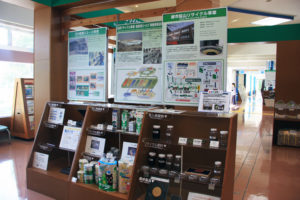
With visitors coming from all over Japan, the center takes reservations for visits as well as provides
tours of recycling plants and research facilities. Inside the center, technologies and products related
to the environment and recycling are exhibited while the details of the project of the Kitakyushu
Eco-Town Center are introduced on panels hanging on the wall. Furthermore, the center provides
facilities available for environmental study, exchange activities and research work.
General information
| ・Address | 10-20 Koyomachi Wakamatsu Kitakyushu-city, Fukuoka-prefecture |
| ・Access | A 30 minutes ride a vehicle from JR Kokura Station |
| ・Opening hours | 9h00 to 17h00 |
| ・Days Closed | Sunday, National holiday, December 29 through January 3 |
| ・Fee | No entrance fee is required |
|
・Booking |
Contact Japan KYUSHU Tourist for booking |
Environmental improvement history of Kiyakyushu
This Tourist information is created by Japan KYUSHU Tourist for enjoyment
of your travel. We are a Travel Agent in Fukuoka specializing in Kyushu.
When you have an idea or a plan for traveling in Kyushu, Japan, please contact
us by sending an Enquiry.
The city once experienced the worst air pollution in Japan
Saw Dokai Bay turned into a “sea of death.” But it regained blue skies after
overcoming its pollution problem by the efforts of city, companies as well
as the women’s association.
Kitakyushu City, once known as a “town of pollution,” now plays the role of the driving
force in creating a recycling-oriented society in Japan making use of the experience
and know-how it accumulated in the process of overcoming its pollution in order to
provide international cooperation.
The city grew as an industrial city after the establishment of Yawata Steel Works in 1901.
It led Japan during the period of modernization and high economic growth with a focus
placed on heavy industry.

Back then, plumes of smoke coming out of the steelworks were referred to as
“seven-colored smoke” which was sung as part of the lyrics of the song of former
Yahata City as it was regarded as a symbol of prosperity. However, the prosperity
of industries brought about severe pollution and quite naturally the “seven-colored
smoke” polluted the air and caused dust deposition.
In the 1960s, air pollution in the Kitakyushu area was the worst in Japan and Dokai
Bay was turned into a “sea of death” due to effluent from factories.
It was citizens who first noticed this problem of pollution. The city started to hear the
voices of its residents saying such things as, “my house is becoming sandy” and
“the laundry gets dirty” from around 1950. The Women’s Association in Tobata area
stood up, investigated the problem themselves and asked the council, administration
and companies to take measures against pollution. ‘I Want Blue Sky’, a documentary
film produced by the Tobata Women’s Association in 1965 was what symbolized the
citizens’ campaign calling for measures against pollution.
Pushed by the voices of its citizens, the Kitakyushu administration started to take action
to grasp the actual situation by measuring the level of air pollution. It then gave
instructions and conducted on-site inspections at these companies urging them to take
measures to improve the situation. Finally, the city concluded a pact on pollution
prevention with each plant and established the Council on Air Pollution Prevention
made up of the city, Fukuoka Prefecture, then Regional Bureaus of International
Trade and Industry and about 30 companies in the city. These companies
responded by putting pollution control facilities in place as well as improving the process
of production.
In the meantime, the Air Pollution Control Act and Noise Regulation Act came into
force in 1968 and the following year, in 1969, a smog alert was issued for the first
time in Japan.
Fourteen pollution control related bills passed the so-called ‘Pollution Diet’ in 1970.
Thus, public concern towards pollution problems grew high throughout Japan while in
Kitakyushu, the city and companies worked hand in hand to tackle the pollution
problem which resulted in rapid improvement in the environment.
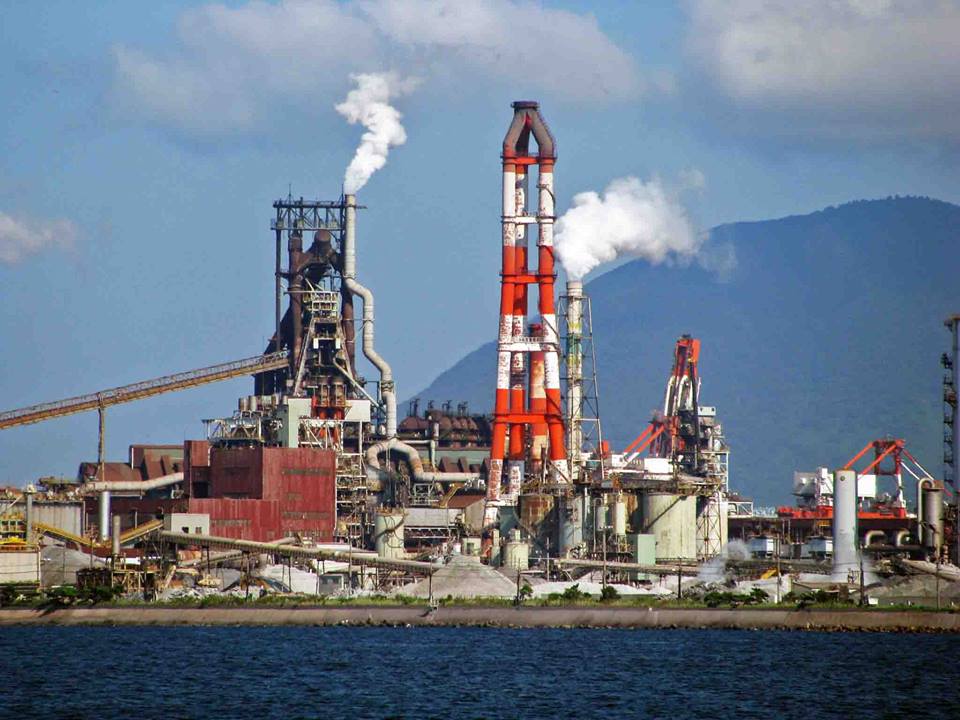
As a result, by around 1980, the blue sky came back to the town once covered with ‘
seven-colored smoke.’ Furthermore, over 100 species of fish live in Dokai Bay which
was once nicknamed the ‘sea of death’ where not even bacteria could live.
In 1985, the Organization for Economic Co-operation and Development (OECD)
introduced Kitakyushu in its White Paper on the environment as a city that transformed
itself from a ‘Gray Town’ into a ‘Green Town.’ Also the city was selected as one of the
‘Starry Towns’ with a favorable atmospheric environment in the ‘Starry Town Contest’
held by the Environment Agency in 1987.
These initiatives by Kitakyushu City are highly recognized by the global society. In 1990,
the city received the ‘Global 500 Award’, which is given by the UN Environment
Program (UNEP) to individuals and organizations that combat environmental issues,
and was the first local government to win the Award in Japan. At the Earth Summit
held in Rio de Janeiro, Brazil in 1992, Kitakyushu City was honored with the ‘Local
Government Honors Award. The city is the only local government to win the Award
in Japan.
In addition, the initiative towards a better environment was enhanced and it started the
sorted collection of cans and bottles in 1993. In 1998, a system in which residents are
obliged to use designated plastic bags for municipal waste started. In 2001,
‘Kitakyushu Expo-Festival 2001’ with the environment as a theme was held at
Higashida area, an idle land owned by Nippon Steel Corporation, where infrastructure
improvement work was going on based on the concept of ‘Kitakyushu Renaissance.
Then, the concept of a ‘Green Village’ in Yahata Higashida began in 2003.
Thus, efforts towards a better environment advanced further.
As mentioned above, Kitakyushu was recognized as the ‘Environmental Model City’
together with 12 other local governments in 2008. The ‘Kitakyushu Asian Center for
Low Carbon Society’ was opened in 2010, and in 2011 the city was selected as a
‘Environmental Future City’ and also as the first ‘Model City for Green Growth’ in
Asia by the Organization for Economic Co-operation and Development (OECD).
A new challenge as the driving force towards realizing a global low carbon society
has started in Kitakyushu City where Japanese industry started.
Kurogane Railway
This Tourist information is created by Japan KYUSHU Tourist for enjoyment
of your travel. We are a Travel Agent in Fukuoka specializing in Kyushu.
When you have an idea or a plan for traveling in Kyushu, Japan, please contact
us by sending an Enquiry.
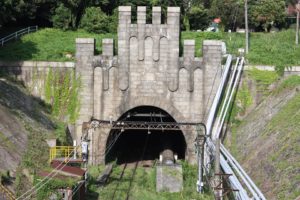
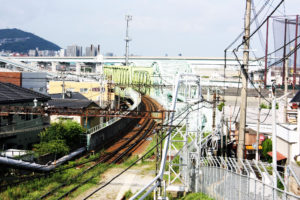
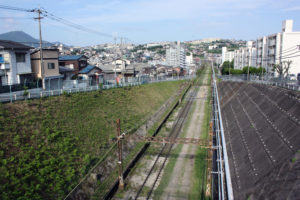
Dedicated Railway for Yawata Steel Works. The railway connected between Yawata and
Tobata, construction work took three years, and completed in 1930. The most difficult
and hard work was making Miyatayama tunnel with a total length of 1180 m due to suffering
from floods. The gates of the Miyatayama tunnel are decorated with stately designs.
|
The rail way crossing the road |
Miyatayama tunnel Yahata side |
Miyatayama tunnel Tobata side |
 |
 |
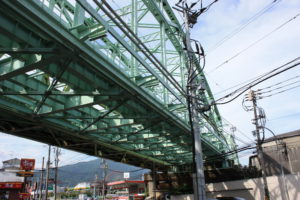 |
General information
| Address | Connected between Higasida, Yahata-higasiku and Nalabaru, Tobota-ku, Kitakyushu-city |
Kokura Castle Garden
This Tourist information is created by Japan KYUSHU Tourist for enjoyment
of your travel. We are a Travel Agent in Fukuoka specializing in Kyushu.
When you have an idea or a plan for traveling in Kyushu, Japan, please contact
us by sending an Enquiry.
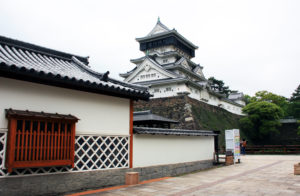
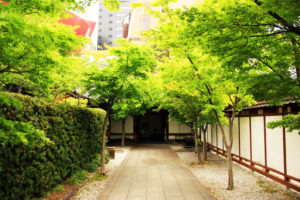
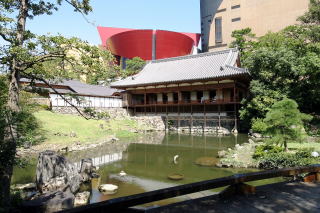
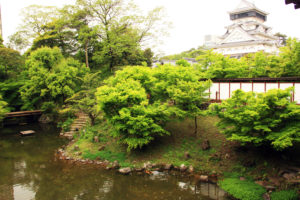
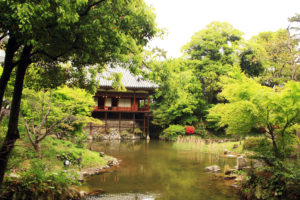
Kokua Castle Garden made at the former site of Shitayashiki (lord’s guest house) located
next to Kokura Castle. This garden consists of a Japanese garden and a daimyo yashiki
(a lord’s house), a building of the Shoin-zukuri type (a style of Japanese domestic architecture).
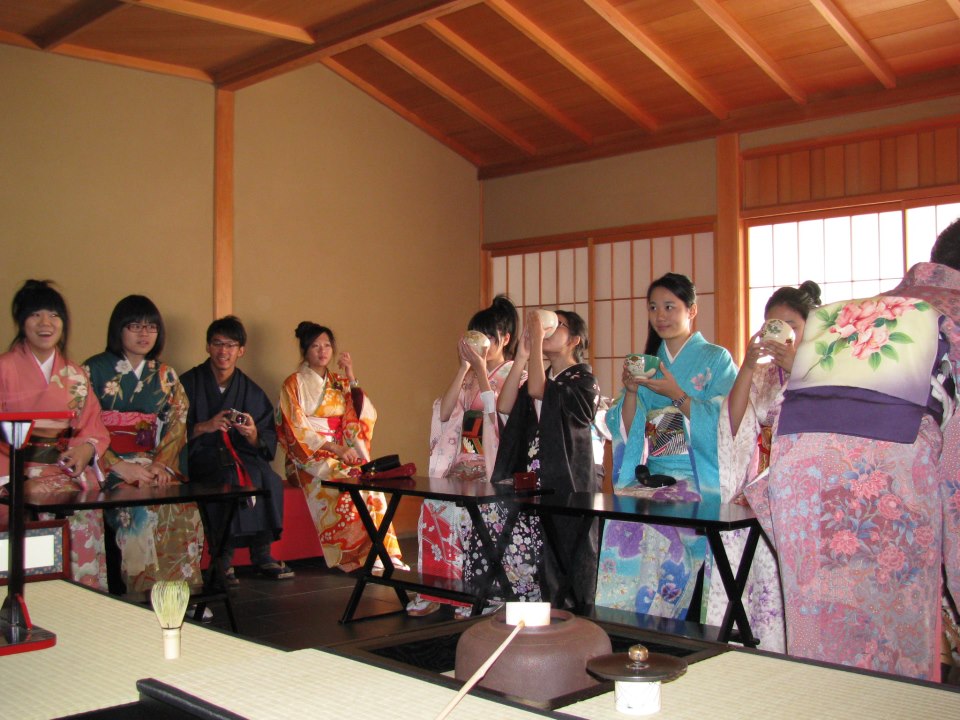
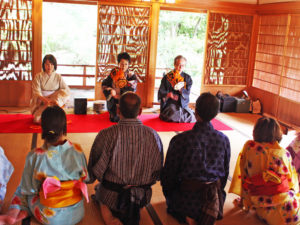
In this garden, not only can you see Japanese traditional architecture, but also enjoy the Tea
Ceremony at the Experience Zone.
 |
 |
 |
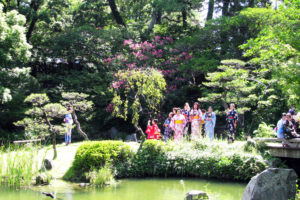
Japanese Garden
 |
 |
 |
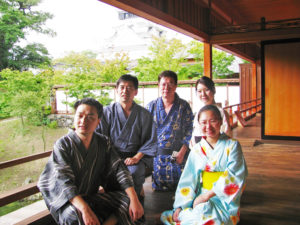
Time to enjoy dressing in Kimono, tea ceremony experience, and Rickshaw riding experience
Kokura Castle Garden and Kokura Castle. You can also take beautiful photographs in this location
to provide you with wonderful memories and recollection of your visit to Kokura.
 |
 |
 |
General information
| Address | 1-2 Jonai Kokura-kita, Kitakyushu-city, Fukuoka-prefecture |
| Access |
15 minutes walk from JR Kokura Station |
| Open hours |
9:00 to 18:00 April to October 9:00 to 17:00 November to March |
| Admission fee | JPY 300 |
| Days closed | No closing days |
Mojiko Station
This Tourist information is created by Japan KYUSHU Tourist for enjoyment
of your travel. We are a Travel Agent in Fukuoka specializing in Kyushu.
When you have an idea or a plan for traveling in Kyushu, Japan, please contact
us by sending an Enquiry.
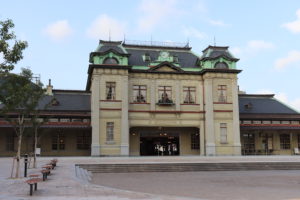
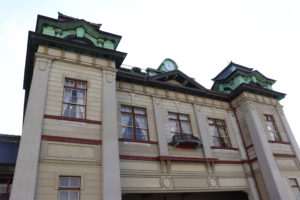
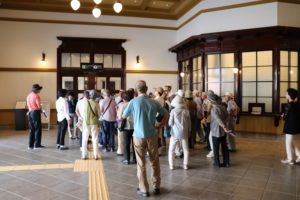
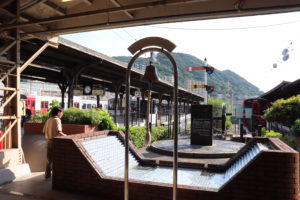
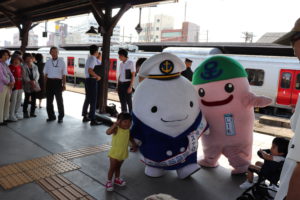
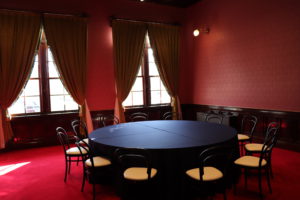
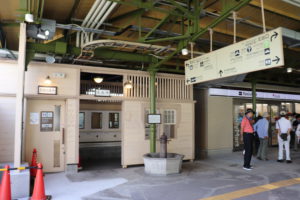
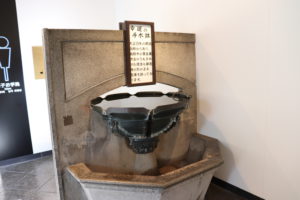
It is the only Station building that is designated as an Important National Cultural Property
together with Tokyo Station. Mojiko Station is a beautiful station built in the Renaissance
style and modeled on the Termini Station in Italy.
 |
 |
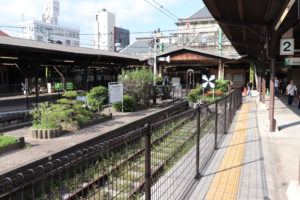 |
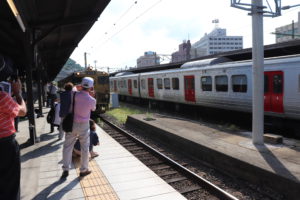
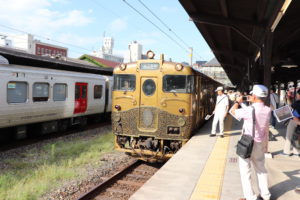
Kyushu Railway (nowadays JR Kyushu) began rail services between Mojiko Station
and Takase Station in 1891 and the Station building was built in 1914.
 |
 |
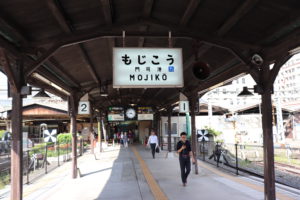 |
This was the first railway in Kyushu and subsequently Mojiko prospered greatly as a gateway
to the Kyushu region after that.
 |
 |
 |
This was the first railway in Kyushu and subsequently Mojiko prospered greatly as a
gateway to the Kyushu region after that.
 |
 |
 |
General information
| Address |
1-5-31 Nishikaigan, Moji-ku, Kitakyushu-city, Fukuoka-city |
| Access |
13 minutes by a JR local train from JR Kokura station |
Kokura Castle
This Tourist information is created by Japan KYUSHU Tourist for enjoyment
of your travel. We are a Travel Agent in Fukuoka specializing in Kyushu.
When you have an idea or a plan for traveling in Kyushu, Japan, please contact
us by sending an Enquiry.
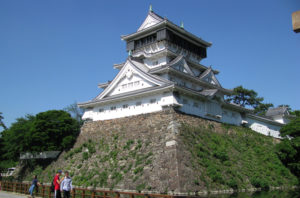
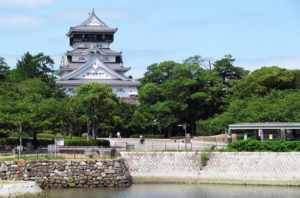
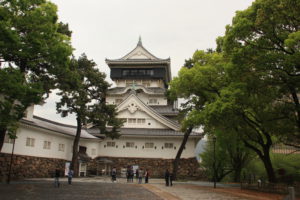
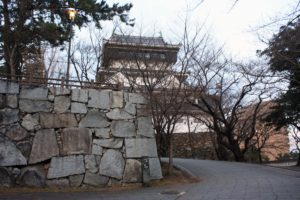
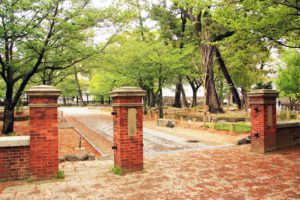
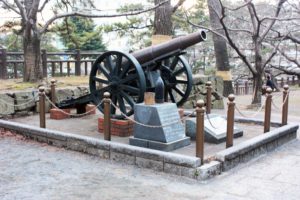
Kokura was the transportation hub from Honshu and all areas of Kyushu during Edo
period from 17th to 19th century. The Castle town was constructed in the Kokura and
Kokura Castle was build in 1602 and spent 7 years construction at the north side of
Kokura facing to Kanmon strait and next to Murasaki river.
The height of Castle tower is 6th tallest in Japan after Himeji Castle.
The castle had a fivefold and six layered donjon and it was built in the architectural
style called “Kara-zukuri”.
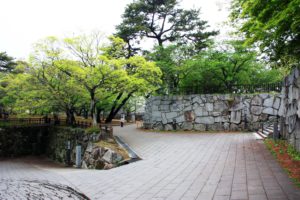
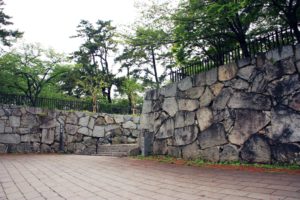
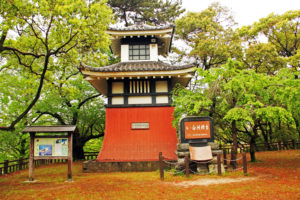
You can take many photos of traditional Japanese scenery that you have never
seen before.
Castle tower
 |
 |
 |
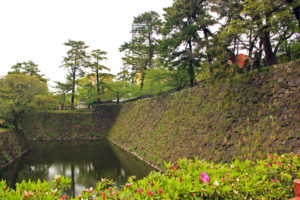
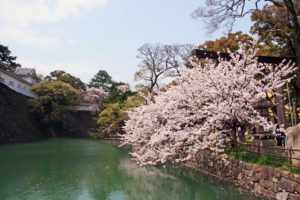
Moat around Castle tower
 |
 |
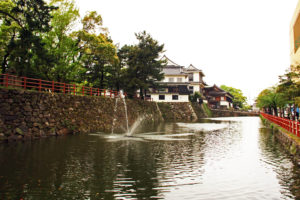 |
Around Castle
 |
 |
 |
 |
 |
 |
| Address | 2-1 Jonai Kokura-kita, Kitakyushu-city, Fukuoka-prefecture |
| Access |
15 minutes walk from JR Kokura Station 70 minutes by a vehicle from Fukuoka-city 100 minutes by a vehicle from Beppu 100 minutes by a vehicle from Yufuin |
Kanmonkyo bridge
This Tourist information is created by Japan KYUSHU Tourist for enjoyment
of your travel. We are a Travel Agent in Fukuoka specializing in Kyushu.
When you have an idea or a plan for traveling in Kyushu, Japan, please contact
us by sending an Enquiry.
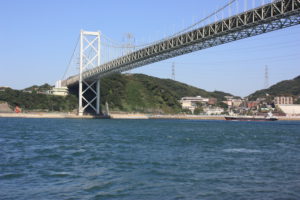
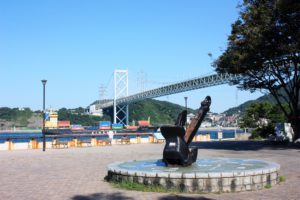
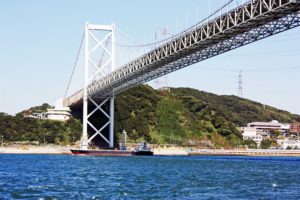
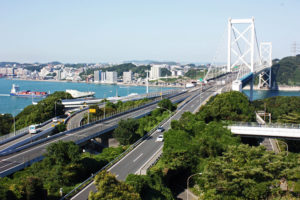
Kanmonkyo Bridge is the suspended bridge crossing the Kanmon Straits, a stretch of water
separating two of Japan’s four main islands. On the Honshu side of the bridge is Shimonoseki
and on the Kyushu side is Kitakyushu-city. The Kanmonkyo bridge was opened to vehicles
in 1973 and connected the Kyushu Expressway in 1984. It is the 34th largest suspension bridge
in the world with a central span of 712 meters.
 |
 |
 |
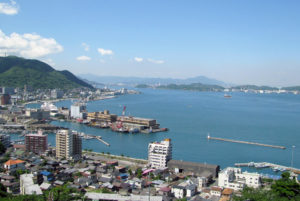
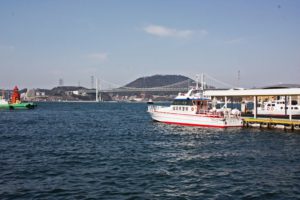
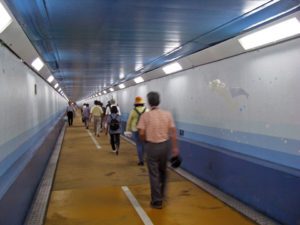
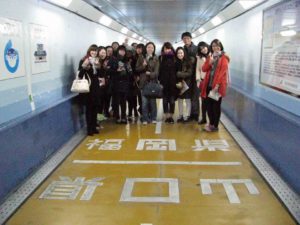
The Kanmon Straits, separating Honshu and Kyushu, is a very busy waterway with as many as
700 small and large ships a day passing through it. There are a total of seven ways to cross the
straits such as the 1,068-meter-lomg “Kanmon-kyo Bridge”, the “Shin-Kanmon Tunnel” , the
“Kanmon Pedestrian Tunnel”, to cross on foot, the “ferries”, and the like.
 |
 |
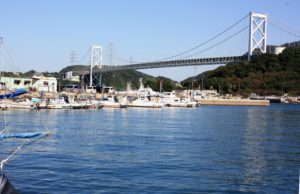 |
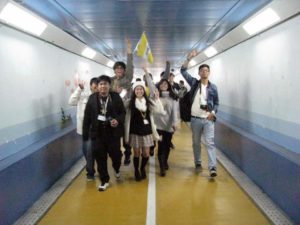
Only the place in the world ! You can cross the strait on foot. The Kanmon Strait, separating
Honshu and Kyushu, is a very beautiful and busy waterway with as many as 700 small and
large ships a day passing through it.
 |
 |
 |
General information
| Address |
Moji-ku, Kitakyushu-city, Fukuoka-prefecture Shimonoseki-city, Yamaguchi-prefecture |
| Access | 30 minutes by a vehicle from JR Kokura Station |
Uomachi & Kyomachi Shopping street
This Tourist information is created by Japan KYUSHU Tourist for enjoyment
of your travel. We are a Travel Agent in Fukuoka specializing in Kyushu.
When you have an idea or a plan for traveling in Kyushu, Japan, please contact
us by sending an Enquiry.
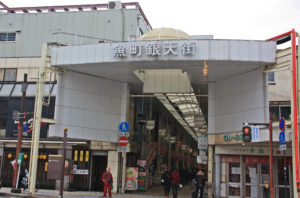
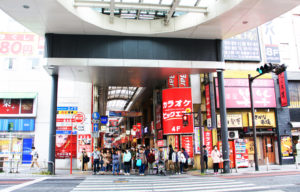
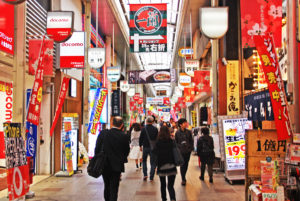
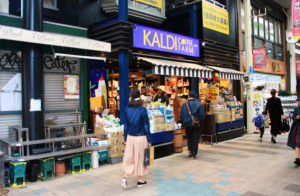
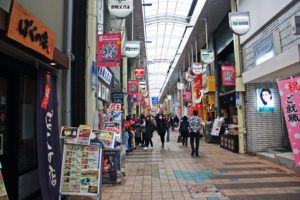
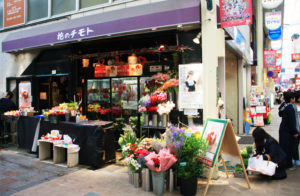
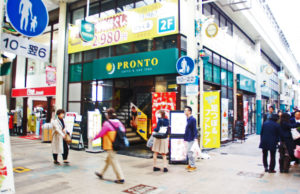
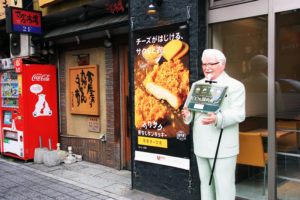
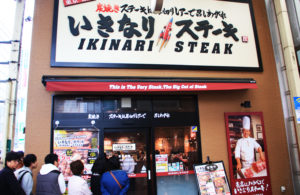
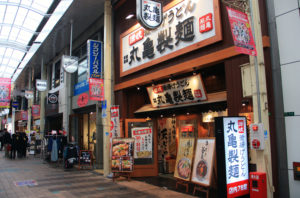
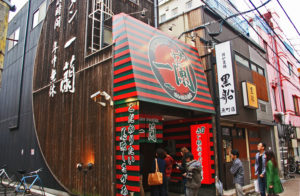
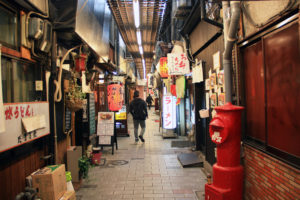
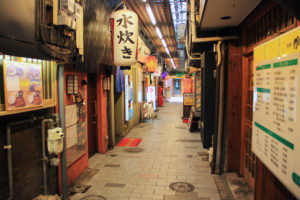
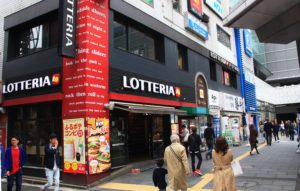
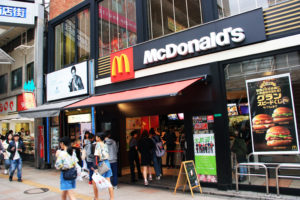
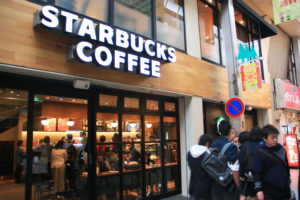
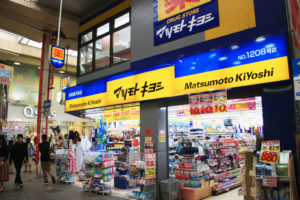
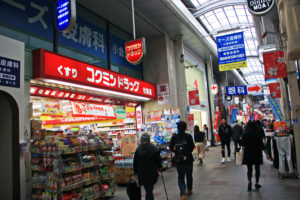
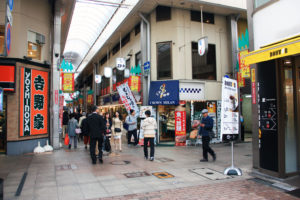
Uomachi and Kyomachi Ginteigai are the arcade downtown shopping streets connected from
JR Kokura Station. The literal meaning of Gintengai is the Silver roof arcade shopping street
and Uomachi Gintengai is the birth place of Japanese arcade shopping street constructed in
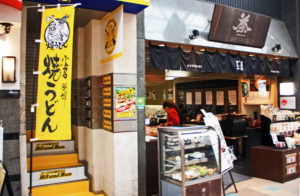
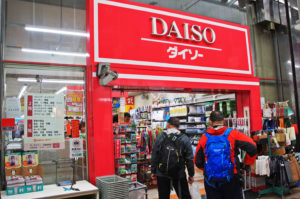
1991. Now, there are many kind of fantastic shops and restaurant along the street.
 |
 |
 |
 |
 |
 |
 |
 |
 |
 |
 |
 |
 |
 |
 |
 |
 |
 |
 |
 |
 |
General information
| Address | Kyomachi and Uomachi, Kokurakita-ku, Kitakyushu-city, Fukuoka-prefecture |
| Access | A short walk from JR Kokura Station |