
Mount Inasa
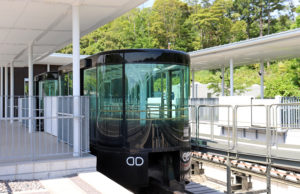
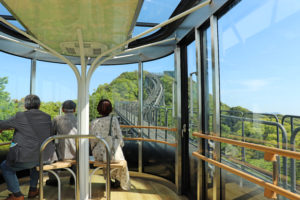
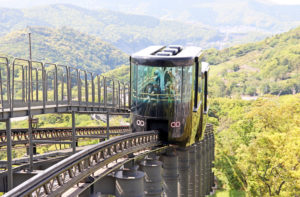
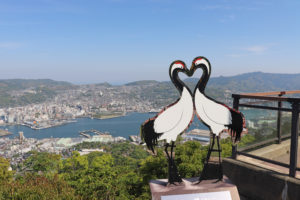
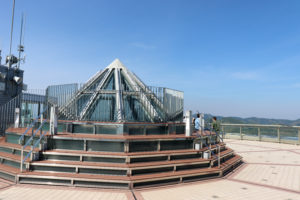
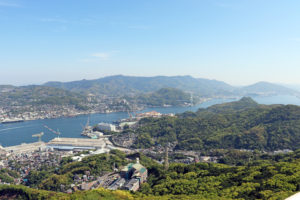
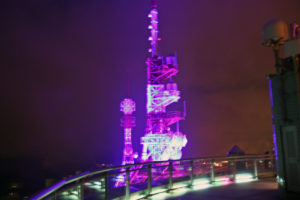
Mount Inasa is one of the best viewpoints in Nagasaki. Standing 333
meters high, the mountain is located close to JR Nagasaki Station.
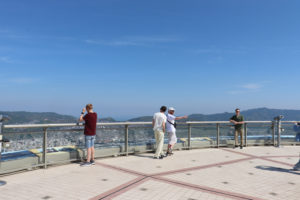
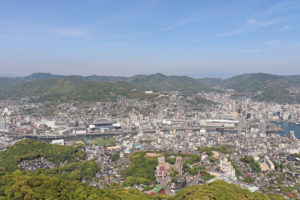
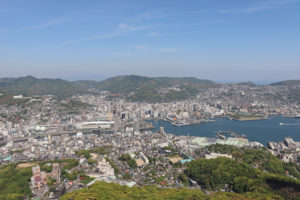
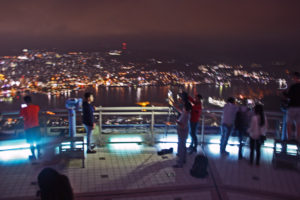
The summit can be reached by ropeway or car, offering panoramic
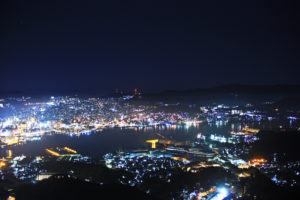
views over the city. Furthermore, the magnificent night view from
Mount Inasa has been selected as one of Japan’s Three Major
Night Views—along with Kitakyushu and Sapporo—as well as one
of the World’s Three Major Night Views, alongside Hong Kong and
Monaco.
 |
 |
 |
 |
 |
 |
 |
 |
 |
The World’s Three Major Night Views
 |
 |
 |
Dejima Wharf
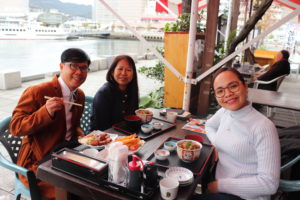
This elegant harbor is a popular destination for both international
and domestic tourists. It features around 20 unique shops and
restaurants lined up along the waterfront, offering everything from
Japanese, Western, and Italian cuisine to beauty salons and
outdoor gear shops.
|
|
|
|
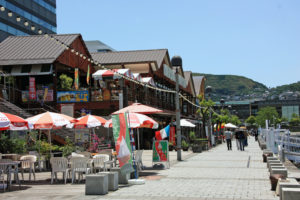
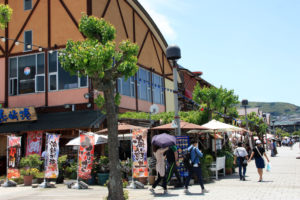
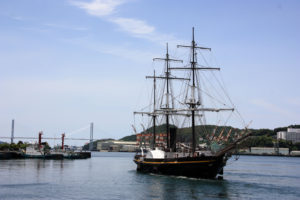
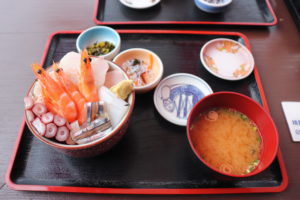
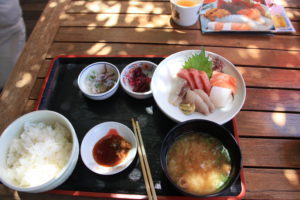
It is quite the popular spot for people who want to relax while
viewing the sea beyond as they dine outdoors.
 |
 |
 |
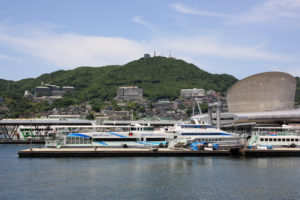
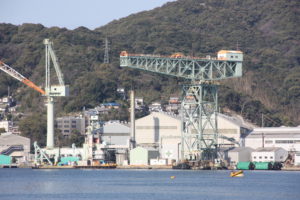
Nagasaki Harbour
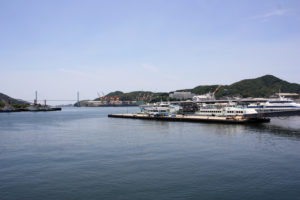
Located in the center of East Asia and surrounded by beautiful
green mountains, the city has long flourished as a hub of foreign
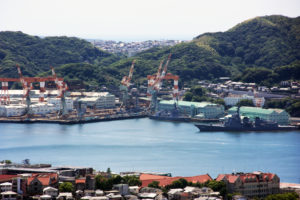
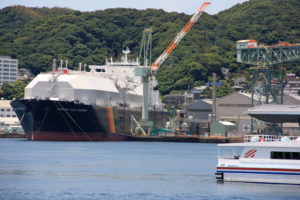
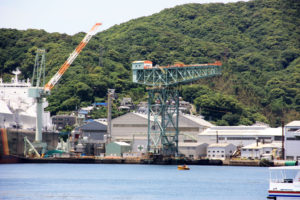
trade. Today, the harbor is home to Mitsubishi Heavy Industries,
which operates one of Japan’s largest and most historic
shipbuilding facilities.
|
|
|
|
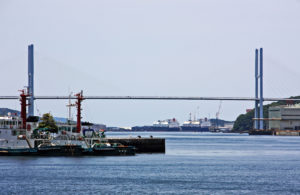
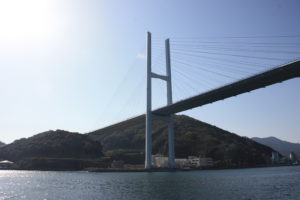
In addition to shipbuilding, the city manufactures and exports a
wide range of industrial equipment, including wind and thermal
power generators. Recently, the waterfront has been transformed
by the addition of a beautiful park and Megami Bridge (Venus Wing),
a stunning cable-stayed bridge. Combining its geographically
advantageous location with a long tradition of international
exchange, the port continues to evolve as a major global gateway.
|
|
|
|
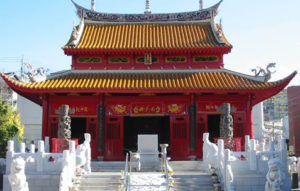
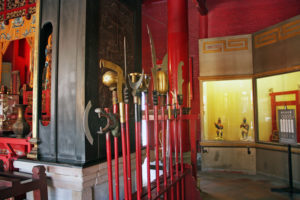
Confucius Shrine
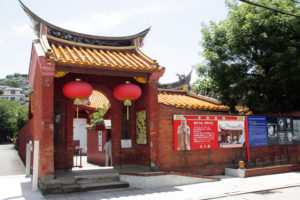
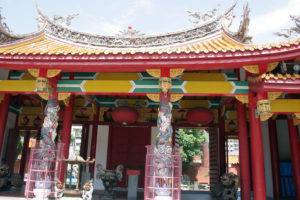
The Nagasaki Confucius Shrine is the world’s only Confucian
shrine built outside China by Chinese hands. First constructed
in 1893 by Chinese residents of Nagasaki with the support of
the Qing Dynasty government, the shrine was designed to
serve as a place of worship and learning for the Chinese
community, housing both a Confucian sanctuary and a primary
school.
 |
 |
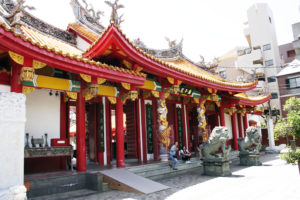 |
The buildings were severely damaged by the Atomic bomb explosion
on August 9, 1945 and were not restored and opened to the public
until September 1967. The shrine was extensively renovated in 1982.
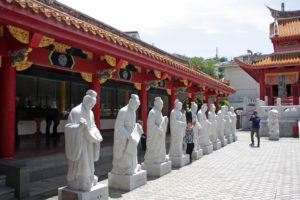
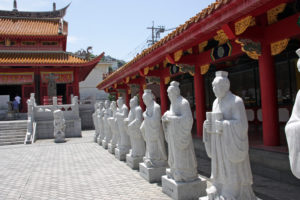
Standing outside the shrine are 72 statues representing the 72
followers of Confucius.
 |
 |
 |
A building at the rear of the shrine houses the Museum of Chinese
History and Palace Museum. It features large illuminated photographs
of the old Silk Road and models of early Chinese inventions such
as the world’s first seismograph. Displayed on the second floor are
more than 80 treasure-class articles of varying antiquity on loan
directly from the Chinese National Museum and Palace Museum
in Beijing.
 |
 |
 |
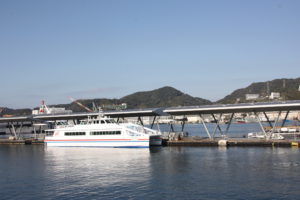
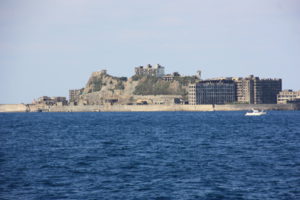
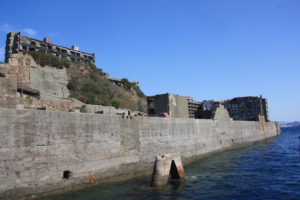
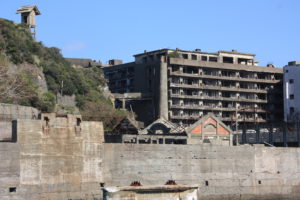
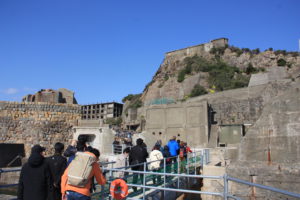
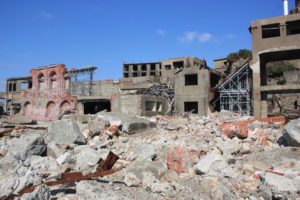
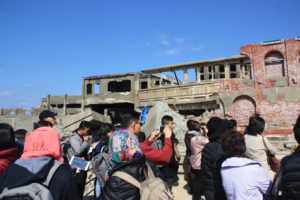
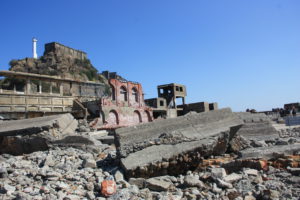
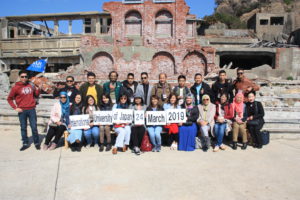
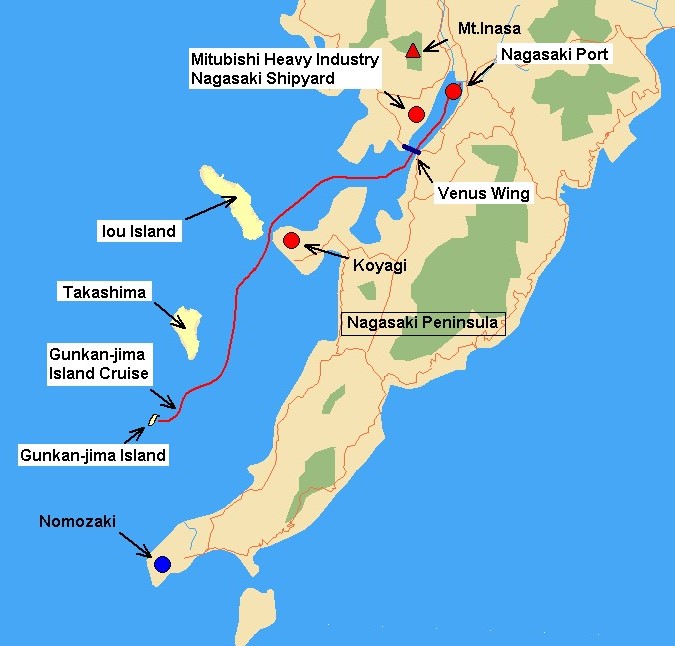
Gunkan-jima island cruise
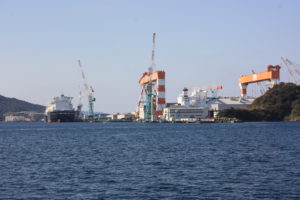
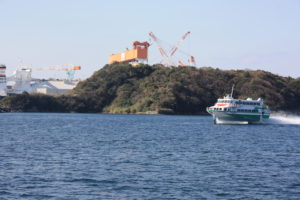
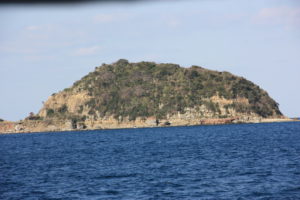
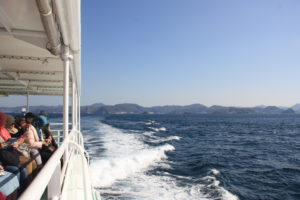
This cruise ship takes you on a journey through Tachibana Bay
from Nagasaki Port, including a landing on Hashima Island.
The island is registered as a UNESCO World Heritage site under
the ‘Sites of Japan’s Meiji Industrial Revolution.’ Today, Hashima
lies in ruins and is famously known as ‘Gunkanjima’ (Battleship
Island), named after its resemblance to the silhouette of a warship.
Located 3 km southwest of Takashima, Hashima was purchased
by Mitsubishi following the industrial success of its neighbor, as
both islands offered access to the same major undersea coal
deposit.
 |
 |
 |
 |
 |
 |
The Hashima coal mining island is an artificial, reclaimed
island and the site of Japan’s first major undersea coal
exploitation pioneered by Mitsubishi. It was once host to
one of the world’s most extraordinary mining communities.
 |
 |
 |
 |
 |
 |
 |
 |
 |
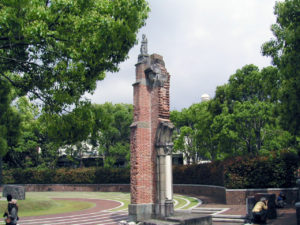
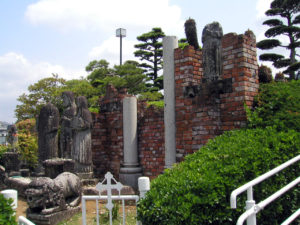
Ruins of Urakami Cathedral
If you look to the right while facing the Ground Zero Monument, you will see
a section of the damaged brick wall from the former Urakami Cathedral.
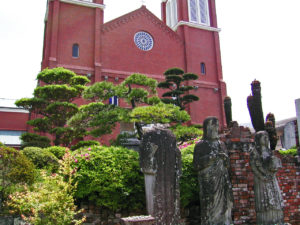
The church was originally located about 500 meters northeast of the epicenter,
on the same site as the modern, rebuilt Urakami Cathedral.
The construction of the original building began in 1895 and continued until
1925, when the twin steeples were finally completed.
|
Ruin of destroyed Urakami Cathedral |
Ruin of destroyed Urakami Cathedral |
Present Urakami Cathedral |
Known at that time as the largest church in the Orient, the imposing red-brick
structure was devastated by the atomic bomb explosion, which tragically
killed a large number of parishioners. In 1958, an 11-meter-tall section of the
damaged southern wall was relocated to the Atomic Bomb Hypocenter Park.
The cathedral was later rebuilt in honor of those who were lost; it was
reconstructed in 1959 and further renovated in 1980 to restore its brick
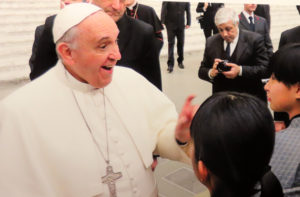
appearance, just a year before the Pope’s historic visit.
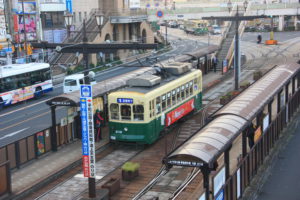
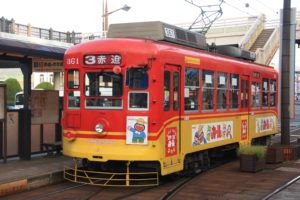
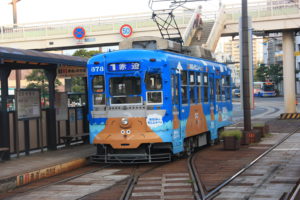
Tram in Nagasaki
The Nagasaki Electric Tramway provides a convenient and affordable way to travel around
the main attractions of Nagasaki City.
 |
 |
 |
No matter how far you travel, the adult fare for a single journey is always 150 yen.
A one-day pass offering unlimited rides for 600 yen is also available for purchase at major
information centers, hotels, and through a smartphone app (but not on board the trams).
Announcements and signs both on trams and at the stops are available in English, making
it easy to find which tram you need to take and where to get off.
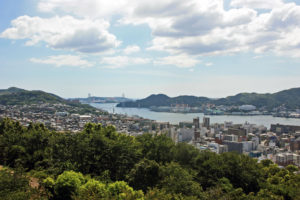
Kazagashira Park
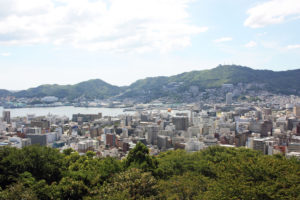
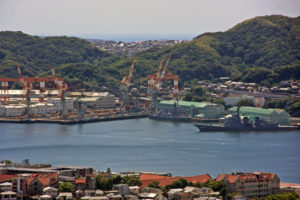
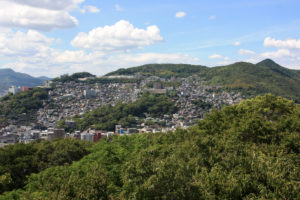
Magnificent and panoramic view of Nagasaki-city. Kazagashira Park is located on the summit
of Kazagashira with 152 m high, and is on the other side of Inasa Mountain across Nagasaki
Harbour.
 |
 |
 |
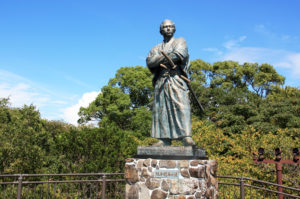
At the observatory, there is the statue of Sakamoto Ryoma who greatly contributed
to overthrow the Tokugawa shogunate and make a new era.
 |
 |
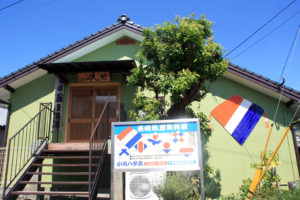 |
St. Andrew Chistian Seminary
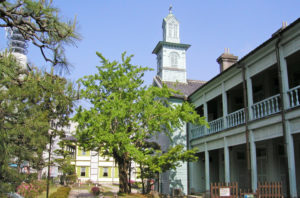
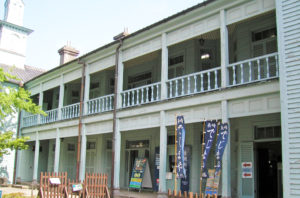
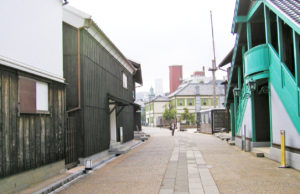
St. Andrew Christian Seminary building stands on the eastern end of Dejima
and features a light blue exterior and a tower with a cross.
It is the oldest surviving Protestant Seminary building in Japan.
It was built as a church school in 1878 and opened the following year as the Dejima
Shinbashiguchi English and Japanese School.
It later changed its name to Dejima Shinbashiguchi Anglican Seminary and offered
theological education. After closing in 1886, it was used as accommodation for foreign
missionaries.
|
|
|
|
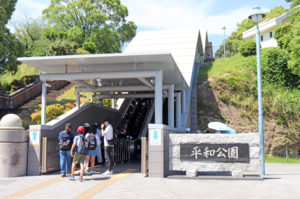
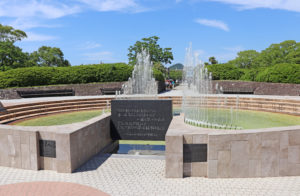
Peace Fountain at Peace Park
Peace Fountain reminds us of the tragic scene unfolded shortly after America dropped
the Atomic Bomb on Nagasaki at 11:02 am on Aug. 09, 1945. With the completion of the
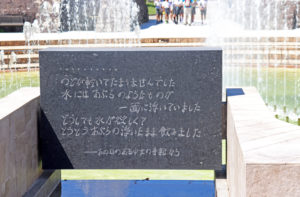
Peace Fountain on Aug. 3, 1969, a monument inscribed with an epitaph was constructed.
Many people were burned deeply and died, crying and groaning for water. When people
recovered their peaceful life in 1965, a campaign for a Peace Fountain was launched.
Recorded on the monument are the name of the founder including the People’s Congress
for Prohibition of Nuclear Weapons and Promotion of Peace and the Committee for the
Construction of the Peace Fountain.
 |
 |
 |
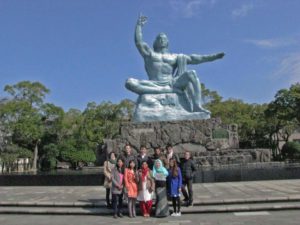
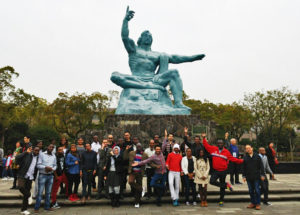
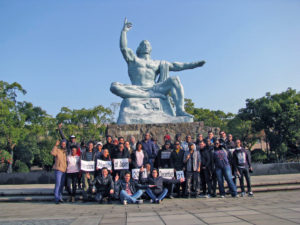
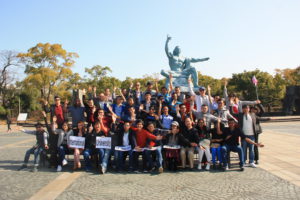
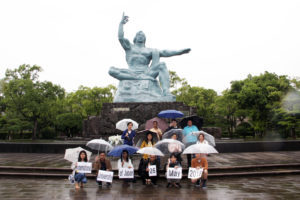
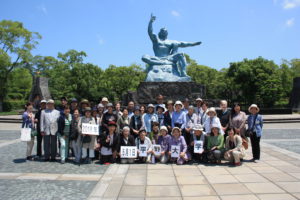
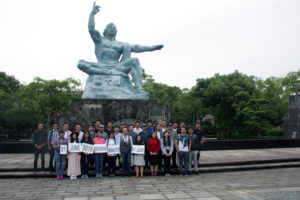
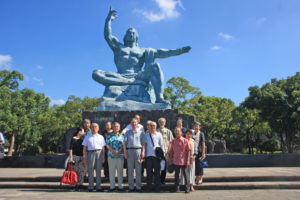
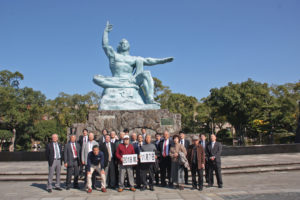
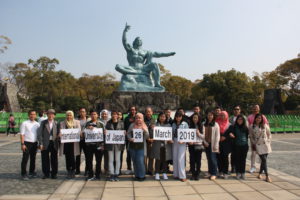
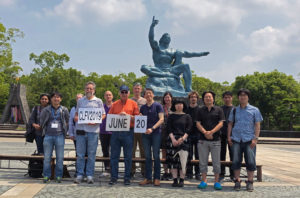
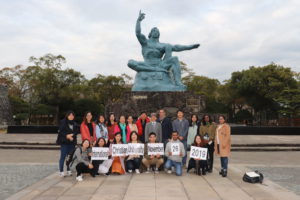
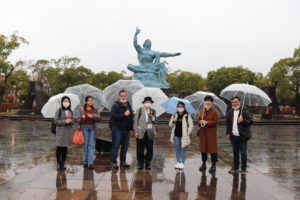
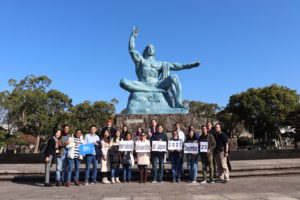
Peace Statue
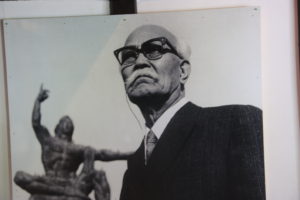
World Peace from Nagasaki. The Peace Statue was completed in 1955, ten years after the
atomic bombing. The 9.7 meter high statue sitting on a 4 meter tall pedestal, made by renown
sculptor Kitamura Seibo who born in Minami-Shimabara-city, Nagasaki-prefecture in 1884.
The bronze Peace Statue has one left arm extending horizontally and other right arm pointing
to the sky. The left arm stretching to the horizon symbolizes world peace, and the other right
pointing skyward indicates the threat of atomic destruction (the harm of nuclear power).
The closed eyes show the prayer for the peaceful repose of the victims of the Atomic Bomb.
|
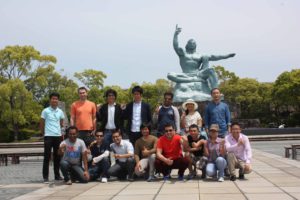
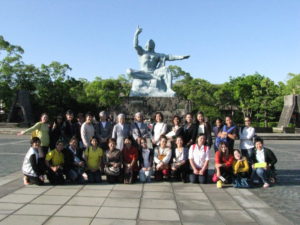
Visiting from all over Japan and the World |
Wishing for eternal world peace from Nagasaki |
Kitamura Seibo, the Statue was completed at the age of 71 |
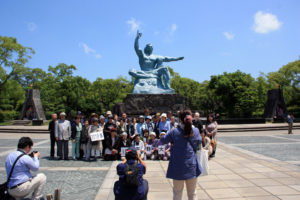
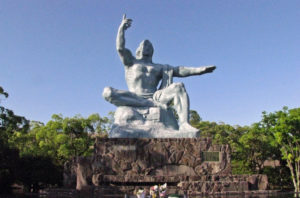
Peace Memorial Ceremony is held in front of the statue on August 9 every year and
the Mayor of Nagasaki makes the “Nagasaki peace declaration” for the whole world.
Commitment to World Peace from all over the World
 |
 |
 |
 |
 |
 |
 |
 |
 |
 |
 |
 |
 |
 |
 |
 |
 |
 WhatsApp: Chat with us