
-

-
Munakata Shrine Hetsu-gu, in Munakata
2024/02/15
Shinto ShrineMunakata Shrine Hetsu-gu is located in Munakata, Fukuoka-prefecture. The Shrine has been registered on the World Heritage in 2016. The Sacred Island Okinoshiam and Associated site in the Munakata region. Hetsu-gu is one of the three shrines that comprise Munakata Shrine and enshrines Ichikishimahime-no-Kami, one of the three female deities of Munakata. Visitors passing through the torii gate and proceeding along the path will find the Main Hall, dedicated to Ichikishimahime-no-Kami, beyond the Shinmon gate.
-
-
Nakae no Shima / Christian Pilgrimage site
2024/02/15
● Christian Pilgrimage sitesNakae no Shima is a Christian Pilgrimage site and is the UNESCO World Heritage site of Hidden Chriatian Sites in the Nagasaki Region. Located two kilometers off the coast of Hirado Island, Nakae no Shima is a small, uninhabited island where religious leaders were executed during the persecution of Christians. The island is considered sacred, and water collected there is used for baptism.
-
-
Oura Cathedral, in Nagasaki
2024/02/15
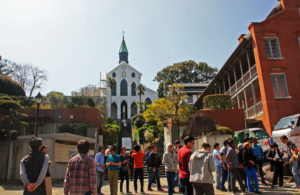
● Churches and CathedralsThe Cathedral is one of the significant Christian Pilgrimage site in Japan. Established 1865, this church is officially known as “Oura Cathedral, the Church of 26 Martyrs.” It was built by the French priest Bernard Petitjean of Fier who had been dispatched by the Foreign Missionary Church of Paris to dedicate prayers to the 26 saints martyred on Nishizaka hill. For this reason, the church faces Nishizaka hill. It was designated as a National Treasure in 1933 for its value as Japan’s oldest Gothic-style Cathedral. “On March 17, 1865, a group of peasants from Urakami came to the church and professed their faith to Father Petitjean, thus revealing that Christianity had survived through the centuries of persecution. The white marble statue of the Holy Mother at the entrance was built in commemoration of the dramatic discovery of the “Hidden Christians. Pope John Paul II visited here in 1981, and Saint Teresa of Calcutta commonly known as Mother Teresa visited in 1982.
-
-
Causes of the Martyrdom of 26 Saints
2024/02/15
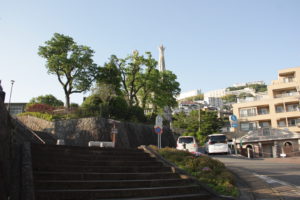
● Martyrdom of the 26 Saints of JapanIn 1596, the Spanish ship San Felipe, heading from the Philippines to Mexico, washed ashore on the Tosa-Urato coast due to a typhoon. Shogun Toyotomi Hideyoshi confiscated the ship’s vast cargo. At that time, the navigator said that Spain first send Christian missionaries to increase the number of believers, and then eventually conquer the country. When Toyotomi Hideyoshi heard this, he was shocked and ordered the capture of Spanish Franciscan missionaries who were actively carrying out missionary activities in Kyoto. Then, he ordered Ishida Mitsunari to execute Franciscan missionaries and Christians. This was the beginning of the Martyrdom of 26 Saints in Nagasaki on February 5, 1597.
-
-
26 Saints were the first martyrs in Japan
2024/02/15
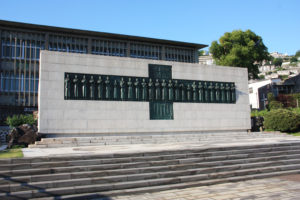
● Martyrdom of the 26 Saints of Japan26 Christians arrested in Kyoto who were consisted of 20 Japanese, 4 Spaniards, 1 Mexican, and 1 Portuguese. They were forced to walk barefoot to Nagasaki for about a month. On February 5, 1597, all 26 Christians arrived at Nishizaka and were tied to Crosses. Paul Miki said from the Cross All of you who are here, please listen to me. I did not com from the Philippines, I am a Japanese by birth, and a brother of the Society of Jesus. I have committed no crime, and the only reason why I am put to death is that I have been teaching the doctrine of our Lord Jesus Christ. I am very happy to die for such cause, and see my death as great blessing from the Lord. At this critical time, when you can rest assured that I will not try to deceive you, I want to stress and make it unmistakably clear that man can find no way to salvation other than the Christian way. The Christian law commands that we forgive our enemies and who have wronged us. I must therefore say here that I forgive Taikosama (Hideyoshi). I would rather have all the Japanese become Christians. (From Luis Frois’s Martyrs Records, 1597)
-
-
Unzen jigoku Martyrdom
2024/02/15
● Christian Pilgrimage sitesWhen Matsukura Shigemasa became the new federal lord of Shimabara in 1616, many people were Christians. Initially, he acquiesced in Christianity, because he needed people’s cooperation to build Shimabara Castle. However, this situation was known to Tokugawa Shogunate, and he strongly commanded Christians in Shimabara to convert. From 1627, Christians who did not convert were persecuted using the boiling water of Unzen jigoku. Many Christians were taken to this Unzen jigoku and martyred. Unzen Church is dedicated to Father Antonio Ishida, a martyr of Unzen Hell, and martyrdom festival is held every May. Unzen jigoku is a tourist spot in Unzen. Jigoku, means Hell, is the number one attraction of Unzen with a peculiar smell of sulfur emitted from the springs, and boiled hot water and white smoke rising from the ground over a wide area. This is a striking reminder that Unzen Volcano is still very much alive.
 WhatsApp: Chat with us