
-
-
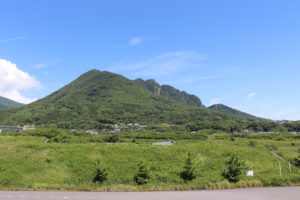
Shimabara Peninsula, in Nagasaki Prefecture
2026/02/01
Discover the Natural Wonders of Kyushu, Staff BlogThe Shimabara Peninsula is located on the eastern side of Nagasaki Prefecture. The peninsula is surrounded by three calm seas and boasts magnificent nature. You can find a unique landscape shaped by the volcanoes situated in the center of the peninsula.
-
-
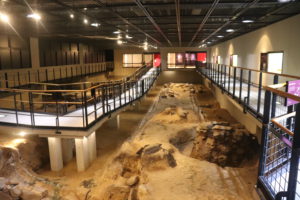
Santo Domingo Church, built in 1609
2026/02/15
History of Japanese ChristianitySanto Domingo Church was built in Nagasaki in 1609 by the Dominican Father Francisco de Morales, using materials from a demolished church in Kagoshima. The ruins of the church were discovered in 2002 during an archaeological excavation conducted for the reconstruction of Sakuramachi Elementary School. Today, the site is home to the Santo Domingo Church Ruins Museum, where visitors can view the excavated remains alongside Christian artifacts and historical materials discovered across Nagasaki.
-
-
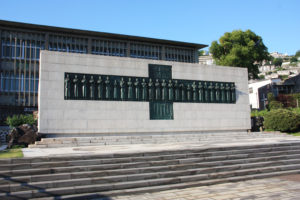
26 Saints were the first martyrs in Japan in 1597
2026/02/17
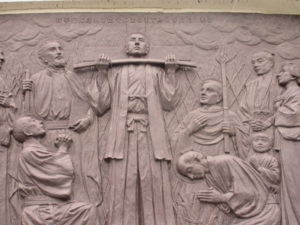
History of Japanese ChristianityA group of 26 Christians was arrested in Kyoto, consisting of 20 Japanese, four Spaniards, one Mexican, and one Portuguese. They were forced to walk barefoot to Nagasaki, a journey that lasted about a month. On February 5, 1597, all 26 arrived at Nishizaka, where they were tied to crosses and martyred. Speaking from the Cross, Paul Miki said: To all of you who are here, please listen to me. I did not come from the Philippines; I am Japanese by birth, and a brother of the Society of Jesus. I have committed no crime. The only reason I am being put to death is that I have taught the doctrine of our Lord, Jesus Christ. I am truly happy to die for such a cause, and I see my death as a great blessing from the Lord. In these final moments, when you can be certain that I would not try to deceive you, I want to emphasize and make it unmistakably clear: there is no path to salvation other than the Christian way. The Christian law commands that we forgive our enemies and those who have wronged us. Therefore, I declare here that I forgive Taikosama (Hideyoshi). My only wish is that all the Japanese people would become Christians.” (From Luis Frois’s Martyrs Records, 1597)
-

-
Unzen jigoku Martyrdom from 1626
2026/02/11
History of Japanese ChristianityWhen Matsukura Shigemasa became the new feudal lord of Shimabara in 1616, a large portion of the population was Christian. Initially, he turned a blind eye to Christianity because he needed the cooperation of the local people to construct Shimabara Castle. However, once the Tokugawa Shogunate became aware of the situation, Shigemasa was strictly ordered to force the Christians in Shimabara to convert. Starting in 1627, Christians who refused to apostatize were persecuted using the scalding waters of Unzen Jigoku (Unzen Hell). Many believers were brought to these boiling springs and martyred for their faith. Unzen Church is dedicated to Father Antonio Ishida and his companions who were martyred at Unzen Hell. Every May, a martyrdom festival is held to honor their memory. Today, Unzen Jigoku is the most popular tourist attraction in Unzen. “Jigoku” means “Hell,” a name inspired by the striking landscape where white steam and boiling water rise from the ground over a vast area. The air is filled with the distinct scent of sulfur, serving as a powerful reminder that the Unzen volcano is still very much active.
-
-
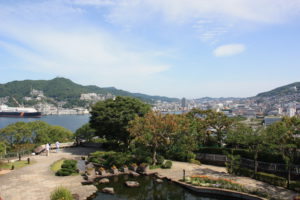
Opening the port created Christian town Nagasaki in 1570
2026/02/19
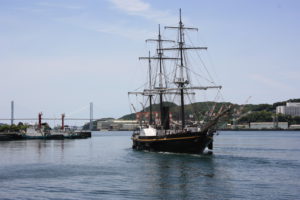
History of Japanese ChristianityNagasaki Port was opened in 1570 by Omura Sumitada, the first Japanese feudal lord to be baptized as a Christian. At that time, a group of Christian families immigrated to the area along with Father Figueiredo. Many of them were fleeing persecution in regions such as Shimabara, Iki, Goto, Hirado, and Yamaguchi. Their arrival marked the beginning of Nagasaki as a Christian town. Omura Sumitada donated the territories of Nagasaki and Mogi to the Jesuits to protect his domain from neighboring enemies. In 1580, the Society of Jesus in Japan established its headquarters in Nagasaki.
-
-
Tensho youth mission to Europe in 1582
2026/02/18
History of Japanese ChristianityIn 1582, four young boys boarded a ship at Nagasaki Port bound for Europe. They were dispatched as representatives of the Japanese Christian feudal lords, departing with Alessandro Valignano, the Jesuit missionary who organized the mission. The four youths—Mancio Ito, Miguel Chijiwa, Martino Hara, and Julian Nakaura—were all around 13 years old at the time. The purpose of the mission is to show the four people who studied at Arima Seminario about Europe and to convey the greatness of Europe to the Japanese people. By introducing the boy raised by the Jesuits to Europe, the mission was to highlight the achievements of Japan’s missionary work and gain support from the Pope and the King of Portugal. Two years and six months after leaving Nagasaki, they finally arrived in Europe. He first had an audience with Philip II at Rispon, and was subsequently welcomed in various places. On March 23, 1585, Japan had an audience with the Pope and made its grand d ebut on the world stage. After that, they also visited various parts of Italy. When they returned to Nagasaki in 1590, Christianity was being prohibited. Therefore, their achievements were suppressed due to the ban on Christianity. It was not until 1858, when religious freedom was recognized, that their activities were evaluated.
-
-
Nagasaki was a small Rome in 1569
Todos os Santos Church, the first church in Nagasaki, was built in 1569. The feudal lord Omura Sumitada and the Jesuits reached an agreement in 1570 to develop Nagasaki into a port for Nanban trade (with Portugal and Spain). Nagasaki Port opened in 1571, the same year the first Portuguese ship arrived. Following this, the development of the “Town of the Cape” began as a Christian settlement, and the small Church of São Paulo was constructed at the tip of the cape. Following the initial construction, several other churches were established: Misericordia Headquarters Church (1583) Santa Maria Church (1600) Santa Clara Church (1603) Santiago Church (1604) San Juan Bautista Church (1605) San Antonio Church (1606) San Pedro Church (1607) San Francisco Church (1611) San Agustin Church (1612) For 45 years after the first church was built, Nagasaki flourished as a Christian town. By 1614, the majority of its 25,000 residents were Christians, earning the city the nickname “Little Rome.” However, following the Tokugawa Shogunate’s nationwide ban on Christianity in 1614, most of these church buildings were destroyed within a 15-day period starting from November 3rd.
-
-
Ban on Christianity in 1612
2026/02/14
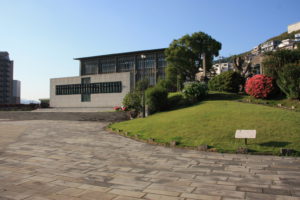
History of Japanese ChristianityThe number of Christians in Japan continued to grow, reaching approximately 300,000 by 1614. Fearing that this increasing influence could lead to rebellion, the Tokugawa Shogunate issued a ban on Christianity in Nagasaki in 1612, f ollowed by a nationwide ban in 1614. After that, the history of martyrdom began in various places. ・in 1617, 4 missionaries were martyred in Omura ・in 1622, Genna great martyrdom (55 Christians) at Nishizaka ・in 1622-24, Ikutsuki and Nakae-no-shima island martyrdom ・from 1627, Unzen jigoku martyrdom ・1633, Nakaura Julian martyred in Nishizaka ・in 1637, Shimabara Rebellion ・in 1644, Konishi Manjo martyrdom, Domestic priests become absent ・in 1657, Persecution of Christians in Omura ・in 1790, Persecution of Christians in Urakami ・in 1839, Persecution of Christians in Urakami ・in 1856, Persecution of Christians in Urakami
-
-
Genna great Martyrdom in 1622
2026/02/12
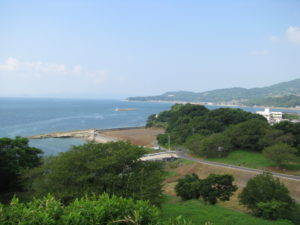
History of Japanese ChristianityTwenty-five years after the martyrdom of the 26 Saints, the blood of Christians was once again shed on the hill of Nishizaka in Nagasaki. A total of 55 Christians were martyred, having been arrested at Suzuta Prison in Omura and Kurusu Prison in Nagasaki.
-
-
Shimabara Rebellion in 1637
2026/02/09
History of Japanese ChristianityThe site is located in Minami-Arima, Minami-Shimabara City. It was the primary battlefield of the Shimabara Rebellion in 1637—a large-scale peasant uprising against the Shogunate’s persecution of Christians, led by the young leader Amakusa Shiro. 。 The castle was founded by Arima Takazumi in 1496. It was a flatland castle (hirajiro), utilizing a natural fortress created by the cliffs facing the Ariake Sea and the rising tides. The castle was abandoned after Matsukura Shigemasa, the feudal lord of Shimabara, built Shimabara Castle following the downfall of the Arima family. In 1637, Christian farmers rose in revolt, driven by their grievances against Shigemasa’s brutal oppression. The Shogunate viewed this uprising as a Christian rebellion and dispatched a punitive force. In response, the rebels entrenched themselves in the abandoned Hara Castle, fighting against the Shogunate under the leadership of Amakusa Shiro Tokisada. On February 27, 1638, Amakusa Shiro fell in battle, and the castle fell the following day. All 37,000 Christians, including women and children, perished in the massacre. In 2018, the site was registered as a UNESCO World Heritage Site as part of the “Hidden Christian Sites in the Nagasaki Region.
 WhatsApp: Chat with us