
-
-
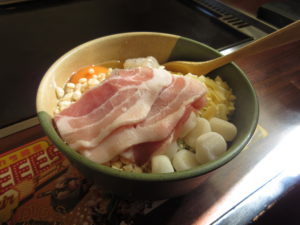
Okonomiyaki
2026/03/23
Authentic Kyushu MealsA dish made of wheat flour batter with eggs, vegetables, meat, seafood, noodles, and other desired ingredients added to it and grilled on a griddle. Eat with a special sauce, green seaweed, and dried bonito flakes. There are different types of okonomiyaki depending on the region, such as Kansai-style okonomiyaki, in which ingredients are mixed into the batter and baked, and Hiroshima-style okonomiyaki, in which noodles and other ingredients are layered in the batter.
-
-
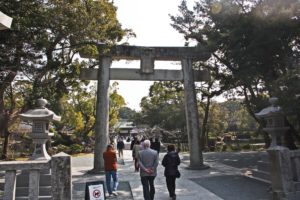
Munakata Shrine Hetsu-gu
2026/03/23
Munakata & Fukutsu travel guideThe Shrine has been registered on the World Heritage in 2016. The Sacred Island Okinoshiam and Associated site in the Munakata region Hetsu-gu is one of the three shrines that comprise Munakata Shrine and enshrines Ichikishimahime-no-Kami, one of the three female deities of Munakata. Visitors passing through the torii gate and proceeding along the path will find the Main Hall, dedicated to Ichikishimahime-no-Kami, beyond the Shinmon gate.
-
-
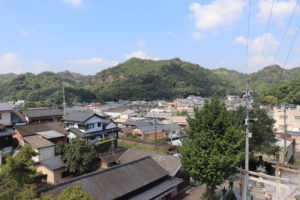
Arita travel guide
2026/03/23
Saga-prefectureArita is located in the north side of Saga and surrounding the mountain ranges. And Arita is the first place producing porcelain in Japan in the early 17th century. The pieces have bright, elegant picture drawn in transparent white porcelain. Arita porcelain was exported to Europe in the later half of 17th century and greatly influenced European pottery. The unique Arita porcelain red, green and yellow patten called Kakiemon style. It holds the largest ceramic fair in Western Japan, the Arita Ceramic Fair. This event is held from April 29 to May 5 every year and has thousands of stores and stalls lining the six-kilometre long main street. Arita Porcelain Park Offers a drastic change of scenery, which might even make you forget you are in Japan. This park features a stunning garden and palace designed in the style of 18th-century German Baroque architecture. This is said to be a tribute to Arita’s influence on European ceramic design. Sueyama Shrine The Shrine is located in Arita Town, Nishimatsuura District. Feature of the Shrine is Shrine gate made by porcelain, and usually the Shrine gate are made of stone or wood. The Shire gate or Torii was built in 1888. It had been designated Tangible Cultural Properties on April 28, 2000. Porcelain Manufacturer, Kakieon A style of Japanese porcelain, with over glaze decoration called “enameled” ceramics. It was originally produced at the factories …
-
-
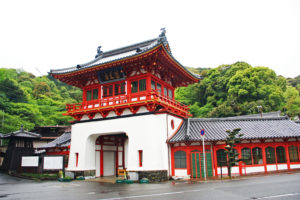
Takeo and Ureshino travel guide
2026/03/23
Saga-prefectureTakeo Onsen resort Takeo has 1200 years history and is located in the western part of Saga-prefecture. The hot spring temperature is 18 to 52 degrees. Spring quality is smooth with alkaline simple hot spring. It is said that the color is colorless and transparent and has an outstanding effect on recovery from fatigue. Romon Gate The landmark of Takeo Onsen. Romon Gate, which was designed by a renowned architect in the Meiji Era, Kingo Tatsuno, and is at the entrance of the Onsen area. Mifuneyama-rakuen Garden Beautiful Japanese Garden, located in the south-western foot of Mifuneyama, construction of the garden took about 3 years and completed in 1845, the area is about 5ha. The dynamic cliffs of Mifuneyama Mountain can be seen from the garden. Great Camphor tree at Takeo Shrine One of the oldest Camphor tree in Japan. The tree is one of the largest in Japan and over 3,000 years old. Designated a natural monument of the city. It is 30 m high, has a circumference of 20 m, and its branches extend 30 m east-west and 33 m north-south. Ureshino Onsen Resort Ureshino Onsen is a hot spring town in south-western Saga Prefecture. Its clear Onsen waters are high in sodium bicarbonate and sodium chloride and feel extremely smooth on skin, giving rise to its popularity as a “Bihada no Yu” ( beautiful skin waters). Ureshono tea, local …
 WhatsApp: Chat with us