
-
-
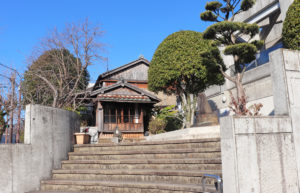
Nyokodo, Dr. Nagai Takashi
2026/06/25
Nagasaki travel guideDr. Nagai Takashi (3 February 1908 – 1 May 1951) was a Catholic physician specializing in radiology, an author, and a survivor of the atomic bombing of Nagasaki. His subsequent life of prayer and service earned him the affectionate title “saint of Urakami”. Nyokodo, which is adjacent to the Takashi Nagai Memorial Hall, is Dr. Takashi Nagai’s hospital room and study. This 2-tatami building was built as a new home for the doctor, with the generosity of the people of Urakami and fellow Catholics who were left penniless by the atomic bombing. The doctor named this building “Nyokodo,” meaning “Love your neighbor as yourself,” and spent his later years here. Dr. Nagai fought the onslaught of leukemia and worked hard to write even though he was bedridden. From this room of just two tatami mats, the doctor continued to harass the people of Urakami, writing novels such as “The Chains of the Rosary, ” “Leaving the Child,” “The River of Life,” and “The Bells of Nagasaki. Massage for World Peace from Dr. Nagai The person who pray for peace must not hide even needles, for a person who possesses is not qualified to pray peace.
-

-
Saint Filippo de Jesus Church ( Japan 26 Saints Memorial Church )
Designed by Kenjiro Imai, this church features Gaudi-style twin towers and was built next to the Nishizaka Martyrdom site. When plans were made to build a memorial hall for the 26 Japanese Saints next to the Nishizaka Martyrdom site, a generous donation was received from Mexico, leading to the church’s construction in 1962. This church is dedicated to Felipe de Jesús, the first Mexican saint and one of the 26 Martyrs of Japan. He was a Franciscan Catholic missionary who sacrificed his life here.
-
-
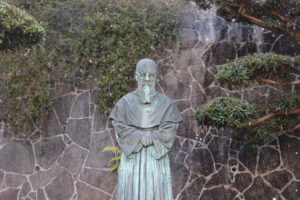
Saint Kolbe Memorial Museum, at Hongouchi Church
Father Maximilian Kolbe was born in Poland in 1894 and was a priest of the Conventual Franciscans. He was active in promoting the veneration of the Immaculate Virgin Mary. He arrived in Japan in 1930, where he began educating seminarians and publishing a monthly magazine titled “The Knight of the Immaculata. ” Following this, as more Japanese people came to understand God’s teachings, Hongochi Church was established in 1931. After six years in Japan, he returned to Poland due to poor health. Later, during World War II, he volunteered to die in place of a stranger named Franciszek Gajowniczek at the Auschwitz concentration camp in German-occupied Poland. The Saint Kolbe Memorial Museum was built in 1986 to commemorate his canonization.
-
-
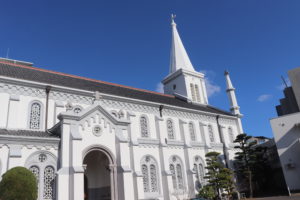
Nakamachi Church
Nakamachi Church is located near JR Nagasaki Station. In 1988, the church was dedicated to the 16 Martyrs of Nagasaki (St. Thomas Nishi and his 15 companions), who were martyred in Nagasaki between 1633 and 1637. To honor them, a monument was erected on the church grounds. Following the 26 Saints of Japan, these 16 martyrs were canonized as saints in 1987. Domingo Ibáñez de Erquicia, Dominican Priest (Spanish, 1633) Antonio Gonzalez, Dominican Priest (Spanish, 1637) Jordan Ansalone, Dominican Priest (Italian, 1634) Luke of the Holy Spirit, Dominican Priest (Spanish, 1633) Michael de Aozaraza, Dominican Priest (Spanish, 1637) Guillaume Courtet, Dominican Priest (French, 1637) Jacobo Kyushei Tomonaga, Dominican Priest (Japanese, 1633) Thomas Rokuzayemon Nishi, Dominican Priest (Japanese, 1634) Vincent Shiwozuka, Dominican Priest (Japanese, 1637) Francis Shōyemon, Dominican Lay Brother (Japanese, 1633) Matthew Kohioye, Dominican Novice (Japanese, 1633) Lorenzo Ruiz, Layman (Filipino, 1637) — The first Filipino saint Marina of Omura, Dominican Tertiary (Japanese, 1634) Magdalene of Nagasaki, Dominican Tertiary (Japanese, 1634) Michael Kurobioye, Layman (Japanese, 1633) Lazarus of Kyoto, Layman (Japanese, 1637)
-
-
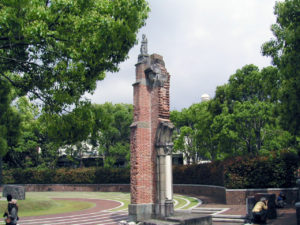
Ruins of Urakami Cathedral
2026/06/25
Nagasaki travel guideIf you look to the right while facing the Ground Zero Monument, you will see a section of the damaged brick wall from the former Urakami Cathedral. The church was originally located about 500 meters northeast of the epicenter, on the same site as the modern, rebuilt Urakami Cathedral. The construction of the original building began in 1895 and continued until 1925, when the twin steeples were finally completed. Ruin of destroyed Urakami Cathedral Ruin of destroyed Urakami Cathedral Present Urakami Cathedral Known at that time as the largest church in the Orient, the imposing red-brick structure was devastated by the atomic bomb explosion, which tragically killed a large number of parishioners. In 1958, an 11-meter-tall section of the damaged southern wall was relocated to the Atomic Bomb Hypocenter Park. The cathedral was later rebuilt in honor of those who were lost; it was reconstructed in 1959 and further renovated in 1980 to restore its brick appearance, just a year before the Pope’s historic visit.
-
-
Urakami Cathedral
2026/06/25
Nagasaki travel guideConstruction of the original Urakami Cathedral, a brick Romanesque building, began in 1895 after the long-standing ban on Christianity was lifted. When completed in 1914, it was the largest Catholic church in East Asia. The atomic bomb that detonated on August 9, 1945, exploded in Urakami, just 500 meters from the cathedral, completely destroying it. The remains of the original cathedral are now on display at the Nagasaki Atomic Bomb Museum. A replacement church was built in 1959 and was remodeled in 1980 to more closely resemble the original brick building. The nearby the Ground Zero in Peace Park contains remnants of the Ruins of Urakami Cathedral.
 WhatsApp: Chat with us