
-

-
St. Lorenzo Luiz martyred in Nagasaki in 1637
2026/02/08
History of Japanese ChristianitySaint Lorenzo Ruiz, the first Filipino saint, was martyred at Nishizaka in Nagasaki in 1637. He was canonized in 1987. A statue of St. Lorenzo was donated to Nakamachi Church, which is closely associated with him. The statue was presented by Cardinal Jaime Sin (a key figure in the Philippine People Power Revolution) during his visit to Japan in 1990.
-
-
Dr. Albert Einstein visited Moji, Kitakyushu in 1922
2024/03/10
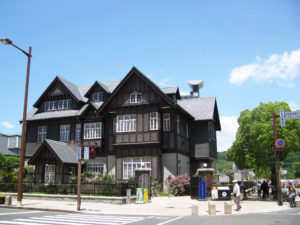
Japanese historyDr. Albert Einstein who awarded Nobel Prize in Physics stayed here. It was built by the Mitsui Co., Ltd in 1921 as a reception centre and to provide accommodation for VIP’s. It is now designated as an important cultural property. Albert Einstein (1879-1955), one of the world’s most famous theoretical physicists, stayed here during his visit to Japan with his wife in 1922, and his room is displayed exactly as it was at that time.
-
-
Hiburi-shinji at Aso Shrine
2024/05/18
Festivals and Events, Staff BlogHiburi-shinji is the annual festival held at Aso Shrine in Aso, Kumamoto-prefecture. Hiburi-shinji is a Shinto ritual that signifies the wedding ceremony of the gods. When the deity of the Himegami wrapped in oak branches and leaves arrives, the parishioners all celebrate by lighting torches made from grass and waving them around. A ring of flames swinging heroically colors the Shrine at night, and the whole area is enveloped in a fantastical atmosphere. After Hiburi-shinji end, spring comes to Aso.
-
-
Akaushi don
2024/05/18
Japanese cuisineAkausi don is this rice bowl is made with luxurious Aso red beef called Akaushi raised in the nature of the magnificent green grasslands of Aso, Kumamoto-prefecture, and allows you to easily enjoy the delicious flavor of the beef. Slices of Akaushi steak grilled medium-rare are laid luxuriously on top of the rice. When you stuff your mouth with Akaushi rice and meat, you will experience an indescribable bliss, and it is an irresistible dish for meat lovers.
-
-
Takamori dengaku
2024/05/18
Japanese cuisineTakamori dengaku is the local cuisine in Aso, which a dish created to make the sweet potatoes, which can only be grown in this region, more delicious and last longer. As part of Takamori’s culinary culture, it has remained the same since then, with the addition of some ingredients.What we are particular about is that the condiments in Dengaku miso are exposed to the sun and contain a lot of minerals that have been absorbed, making it a dish that not only fills your stomach but also maintains your health by eating it. We hope you will enjoy Aso with traditional slow food while sitting around the hearth, coating the ingredients grilled over natural charcoal with miso, and talking with others.
-
-
Takamori dengaku-mura
2024/05/17
Featured restaurants, Staff BlogTakamori dengaku is a dish created to make the sweet potatoes, which can only be grown in this region, more delicious and last longer. As part of Takamori’s culinary culture, it has remained the same since then, with the addition of some ingredients.What we are particular about is that the condiments in Dengaku miso are exposed to the sun and contain a lot of minerals that have been absorbed, making it a dish that not only fills your stomach but also maintains your health by eating it. We hope you will enjoy Aso with traditional slow food while sitting around the hearth, coating the ingredients grilled over natural charcoal with miso, and talking with others.
-
-
Wasshoi Million Summer Festival
2024/05/14
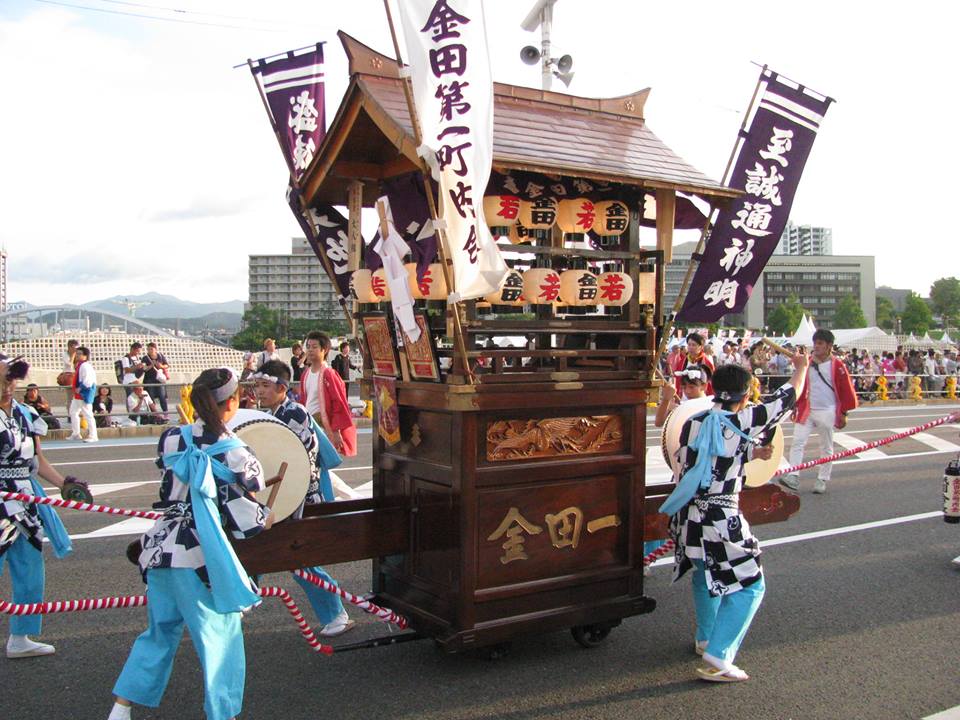
Festivals and Events, Staff BlogWasshoi Million Summer Festival is one of the festivals representing Kyushu and started in 1988 to commemorate the 25th anniversary of the formation of the city and has more than one and half million spectators every year. The festival is held on Komonji dori Avenue in front of Kitakyushu City Government Office on the first Saturday and Sunday of August ( August 5 and 6 this year). On the first day (Saturday),after the opening ceremony parade, festivals representing each of the old cities assemble to join the parade and excitement grows among all the festival participants and spectators. On the second day (Sunday), the Million Dance is performed around Kokura Castle by one and half million citizens who come from local companies and town groups,wearing themed festival costumes. They dance and dance, enlivening and energising the festival. One of the greatest highlights is the firework display,this spectacular show marks the finale of the festival. ・Venue : Komonji Avenue and Katsuyama Park Kokura kitaku ・Direction : A 15 min. walk from JR Kokura Station
-
-
Japan’s longest foot bath, in Obama, Nagasaki-prefecture
2024/06/05
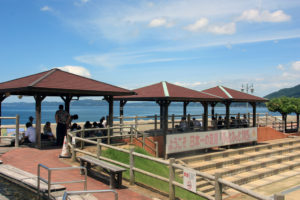
ExperiencesThe Japan’s longest foot bath. Called “ Hot foot 105 ” is the Japan’s longest foot bath in Obama Onsen Resort, located at the mountain foot of Unzen in Shimabara peninsula. The length of foot bath is 105m which is same number of the hot spring source temperature of 105 degree Celsius.
-
-
Nagasaki Kunchi
2024/05/13
Festivals and Events, Staff BlogNagasaki Kunchi is one of big-three festival in Japan, held on October 7 to 9 at Suwa Shrine. The festival features Chinese dance including Ja-odori (Snake dance), this time dancing all around the city but especially at Suwa Shrine. History of the Festival, after Christianity was harshly suppressed in Nagasaki in 1624, a festival was dedicated to Suwa Shrine, the guardian god of local people. It is believed that Suwa Shrine festival called “Nagasaki Kunchi” and danced were offered to shrine with cooperated of local people in 1634. At the outset, dedicated dance were very simple but gradually became colorful. During Eiho Era (1673-80), a Chinese dance with an exotic flavor offered to the shrine. The Ja-odori or snake dance was first performed in the Nagasaki Kunchi during period 1789-1800. In 1970, the government designated the whole of Nagasaki Kunchi dance including Ja-odori as an Important Intangible Cultural Asset.
-
-
Sand bath, in Ibusuki
2024/05/13
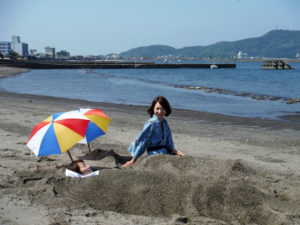
Japanese CultureIbusuki is an Onsen Resort that is famous for its sand baths, where bathers are buried in naturally heated sand. The town encompasses the southern tip of the Satsuma Peninsula, and the main downtown area is along the coast facing Kinko bay.
 WhatsApp: Chat with us