
Buckwheat noodle (そば)
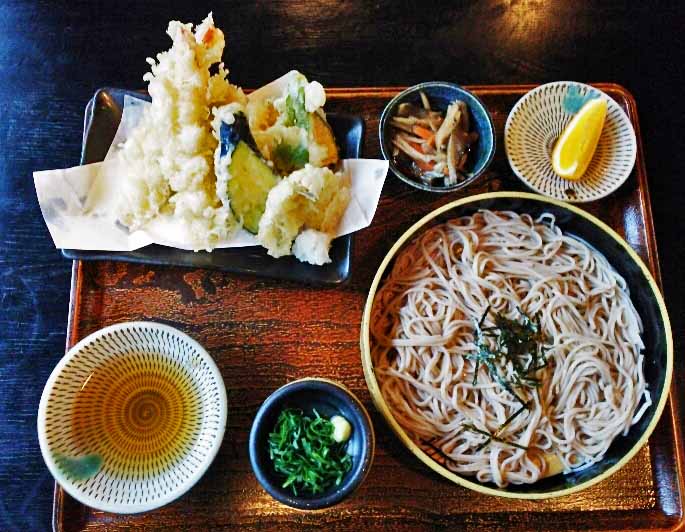
Buckwheat noodle is long, thin brownish noodle made
from buckwheat flour to which is added wheat flour, egg, and
sometimes yam starch.
from buckwheat flour to which is added wheat flour, egg, and
sometimes yam starch.
It is eaten either in hot soup, “Kakesoba” or as a cold dish, “Morisoba”.
In Morisoba, noodle is piled up on small flat bascket. It is served together
with a tiny dish of condiments and cup of dip made from soy sauce and
fish broth.
with a tiny dish of condiments and cup of dip made from soy sauce and
fish broth.
Minced green onions, red pepper and other spices are used as
condiment. The dish is eaten by dipping the noodle in the sauce with
the condiments mixed in it.
It is sometimes eaten with Tempura, egg, or other foods.

Buckwheat noodle (そば)
Buckwheat noodle is long, thin brownish noodle made
from buckwheat flour to which is added wheat flour, egg, and
sometimes yam starch.
from buckwheat flour to which is added wheat flour, egg, and
sometimes yam starch.
It is eaten either in hot soup, “Kakesoba” or as a cold dish, “Morisoba”.
In Morisoba, noodle is piled up on small flat bascket. It is served together
with a tiny dish of condiments and cup of dip made from soy sauce and
fish broth.
with a tiny dish of condiments and cup of dip made from soy sauce and
fish broth.
Minced green onions, red pepper and other spices are used as
condiment. The dish is eaten by dipping the noodle in the sauce with
the condiments mixed in it.
It is sometimes eaten with Tempura, egg, or other foods.
Udon, Wheat Noodle (うどん)
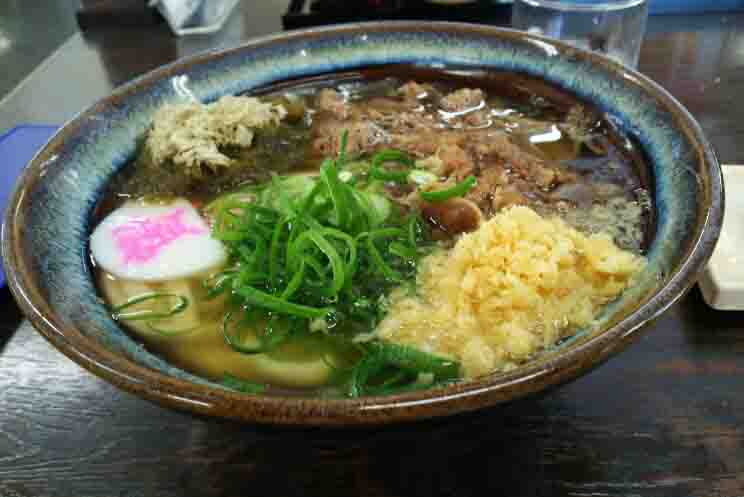
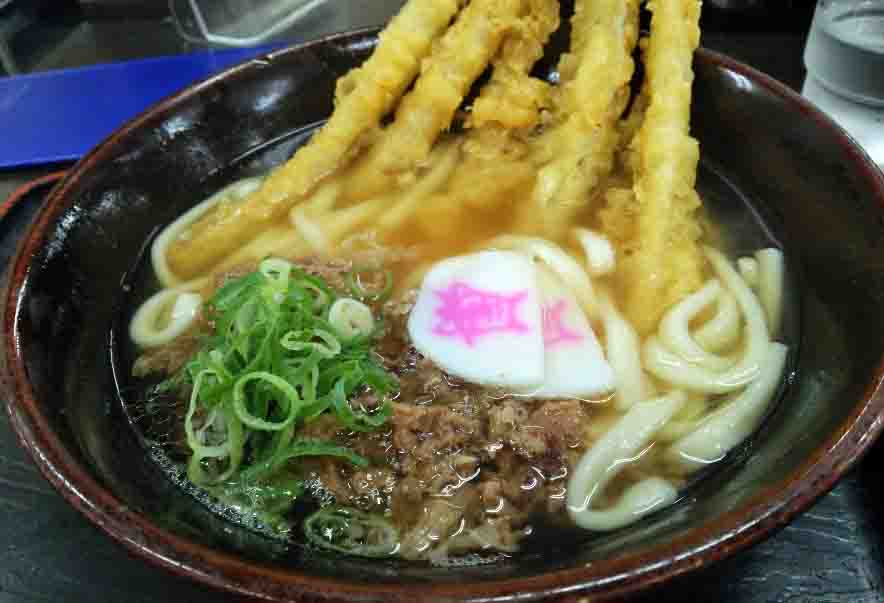
Udon is a very popular cuisine among Japanese people.
It is noodle from wheat flour, and is a little thicker than
Soba noodle.
Soba noodle.
Udon is eaten either from bowls filled with hot soup, or by dipping it into
special soup as in the case of Soba.
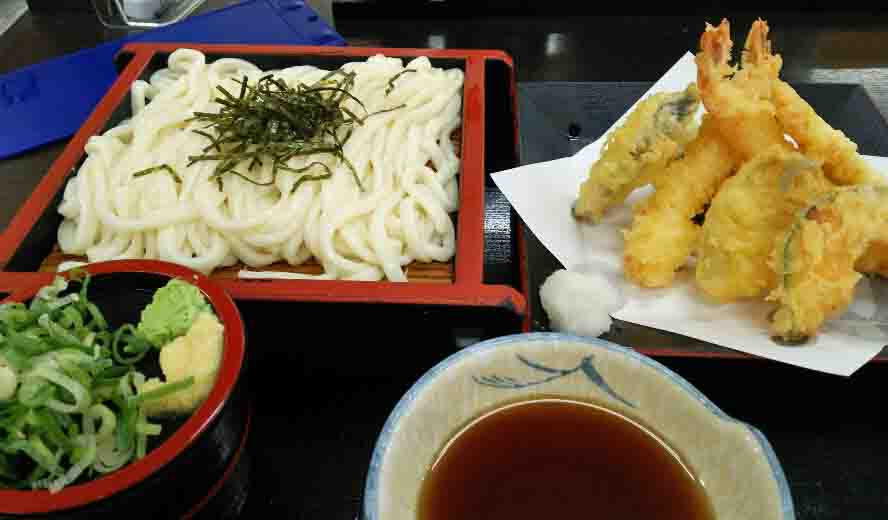
special soup as in the case of Soba.
Of these two, former is much more common.
Japanese people like to put minced green onion and red paper in the soup
as spice. In Japan, if it is not impolite to make natural noises when you slurp up
the noodles.
as spice. In Japan, if it is not impolite to make natural noises when you slurp up
the noodles.
The recipe is that the flour is kneaded for some time, and then rolled out and cut
into long strips. The noodle is finished by boiling them in hot water.
Ohagi (おはぎ), traditional Japanese sweet
Ohagi is a traditional Japanese sweet, made from boiled glutinous rice coated
with a red-bean jam, sweetened soy bean powder, or sweet sesame paste.
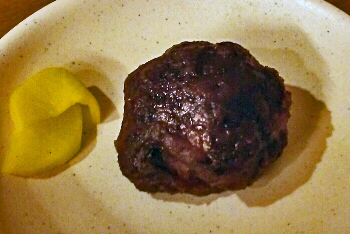
with a red-bean jam, sweetened soy bean powder, or sweet sesame paste.
Traditionally Ohagi is eaten only on special days set aside for Buddhist service,
the Vernal Equinox Day and Autumnal quinox Day, when pious Buddhists pay
homage to their ancestors and offer Ohagi to them.
the Vernal Equinox Day and Autumnal quinox Day, when pious Buddhists pay
homage to their ancestors and offer Ohagi to them.
Ohagi (おはぎ), traditional Japanese sweet
Ohagi is a traditional Japanese sweet, made from boiled glutinous rice coated
with a red-bean jam, sweetened soy bean powder, or sweet sesame paste.
with a red-bean jam, sweetened soy bean powder, or sweet sesame paste.
Traditionally Ohagi is eaten only on special days set aside for Buddhist service,
the Vernal Equinox Day and Autumnal quinox Day, when pious Buddhists pay
homage to their ancestors and offer Ohagi to them.
the Vernal Equinox Day and Autumnal quinox Day, when pious Buddhists pay
homage to their ancestors and offer Ohagi to them.
Tobata Gion Yamagasa (戸畑祇園山笠)
Float Festivals including Tobata Gion Yamagasa inscribed on UNESCO
Intangible Heritage List in 2016.
Intangible Heritage List in 2016.
Tobata Gion Yamagasa is one of the three major summer festivals in Fukuoka
Prefecture
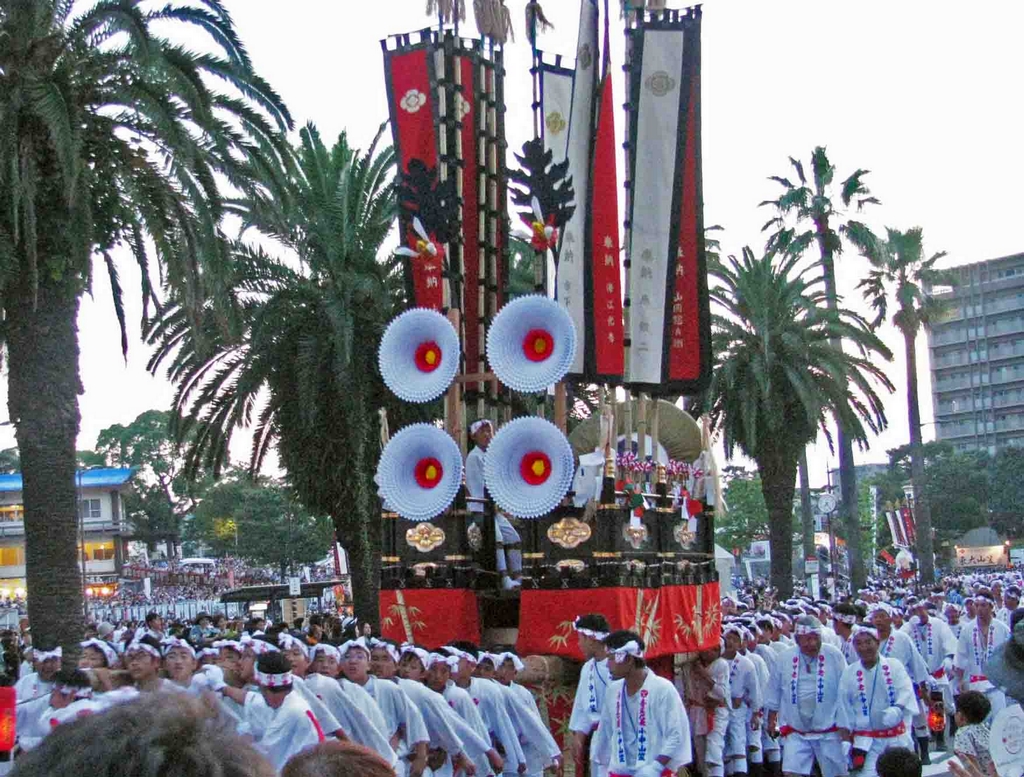
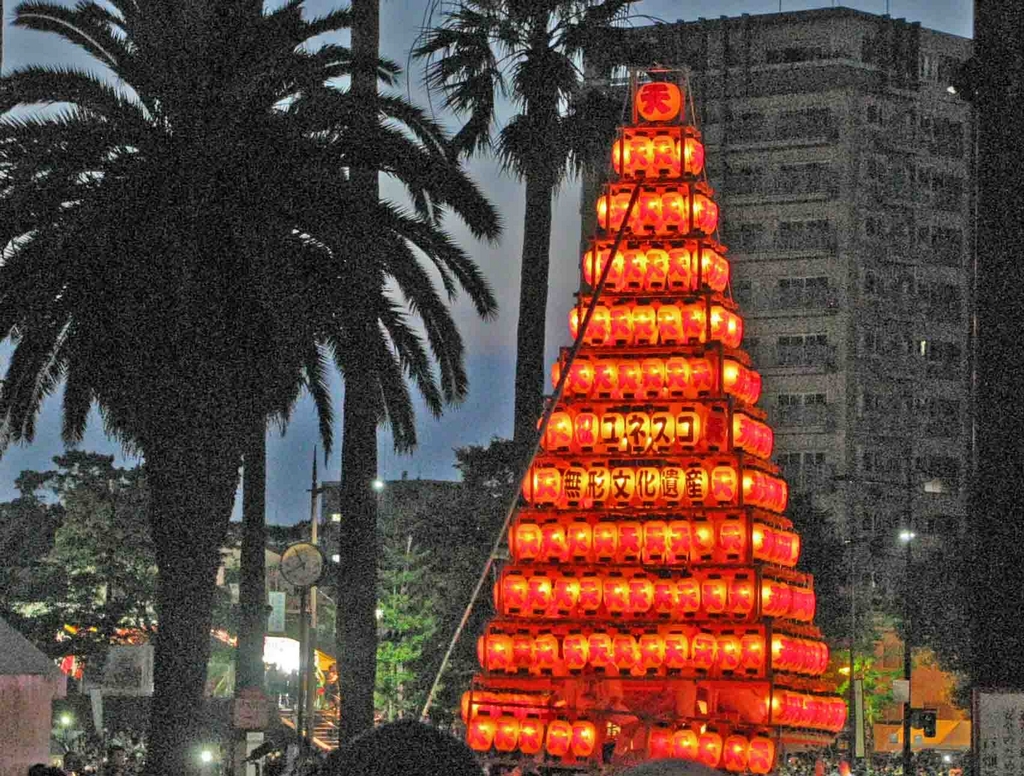
The festival has a lot of energy and is very dynamic as is the case with
festivals such as the Hakata Gion Yamagasa,with young men wearing
the happi (festival costume) and hachimaki (head band), carrying the
Yamagasa (festival float) and walking around the town shouting
“yoitosa yoitosa”.
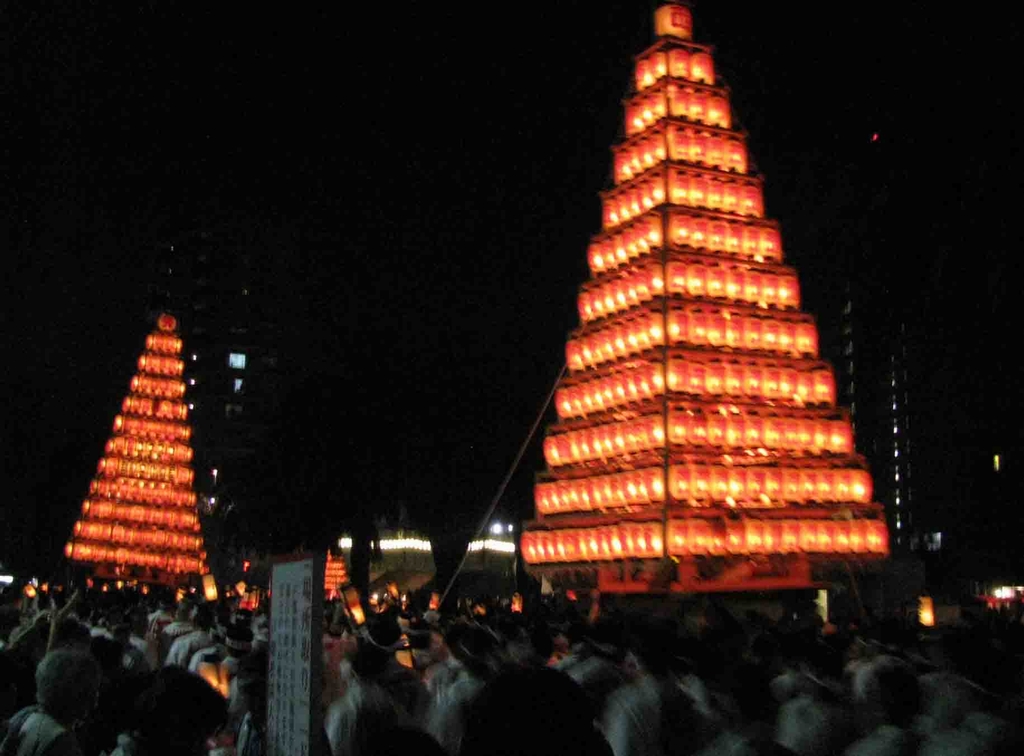
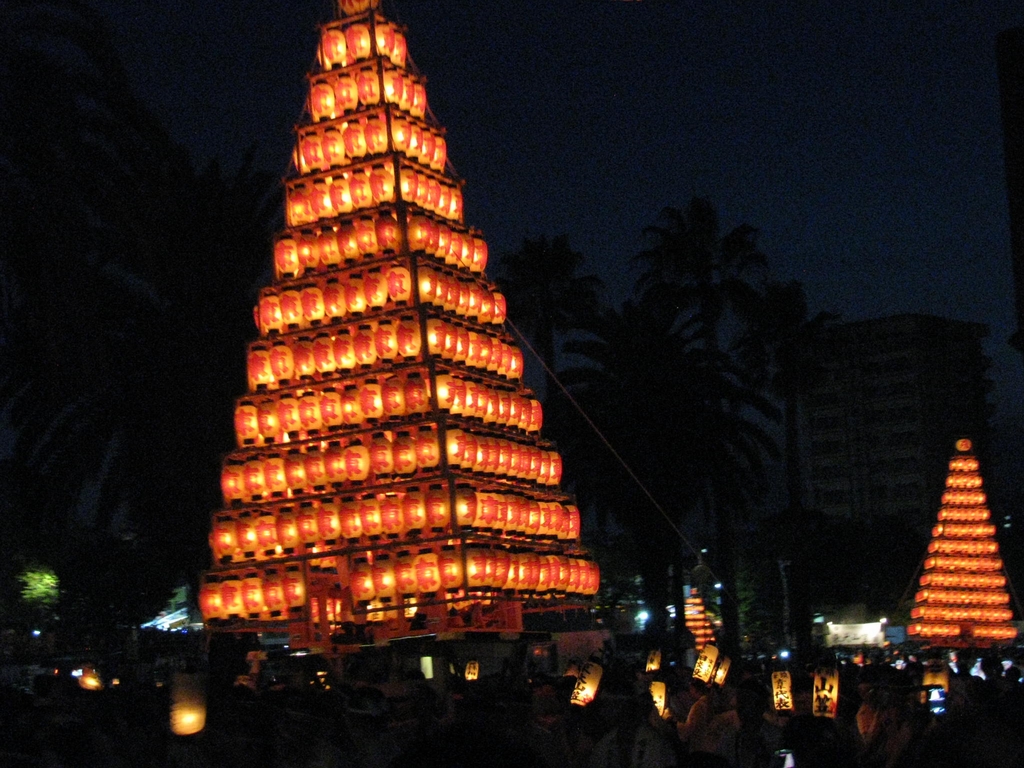
What is remarkable is the way the character of the Yamagasa changes
from daytime,with the Nobori Yamagasa (festival floats with flags); to
nighttime,with the Chochin Yamagasa ( festival floats with lanterns).
The highlight is the Chochin Yamagasa Contest held in Tobata Ward
Office on Saturday night.
The Nobori Yamagasa used during the daytime is dismantled,and the
10 metre-high Chochin Yamagasa,with its 309 lanterns arranged in 12 tiers,
is assembled and carried along in a race by dozens of young people crying
“yoitosa yoitosa”.
Office on Saturday night.
The Nobori Yamagasa used during the daytime is dismantled,and the
10 metre-high Chochin Yamagasa,with its 309 lanterns arranged in 12 tiers,
is assembled and carried along in a race by dozens of young people crying
“yoitosa yoitosa”.
●Event Schedule in 2017
・June 21 (Fri.)
Shinto ceremonies at each of the following:Tobihata Hachimangu Shrine,
Sugawara Shrine and Nakabaru Hachimangu Shrine.
Sugawara Shrine and Nakabaru Hachimangu Shrine.
・June 22 (Sat.)
Yamagasa Contest in the evening in front of Tobata Ward Office
・June 23 (Sun.)
Yamagasa parade in each town
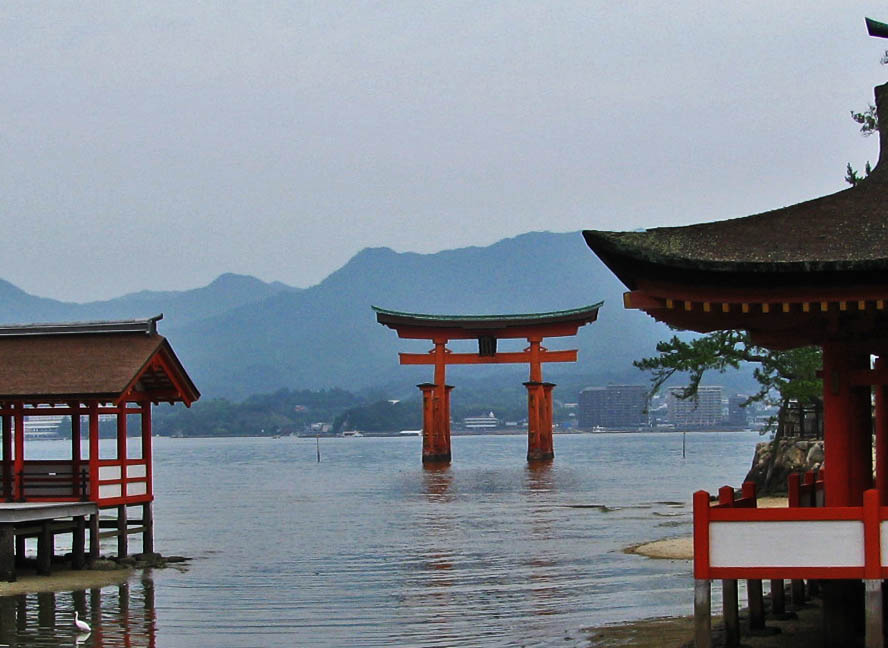
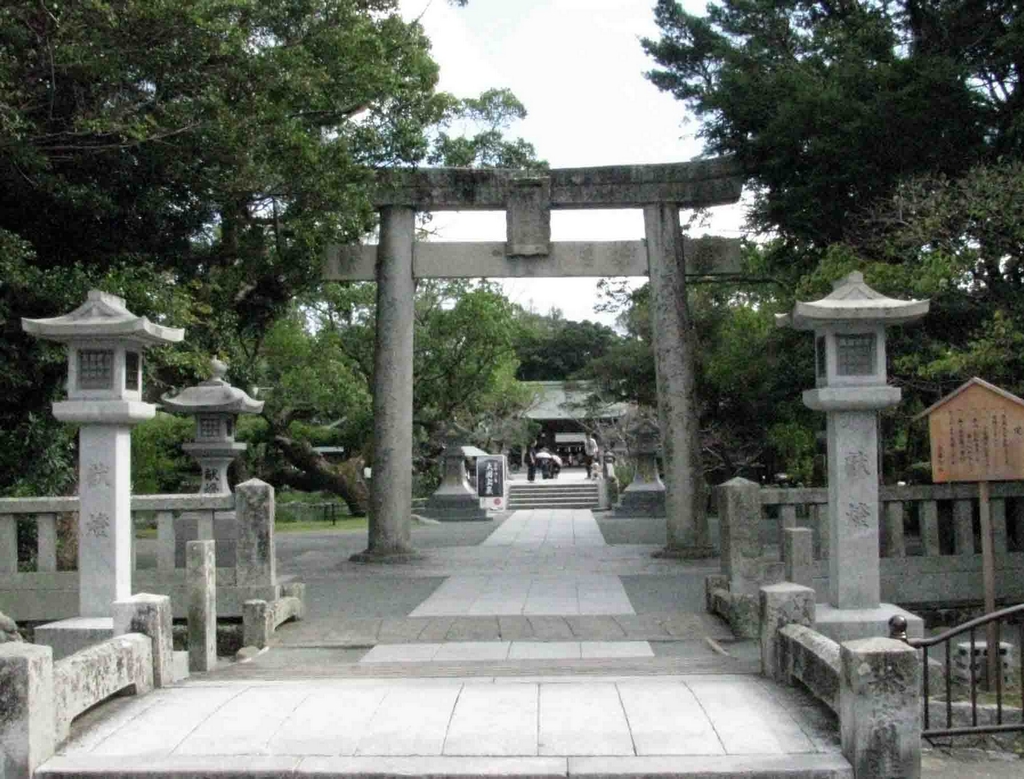
Torii Shinto Shrine gate (鳥居)
Is there any special meaning in the Torii Shinto Shrine gate?
Torii is a gate-like structure placed at key point in the path leading to
the Shinto shrine.
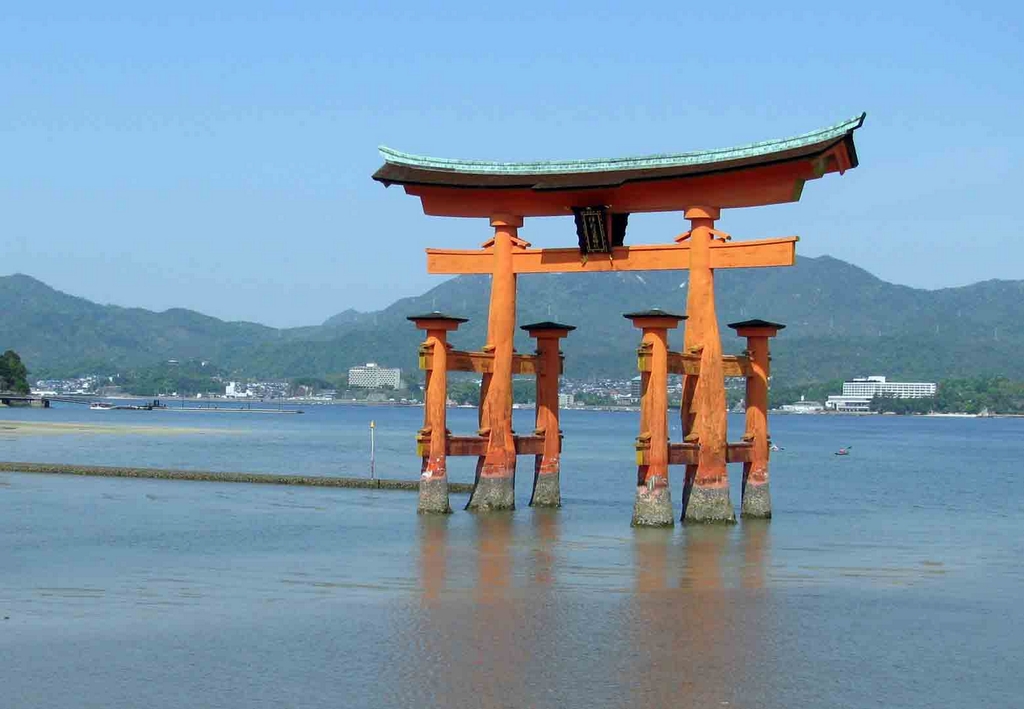
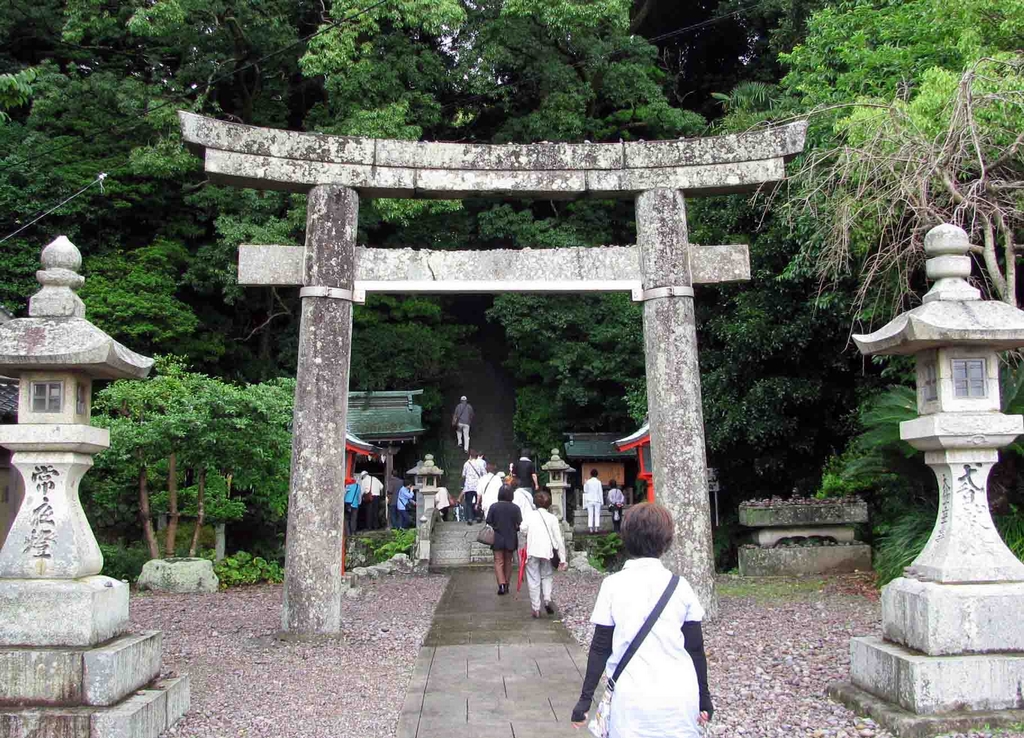
It consists of two standing pillars, with two horizontal beams, one a little
above the other. It symbolically separates the holy world inside from the
secular world outside.
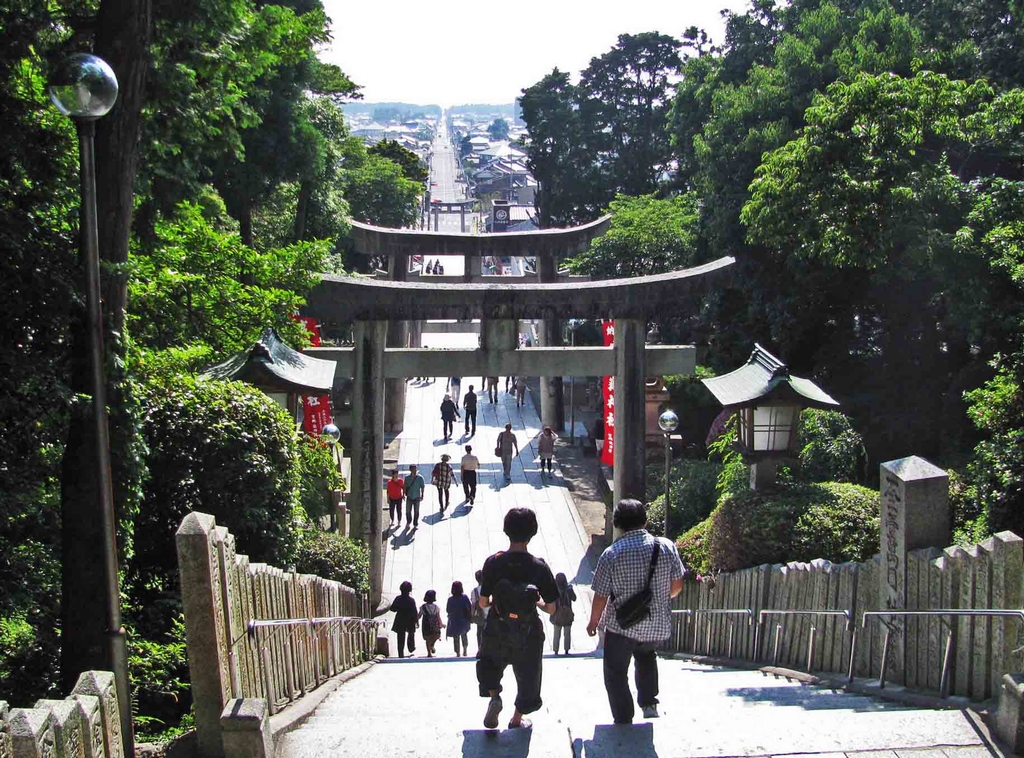
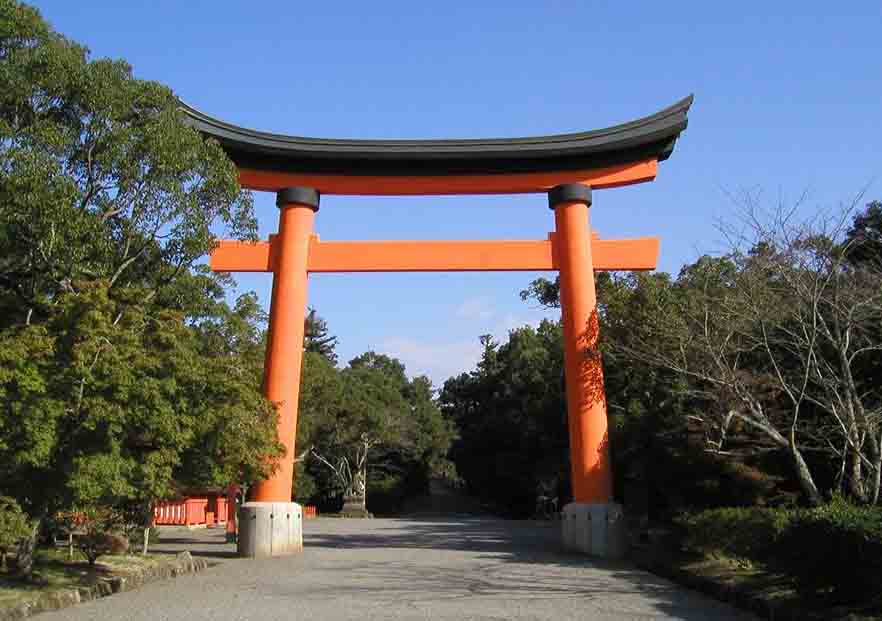
Miyajidake Shrine Usa Shrine
above the other. It symbolically separates the holy world inside from the
secular world outside.
Miyajidake Shrine Usa Shrine
The torii is derived from its homophone “tori” which means bird flying in the sky.
It is said to have originated as a perch for sacred birds within the shrine precincts.
Breakfast today (今日の朝食)
I took a typical Japanese breakfast today consist of steamed rice,
soybean soup with asari clams, tsukune (chicken meatloaf with egg,
dried laver seaweed, natto ( fermented soybeans) and raw egg mixed
with steamed rice.
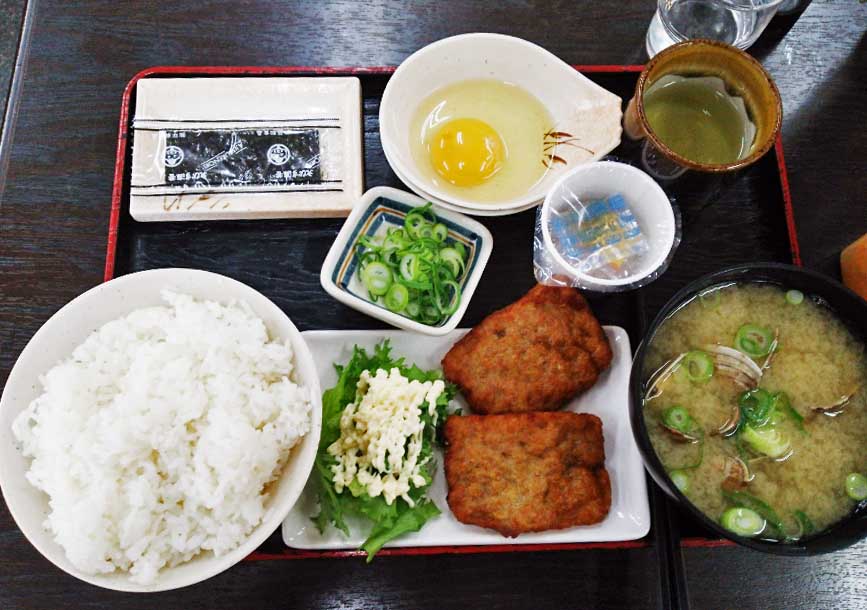
soybean soup with asari clams, tsukune (chicken meatloaf with egg,
dried laver seaweed, natto ( fermented soybeans) and raw egg mixed
with steamed rice.
今日は典型的な日本の朝食を食べました。
内容は、ご飯、あさり貝の味噌汁、つくね、味付け海苔、納豆、生卵です。
Breakfast today (今日の朝食)
I took a typical Japanese breakfast today consist of steamed rice,
soybean soup with asari clams, tsukune (chicken meatloaf with egg,
dried laver seaweed, natto ( fermented soybeans) and raw egg mixed
with steamed rice.
soybean soup with asari clams, tsukune (chicken meatloaf with egg,
dried laver seaweed, natto ( fermented soybeans) and raw egg mixed
with steamed rice.
今日は典型的な日本の朝食を食べました。
内容は、ご飯、あさり貝の味噌汁、つくね、味付け海苔、納豆、生卵です。
Dango-jiru (だんご汁)
Dango-jiru is one of my favorite local specialty in Oita.
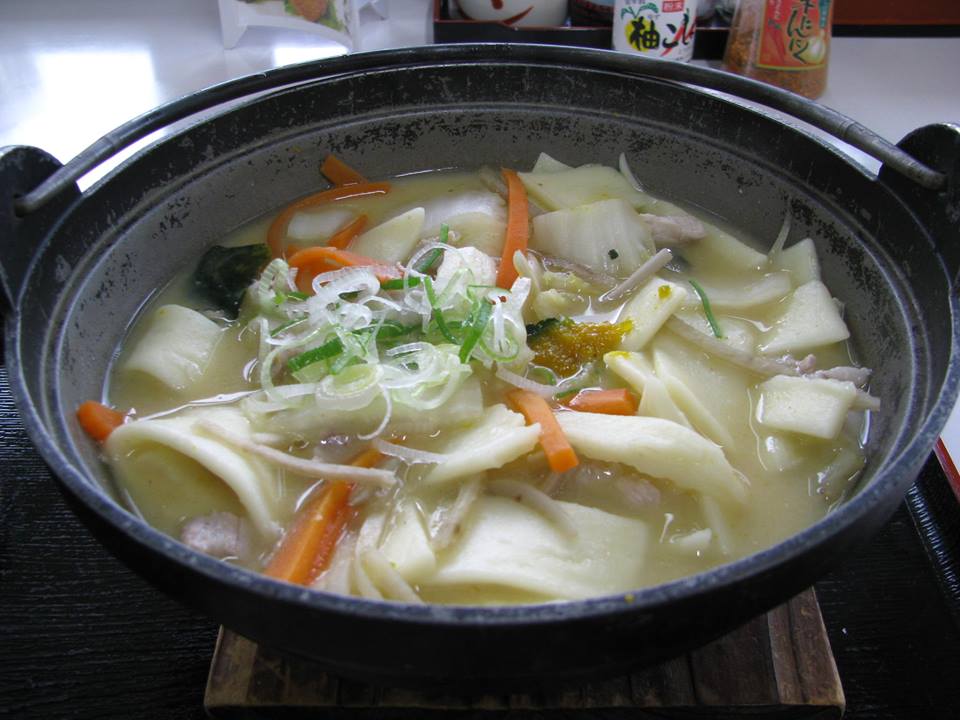
It is made by boiling flat noodles made from wheat flour together
with ingredients such as radishes, carrots, burdock roots, aroids,
and shiitake mushrooms in miso flavored dashi (broth).
It is made by boiling flat noodles made from wheat flour together
with ingredients such as radishes, carrots, burdock roots, aroids,
and shiitake mushrooms in miso flavored dashi (broth).
Farmers who were busy with farm work invented the dish because they
could cook it easily and eat it quickly.
could cook it easily and eat it quickly.
だんご汁は私が大好きな大分の郷土料理です。
小麦粉で作った平たい麺を、大根、人参、ごぼう、里芋やしいたけなどの
具とともに、味噌味のダシで煮たものです。農作業で忙しい農家の人が、
簡単にでき、さっと食べられるものとして考案したのもがだんご汁です。
具とともに、味噌味のダシで煮たものです。農作業で忙しい農家の人が、
簡単にでき、さっと食べられるものとして考案したのもがだんご汁です。
 WhatsApp: Chat with us