
Japanese Traditional Architecture
The Architectural Splendor of Japan
Japanese traditional architecture—from the towering majesty of castles to the serene
elegance of shrines and temples—is a testament to centuries of refined craftsmanship
and a deep respect for nature.
What makes these structures truly remarkable is the mastery of wood. Using an ancient
technique of interlocking joints, these grand buildings were often constructed without the
use of a single nail. This method provides not only incredible durability and earthquake
resistance but also a seamless, organic beauty that modern materials cannot replicate.
Whether it is the massive, curved stone walls of a castle designed for both defense and
aesthetics, or the sweeping eaves of a temple that mimic the mountains around it,
Japanese architecture is defined by harmony. It is not built to conquer the landscape,
but to breathe with it.
We invite you to experience this living history—where every pillar, garden, and roofline
tells a story of a culture that seeks beauty in balance and eternity in craftsmanship.
With countless breathtaking views to discover, it is the perfect destination to capture
unforgettable memories of your journey.
feature intricate wooden joints crafted entirely without the use of nails.
・Iconic Silhouettes: The striking combination of multi-layered roofs and white-plastered walls
is designed to resemble the graceful form of a bird in flight.
・Engineering Excellence: The massive, curved stone walls (Ishigaki) are masterfully
engineered to withstand earthquakes while serving as a powerful, artistic foundation.
・Natural Harmony: Each castle is designed to harmonize with its environment, featuring
moats and gardens that beautifully reflect the changing seasons.
Featured Castle in Kyushu
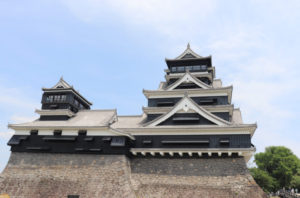 |
The castle is not only one of Japan’s three greatest castles. Although the 2016 earthquakes caused extensive damage and destroyed several historic structures, restoration work has been progressing at a remarkable pace ever since. It now stands as a powerful symbol of the region’s resilience and recovery. |
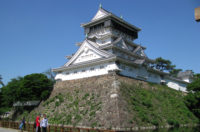 |
The Castle town was constructed in the Kokura and Kokura Castle was build in 1602 and spent 7 years construction at the north side of Kokura facing to Kanmon strait and next to Murasaki river. The height of Castle tower is 6th tallest in Japan after Himeji Castle. |
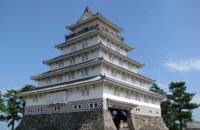 |
Located in Shimabara City, this castle was built in 1625 by the feudal lord Matsukura Shigemasa, who was renowned as a master of castle architecture. The castle, which took seven years to complete, is also affectionately known as “Moritake Castle. |
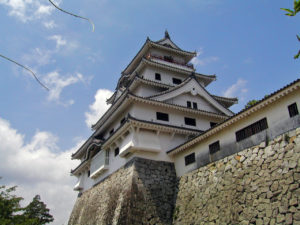 |
Karatsu Castle is called Dancing Crane Castle. The Castle, which stands beside Karatsu Bay, is unusual in that the stonework rises directly out of the water, using the ocean as a natural moat. |
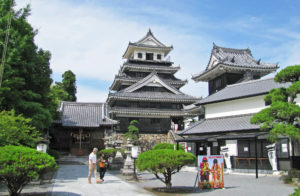 |
Originally built by the legendary strategist Kuroda Kanbei, Nakatsu Castle is famous for its unique seawater moat drawn directly from the Seto Inland Sea. Explore the stunning contrast of its stone walls, where old and new techniques meet, and climb to the top for a panoramic view of the city and the sea. |
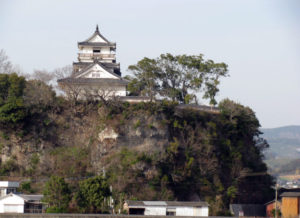 |
Kitsuki Castle is known as the smallest castle in Japan, perched on a plateau overlooking the Morie Bay. The view from the top offers a stunning panorama of the ocean and the surrounding valleys. |
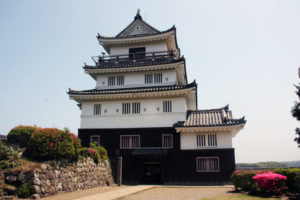 |
Stands on a hill guarding Hirado Port and the Hirado Strait, which used to be part of an important trade route between Japan and the Asian mainland. The original fortress was built in 1599 by the local Matsura Lord. |
 WhatsApp: Chat with us