
Japanese Traditional Architecture
Shinto Shrines: Sacred Architectural Beauty
Shinto shrines are not just religious sites; they are sacred masterpieces designed to
harmonize human life with nature.
・Harmony with Nature: Built using natural materials like Hinoki cypress, these structures
are designed to blend seamlessly into their surrounding forests and landscapes.
・The Iconic “Torii” Gate:The majestic gate marks the entrance to sacred ground, creating
a striking visual contrast against the greenery.
・Masterful Woodwork: Constructed with traditional “Kigumi” techniques, these shrines
feature complex wooden joints assembled entirely without nails.
・Artistic Details: From the elegant curves of the thatched roofs to the intricate carvings of
mythical creatures, every detail reflects deep spiritual meaning and craftsmanship.
Featured Shrines in Kyushu
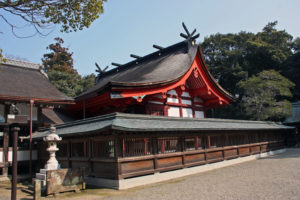 |
Hetsu-gu is one of the three shrines that comprise Munakata Shrine and enshrines Ichikishimahime-no-Kami, one of the three female deities of Munakata. Visitors passing through the torii gate and proceeding along the path will find the Main Hall, dedicated to Ichikishimahime-no-Kami, beyond the Shinmon gate. |
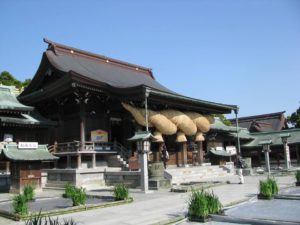 |
The Shimenawa is the biggest in Japan. Surprisingly, weight is 3ton, with 2.6m diameter and 11m length. Shimenawa is the thick, twisted, straw rope. It was believed in ancient days that a Shimenawa had the power to keep off evil sprits, so many objects connected with Shinto Shrines decorated with Shimenawa. |
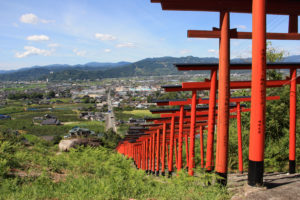 |
Breath taking scenery in harmony with the Shrine. Ukiha Inari Shrine, located at foot of Mino mountain range, 130 m height from sea level. The 90 vermilion coloured Torii Gates stand on the 300 steps stairs is introduced you from bottom area to the Shrine main building. |
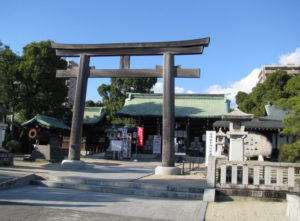 |
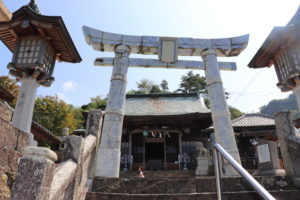
The shrine is designated as the special government shrine. The shrine dedicated to Naomasa Nabeshima, who oversaw the manufacture of Japan’s first modern Cannon. |
 |
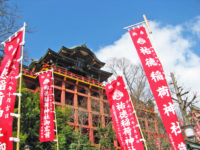
The Sueyama Shrine is located in Arita Town, Nishimatsuura District. Feature of the Shrine is Shrine gate made by porcelain, and usually the Shrine gate are made of stone or wood. It is dedicated to Emperor Ōjin, Nabeshima Naoshige, and Yi Sam-pyeong. |
 |
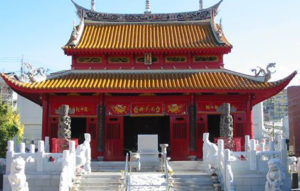
One of the most famous Inari shrines in Japan and located in Kashima-city, Saga-prefecture. Dedicated to Inari, the deity whose messengers are foxes, it is the third largest of its kind in Japan. |
 |
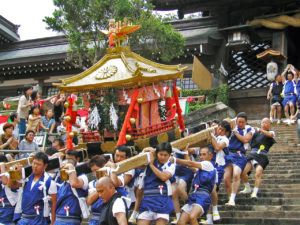
The world’s only Confucian shrine built outside China by Chinese hands. First built in 1893 by Chinese residents of Nagasaki with the support of the Ch’ing Dynasty government, the shrine was designed to serve as a place of worship and learning for the Chinese community, and housed a Confucian sanctuary and primary school. |
 |
The complex of building and gardens comprising Suwa Shrine nestles on a shaded stretch of hillside overlooking the heart of Nagasaki City. The shrine was founded in the wake of ban of Christianity in the early 17th century, and during the Edo Period it soon grew into a spiritual and cultural hub for the citizens of Nagasaki. |
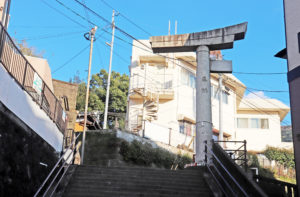 |
Sanno Shrine is located approximately 800 meters away from the ground zero of Atomic bomb. The Shrine was instantly obliterated by the explosion and the 4000 degrees Celsius heat wave vaporized nearby trees. |
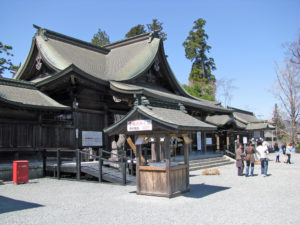 |
Aso Shrine is popular as a god protecting worshipers from traffic accidents, and exorcism, marriage, and learning. Aso shrine one of the oldest and most prominent shrines in Japan, and was built in 281 before accession of the 1st Emperor Jinmu. |
 WhatsApp: Chat with us