
Japanese Traditional Architecture
・Soaring Pagodas: The multi-story pagodas, such as the iconic five-storied pagoda, are
early masterpieces of seismic engineering, designed to sway but never fall during
earthquakes.
・Intricate Joinery: Constructed using ancient woodworking techniques, these massive
wooden structures are assembled without a single nail, showcasing the incredible
precision of Japanese artisans.
・Gardens: Many temples feature tranquil rock and moss gardens designed for meditation,
representing a miniature universe within a quiet temple ground.
・Stunning Roof Designs: The wide, sweeping eaves and grand tiled roofs create a powerful
yet graceful silhouette that defines the Japanese landscape.
Featured Buddhist Temples in Kyushu
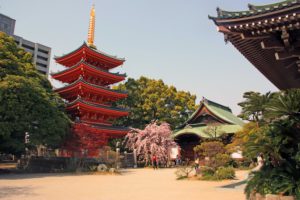 |
The largest seated wooden image of Buddha in Japan. Tochoji temple was founded in 806 by Kobo-daishi Kukai and it is the oldest temple of the Shingon sect in Japan that Kobo-daishi set up. The Fukuoka Daibutsu called Great Buddha of Fukuoka completed in
1993 stands 10.8 meters tall and is the largest seated wooden image
of Buddha in Japan.
|
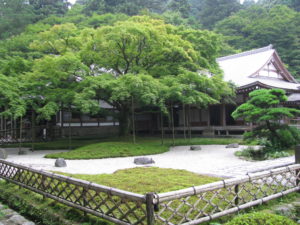 |
One of the most famous temple in Fukuoka prefecture known for being a great place for cherry blossom viewing in the spring, and many people visit in the autumn to see the fall foliage. The temple was founded in 725, Nara period by Seiga, who come from India as a priest during the period.
|
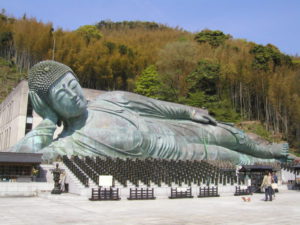 |
Nanzoin is a Shingon Buddhist Temple in Sasaguri, Fukuoka-prefecture. It is notable for its bronze statue of a reclining Buddha, said to be the largest bronze statue in the world. Completed in 1995, the giant bronze Reclining Buddha statue, known as Nehanzo.
|
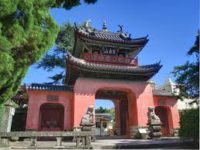 |
The first Chinese style temple in Nagasaki. Shortly after the construction of Kofukuji Temple, Chinese traders asked the Nagasaki governor for permission to built Chinese temples according to their home provinces. It is recorded that this temple was built in 1629 by people who came from Fuzhou in Fujian Province.
|
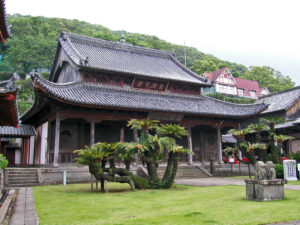 |
After the Tokugawa Shogunate banned Christianity, non-Christian Chinese merchants began making port at Nagasaki around 1600. Chinese people soon started living in Nagasaki and etitioned the Nagasaki government to let them built a Chinese temple to pray for safe navigation and console of the deceased. |
Historical Preservation District : Living History in Japan
These historic districts are more than just museums; they are living landscapes where
traditional architecture and daily life continue to thrive side by side.
Featured Disteicts in Kyushu
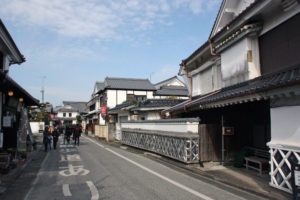 |
Time-honored scenery, back to 100 years ago. The Avenue is located in Yoshii-machi, Ukiha-city. Shirakabe, literary meaning is white wall. The avenue of houses with white wall were constructed about 100 years ago. About 250 houses in the area has been designated as National important traditional buildings preservation district. |
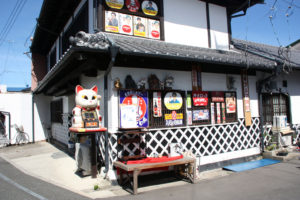 |
White-walled townscape, Fukushima area is designated as an important traditional buildings preservation area by the Japanese government. Since the Edo Era (1603 – 1868), the area has flourished as an economical and political base, and many merchant houses which retain the atmosphere of that time remain even today, mainly in the towns of Miyano, Kyo, and Furumatsu. |

Other ways to contact us:
For a quick discussion or preliminary questions, you are also welcome to reach out via:
・Email : info@japan-kyushu-tourist.com
・WhatsApp : +81-90-1349-2929 
・Telephone : +81-93-521-8897
Japan KYUSHU Tourist Co., Ltd
3-8-1 Asano, Kokurakita-ku, Kitakyushu, Fukuoka 802-0001, Japan
Licensed Travel Agency: Fukuoka Prefecture Registration No. 3-688
 WhatsApp: Chat with us