Japan KYUSHU Tourist  ジャパン九州ツーリスト株式会社

We are a travel agency in Fukuoka specializing in Kyushu,
warmly welcoming guests from around the world.
We offer Customized Private tours tailored to your preferences
across Kyushu.

TEL +81 93-521-8897
FAX +81 93-521-8898
E-mail

Trail, Trekking and Cycling


Hakata temple & shrine town trail, in Fukuoka-prefecture


Hakata temple and shrine town is located within walking distance of JR ]Hakata Station and

there are many Temples and Shrines where you can feel and soak up the ambience of true

traditional Japanese culture.

The history of Hakata temple and shrine town started with the dispatch of Japanese cultural and

political missions to China in the 7th century. Afterwards the area prospered as the hub of Hakata,

which at the time was the largest port trading city in Japan.

There are many valuable artefacts and monuments here, including Tochoji temple, Kushida

Shrine, Jotenji temple, Shofukuji temple as well as Engakuji temple.

It is also surprising that Hakata has little recognition for being the origin of many culinary staples

such as Udon and Soba noodles, Manju (steamed bun), Uiro (steamed cake made of rice flour),

and traditional beverages like Japanese green tea.

This important historical area is also the location of Japan’s first Zen-temple and Shingon-temple.


Maple Yaba Cycling Road, in Nakatsu, Oita-prefecture


Maple Yaba Cycling Road is a bicycle path that uses the abandoned Yabakei

Railway line and was established in 1982. As it uses the old railway line,

the gradient is gentle and it is a recommended cycling course for beginners.

You can enjoy many scenic spots such as the autumn leaves and the “Ao no Cave

” made famous by Kikuchi Kan’s “Beyond Gratitude and Revenge”, and it is a

cycling road with a wide variety of routes including tunnels and iron bridges that

use the old railway line.


Trekking in Hiraodai Karst Plateau, Kitakyushu-city, Fukuoka-prefecture


Hiraodai Karst Plateau is also part of Kitakyushu Quasi-National Park along with Mount Sarakura

and one of the three largest karst plateau in Japan along with the Akiyoshi-dai Plateau and the 

Shikoku Karst.  It is located in southeastern part of Kitakyushu-city. At altitudes between 400 and

600 meters above sea level and stretching 6 km from north to south and 2 km from east to west.  

There are a lot of hiking courses you can enjoy, and best season are spring and autumn. 


Trekking in Mount Sarakura, Kitakyushu-city, Fukuoka-prefecture


Mount Satakura is a part of Kitakyushu Quasi-National Park and is located in Yahata-higashi.

The height of the mountain is 633 metre from the sea level. The 8 courses have developed from

Mount Sarakura Cable Car Station to the summit of the mountain.

It takes about 120 minutes and form Cable Car Station to the top of the mountain.

Spectacular view from  the summit of mount Sarakura can be enjoyed.


ページ: 1 2

Study tours in Kyushu

  • Nagasaki / UNESCO Industrial Revolution One-day tour


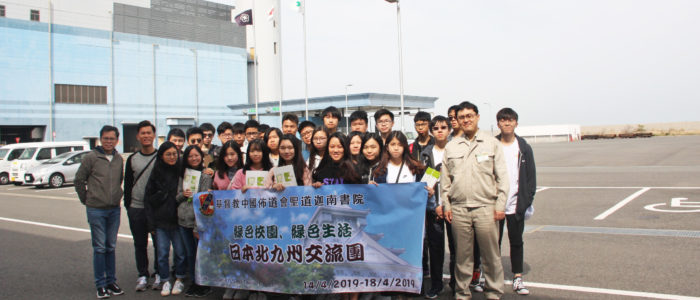
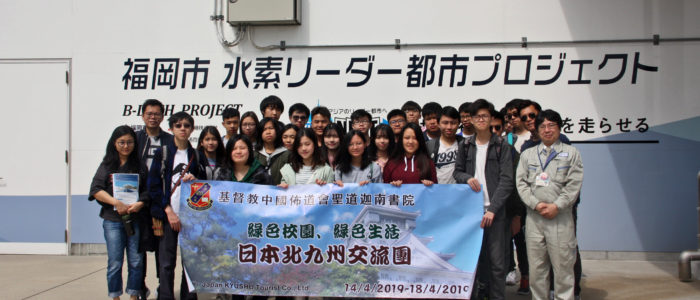
We are  providing the Study tours in Kitakyushu and Nagasaki from the viewpoint

of SDGs.


SDGs (Sustainable Development Goals), otherwise known as the Global Goals, are

a universal call to action to end poverty, protect the planet and ensure that all people

enjoy peace and prosperity and which is a collection of 17 Global Goals. 

The Goals to be achieved vary by country and region and the solutions and difficulty

to reach the Goals also differ. Kitakyushu and Nagasaki are the best places of SDGs.

Because the histories, current environmental leadership and further plans of those

areas are related to all 17 Goals, therefore the solutions for each participant can

be found.


What to learn


Solid waste management & Recycling  / Kitakyushu-city

Kitakyushu-city is the advanced city of Solid waste management

in Japan.  Comprehensive solid waste management system can

be learned from waste colleting procedure at household to the 

final stage of waste treatment such as incineration, landfill and

recycling


Low Carbon Society /  Kitakyushu-city

The city is promoting the Low Carbon Society in Asia while taking

leadership as the Environmental Future city.  The new generation

technologies and the activities cooperated with Citizen to achieve

 Low Carbon Society can be learned.


Industrial modernization & KAIZEN strategy / Kitakyushu-city

Japanese industry at the end of 19th century was 200 years behind.

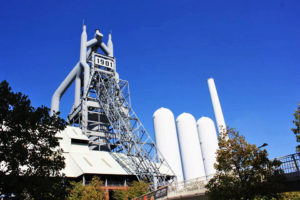
Since Japan’s modern Steel Industry operation commenced in 1901

in Kitakyushu, Japan became the world’s leading industrialized

country in only 100 years. There is the KAIZEN strategy in the

background to Japan becoming an  industrialized country at a

rapid speed.


UNSCO World Herigate / Japan’s Meiji Industrial Revolution 

Steel Industry Heritages in Kitakyushu-city and Ship building and Coal Industry Heritages in

Nagasakithose Heritages show the history of Japan’s Industrial modernization.


Kitakyushu

one-day tour

Nagasaki

one-day tour

Japan’s Industrial

modernization tour         


The unique testimony to the tradition of people and their communities who secretly 

transmitted their faith in Christianity while surviving in the midst of the conventional

society and its religions during the time of prohibition.


One-day tour

3 days tour

6 days tour


Solid waste management tour in Kitakyushu
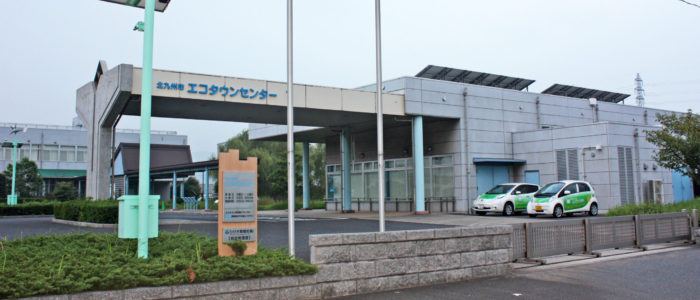
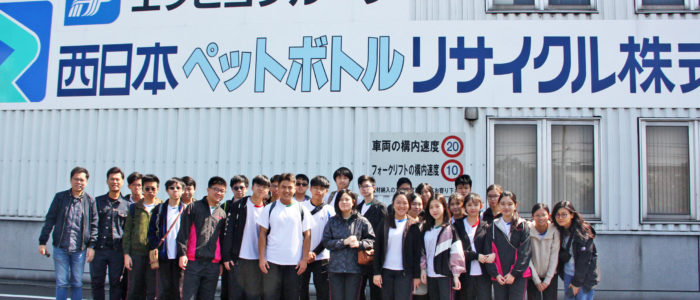
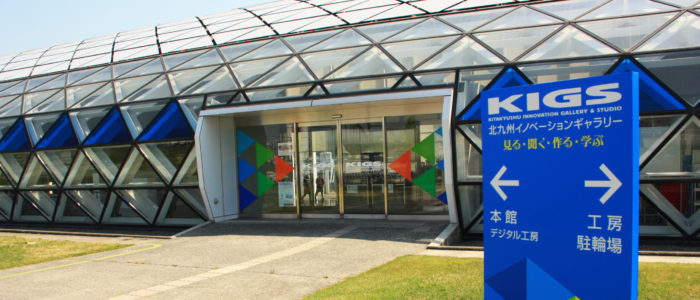
  • Kitakyushu Eco-Town Center


Kitakyushu-city is the advanced city of solid waste management in Japan. The comprehensive

Solid waste management system and Recycling technologies can be learned from waste

collecting procedure at household to the final stage of waste treatment such as incineration,

landfill and recycling. 


What to learn

Comprehensive Solid waste management system and Recycling technologies


Tour conditions 

The tour is the tailor-made study tour exclusively for your group

Number of participant : from 5 to 40

Tour duration : 2 days ( one-day tour can be arranged if required ) 

Study tour planning and arrangement :

Tour guide and interpreter (English ) : Japan KYUSHU Tourist

Transportation : a chartered vehicle


Itinerary


Day 1

8:30 leave hotel in Kitakyushu

Eco Town Center

Hiagari Recycling Center for waste cans and bottles

lunch  

Plastic PET Bottle recycling / Nishi-Nippon PET Recycling

Citizen community Center

17:30 arrive Hotel in Kitakyushu


Day 2

8:30 leave hotel in Kitakyushu

Waste paper recycling / Kyushu Seishi 

Higashida No.1 Blast Furnace

Lunch

Melting Furnace  / Sin-Moji Plant 

Sightseeing Mojiko Retro

17:30 arrive Hotel in Kitakyushu


Option : the following sites can be arranged as an option.

Hibikinada Biotope

Fukuoka Hydrogen Station

Oki Recycling Center Kururun


Where to visit and what to learn


Day 1
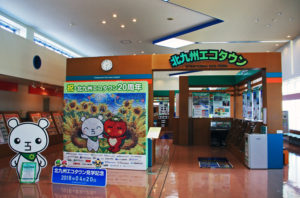
 

Eco Town Center

Eco Project information center that supports the Eco-town.  It introduces

initiatives and activities implemented in Eco-town to encourage people

to proactively used the facility for such activities as environmental study

sessions and interaction amongst visitors.


Hiagari Recycling Center for waste cans and bottles
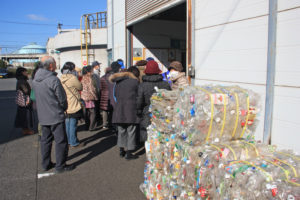
The Recycling Center where separates cans, bottles and PET bottles

collected in Kitakyushu-city for recycling. And also paper containers and

Styrofoam food packs are separated at this facility.


Plastic PET Bottle recycling / Nishi-Nippon PET Recycling
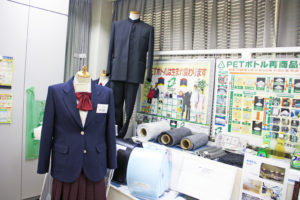
 

PET (polyethylene terephthalate) bottles are sorted by municipalities 

and recycled into pellets and flakes, which can be used as raw materials

for polyester fibers and egg cartons.


Citizen community Center 

Introduce the Duties of Citizen and Self-government organization for

recycling & waste management.


Day 2


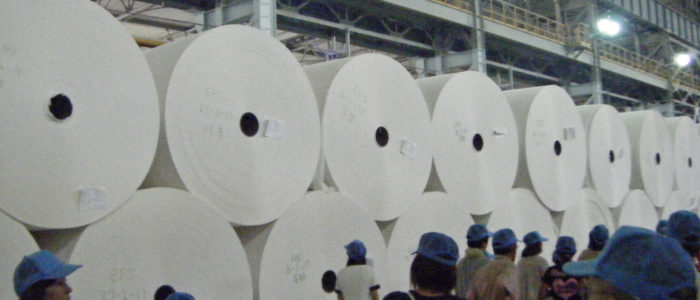
Waste paper recycling / Kyushu Seishi 
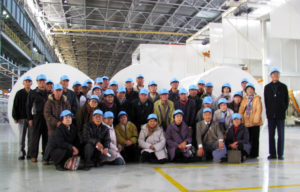
Refined waste papers is recycled into toilet papers. Sludge generated

during the toilet paper production process is used to produce a foaming

inhibitor used by steel works.


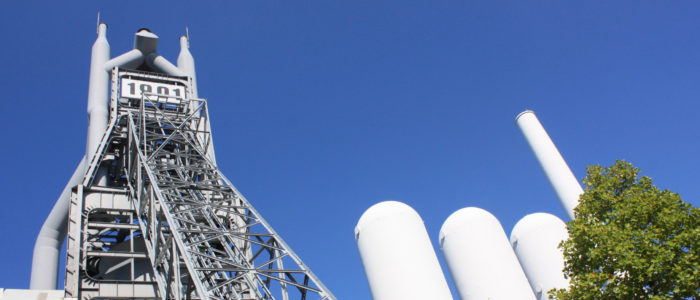
Only the Blast Furnace in the world which preserved as it was and here
is. It contributed greatly to the development of the Japanese steel industry 
and was used until 1972,  and has been preserved just as it was
Equipment and tools which were actually used are exhibited in the square
and you can see the iron-making process from the raw material
(ore and coketo production of pig iron.


Melting Furnace  / Sin-Moji Plant 

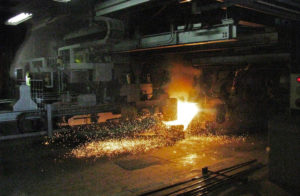
The collected waste including metals is melted at over 1,700 degree Celsius

in the Melting Furnace and then the melted slag and metals are discharged. 

The slag is used as raw materials for pavement and bricks and the metals

are re-used for other steel products. The process and technology of the 

Melting Furnace can be learned.


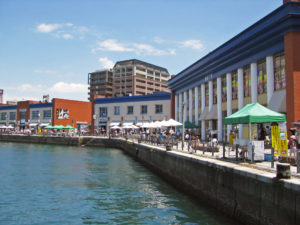
Mojiko Retro

Dr. Albert Einstein awarded Nobel Prize in Physic visited Moji in 1922, and

he acclaimed that everything could see were Arts. The exotic district of

Mojiko Retro is visited by more than 2 million tourists a year. Moji-ko Port

flourished following its 889 designation as a Special National Port for 

exporting coal and other products. 


Options


Hibikinada Biotope

Japan’s largest Biotope, the Paradise of creatures made over the year in the

waste disposal site.   237 kind of birds including circus spinouts listed on the

Japan’s endangered species and 284 kind of vegetation have been confirmed

in the Biotope of 41 hectares.


Fukuoka Hydrogen Station

World’s first hydrogen station for vehicle to utilize the wastewater treated in

the Fukuoka Chubu Sewage Treatment Center.  The process has been

developed as a result of the verification testing of technology for hydrogen

creation sourced from wastewater biogas.


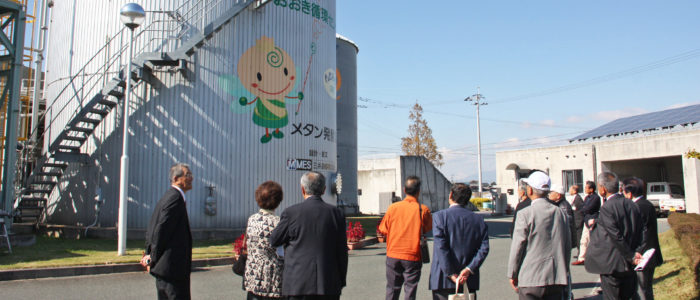
Oki Recycling Center Kururun

The biomass recycling facility that started operations in November 2006.

It takes kitchen waste from the town’s households and restaurants, along

with septic tank sludge and raw sewage, and uses a methane fermentation

process to turn it into a biomass that can be used for power generation.

After the fermentation, the digestive fluids are used as liquid fertilizer.

Furthermore, Oki Town was the second in the country to make a

zero-waste declaration, which it officially announced in March 2008 with

its Oki town Mottainai Declaration.


Home  Our Services   About us   Contact us    Terms and Conditions   Privacy Policy


Accommodation arrangement


Japan has a wide variety of accommodations that cannot be described simply as either

Western-style hotels or Japanese-style hotels. For example:


Onsen Resort Accommodation


Most of these accommodations offer Japanese-style service, and include dinner.

The accommodation buildings are either Japanese-style or a modern architectural style

that is in harmony with the surrounding nature. Most of the rooms are equipped with

modern beds, and some accommodations have open-air bath rooms .


Tourist destinations accommodation


Most accommodations are in attractive modern architectural styles and many of these

offer breakfast but no dinner.

When choosing a place to stay, we certainly consider not only the services of the

Accommodation, but also the access to restaurants, facilities and tourist attractions.


We would like to offer Suitable accommodation for your memorable stay in consideration of location,

meals, Onsen, facilities as well as services with homely atmosphere.


We will suggest the best accommodation as per the following information

・Number of travelers

・Type of accommodation ; such as Western and / or Japanese

・Grade of accommodation such as economy, intermediate or luxury

・How many people in a room

・Type of room such as Western and / or Japanese

Bed type of Western style room such as twin beds and / or double bed and /or triple beds

・Preference of meals


Home   Our Services   About us   Contact us  Terms and Conditions   Privacy Policy  Staff Blog