
-

-
Kumamoto Castle
2026/06/24
Kumamoto travel guideIt is one of Japan’s three greatest castles, along with Nagoya Castle. The current castle was built in 1601 by the great military commander Kiyomasa Kato and took seven years to complete. The massive 980,000-square-meter premises are dotted with many memorable sights, including castle keeps, turrets, gate turrets, castle gates, and long fences. This castle is particularly famous for its beautiful, curving stone walls called “Musha-gaeshi,” which were designed to repel invading enemies. These walls are designated as a National Historic Site, and 12 buildings, along with the Uto-yagura turret, are registered as Important Cultural Properties. Although the 2016 earthquakes caused heavy damage and destroyed several structures, restoration work has been progressing at an incredible pace ever since.
-
-
Amano Iwato Shrine
2026/06/26
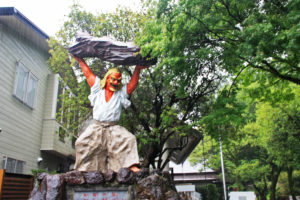
Takachiho travel guideTakachiho is the birthplace of Shinto, Japan’s indigenous religion. The origin story of Shinto is set in the cave behind Amano Iwato Shrine and at Amano Yasugawara. According to the myth, Amaterasu, the Shinto sun goddess, became so outraged by her brother’s cruel pranks that she hid herself in a cave, refusing to come out and depriving the world of her life-giving light. All of the other gods and goddesses gathered to lure her out. They tried everything they could think of to no avail until one goddess performed an outrageously ribald dance that caused the other gods to roar with laughter. Amaterasu left the cave to see what all the fun was about, and in doing so she returned her light to the world. Amano Iwato Shrine About ten kilometers outside of central Takachiho, Amano Iwato Shrine was built near the Cave where Amaterasu is said to have hid herself away. The cave cannot be approached, however, there is an observation deck behind the shrine’s main building from where you can gaze across the river. In order to access the observation deck, you need to inquire at the shrine entrance, and a priest will give you a quick guided tour. Amano Yasukawara A short walk down the road from Amano Iwato Shrine is a path that leads down to the river below. After a few minutes on this path you will see neat little piles of stones stacked along the …
-
-
Takachiho Gorge
2026/06/26
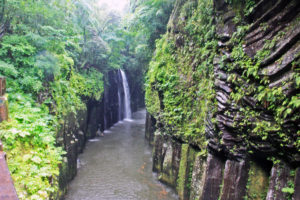
Takachiho travel guideThe Takachiho Gorge is a narrow chasm carved by the Gokase River. Its sheer volcanic basalt cliffs feature unique columns that resemble twisted dragon scales. Visitors can experience the gorge from below by rowing a rental boat down the calm, easy-to-navigate waters at its southern end. Exploring Takachiho Gorge For a unique perspective, row a rental boat down the calm, easy-to-navigate waters at the south end of the gorge. This highly recommended experience offers breathtaking, close-up views of the sheer cliffs and the majestic waterfall. Takachiho Gorge boat riding The most recommended activity at Takachiho Gorge is exploring the river by rental boat. The opportunity to witness majestic waterfalls and unique columnar joints together in one place is truly rare. We invite you to experience this breathtaking view from the water.
-
-
Aso Tourist Tram / Minami Aso Railwawy
2026/06/14
Aso travel guideDiscover the natural wonders of Kumamoto on the Yusuge-go, a charming open-air trolley train running between Tateno and Takamori stations. Designed without windows to let you soak in the refreshing highland air, it offers a relaxing, scenic ride through the massive Aso Caldera. Highlights of the Ride: ・Panoramic Views: Marvel at the majestic Aso Five Peaks and the lush, rural landscapes of the southern Aso region. ・Thrilling Bridges: Experience the excitement of crossing high railway bridges, including a stunning gorge over 60 meters deep. ・Heartwarming Guides: Enjoy lively commentary from the train staff, who share stories about the area’s rich history and crystal-clear water springs. ・Nostalgic Vibe: Relax in vintage-style carriages that evoke a sense of Japanese history and rural charm
-
-
Takachiho shrine
2026/06/26
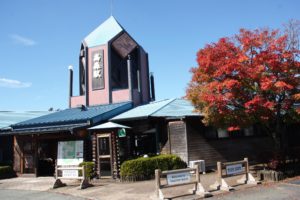
Takachiho travel guideThe shrine has a long history, having been established 1,900 years ago. It enshrines the deities of agriculture, marriage, traffic safety, and protection against misfortune. Located just west of the town center, it is nestled in a grove of tall cedars. During the day, the shrine’s simple, unpainted buildings blend naturally with the surrounding trees. The filtering light brings with it an air of calm, peaceful reverence. Today, this legend is reenacted through Yokagura, a series of 33 dances depicting the divine conflict and other deeds of the gods. On winter weekends, people gather to watch all-night performances held at different locations each week, including private homes. These performances take place on Saturday evenings from mid-November to mid-February. Takachiho-no-Yokagura Today, this legend is reenacted through Yokagura, a series of 33 dances depicting the divine conflict and other deeds of the gods. On winter weekends, people gather to watch all-night performances held at different locations each week, including private homes. These performances take place on Saturday evenings from mid-November to mid-February.
-
-
Tenjin
2026/06/27
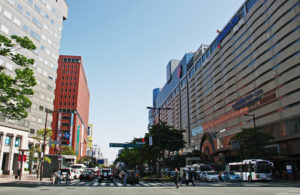
Fukuoka travel guideThe biggest shopping district in Kyushu island. It offers department stores, fashion boutiques and an extensive variety of cuisine and fantastic restaurants and a street food stall Yatai. If you change your perspective even slightly while walking through Tenjin, you will discover places that offer a glimpse into Fukuoka’s history, peaceful parks to take a break, and other surprising sights that leave a lasting impression. Tenjin underground arcade The cobblestone walks leading to the Tenjin Subway Station add a quaint atmosphere to this underground arcade. Shops in the arcade bring the fashion of Tokyo, Paris, Milan, London and New York to Fukuoka.
-
-
Suizenji-koen Park
2026/06/24
Kumamoto travel guideDesigned to replicate the beautiful scenery of Japan, this refined, Momoyama-style strolling garden represents the 53 stations of the Tokaido Road, including a miniature Mt. Fuji. The garden’s fresh springs release clean, cold water that flows from Mt. Aso via underground currents. In 1632, Hosokawa Tadatoshi, the first Lord of the Kumamoto Domain, began its construction as a tea retreat and built a temple here called Suizenji. This beautiful garden evolved during the reigns of the fourth and fifth lords, taking about 80 years in total to complete.
-
-
Nabegataki Watarfalls
2026/06/14
Aso travel guideNabegataki Waterfall is a scenic tourist spot located just outside Oguni Town in the Aso region. As one of the area’s most famous waterfalls, it resembles a miniature Niagara Falls. Notably, visitors can actually walk behind the wide curtain of water to experience a unique viewpoint. The hidden tourist spot in Aso region View from outside of the Waterfalls View from behind the Waterfalls As a very unique waterfall, you can actually walk behind the falls to see how the water has carved out the rock over the years.
-
-
Oura Cathedral
2026/06/16
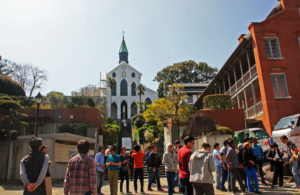
Nagasaki travel guideThe cathedral is one of the most significant Christian pilgrimage sites in Japan. Established in 1865, this church is officially known as “Oura Cathedral, the Church of the 26 Martyrs.” It was built by Father Bernard Petitjean, a French priest from Fier, who had been dispatched by the Paris Foreign Missions Society to offer prayers for the 26 saints martyred on Nishizaka Hill. For this reason, the cathedral directly faces Nishizaka Hill. It was designated as a National Treasure in 1933 in recognition of its historical value as Japan’s oldest Gothic-style cathedral. On March 17, 1865, a group of peasants from Urakami visited the church and professed their secret faith to Father Petitjean, revealing that Christianity had survived through centuries of intense persecution. The white marble statue of the Holy Mother at the entrance was erected to commemorate this dramatic discovery of the “Hidden Christians. The cathedral also welcomed Pope John Paul II in 1981, followed by Mother Teresa (Saint Teresa of Calcutta) in 1982.
-
-
Atomic Bomb Museum
2026/06/16
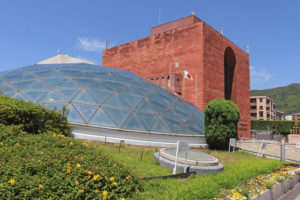
Nagasaki travel guideThe Nagasaki Atomic Bomb Museum opened in April 1996 as part of a project commemorating the 50th anniversary of the atomic bombing. The museum replaced the Nagasaki International Cultural Hall, which had previously exhibited a vast collection of artifacts related to the bombing. The museum exhibits numerous photographs and artifacts that depict the devastation caused by the atomic bomb. Its displays also cover the history leading up to that tragic day, the development of nuclear weapons, and our enduring desire for peace.
 WhatsApp: Chat with us