
Christian sacred sites
Christianity in Japan was spread in Nagasaki region. However, unparalleled hidden Cristian history
was started from when Toyotomi Hideyoshi Shogunate proclaimed Christian ban in 1587. During ban
on Christianity, people secretly continued to faith while surviving in the midst of the conventional
society and Japanese religions. And many Christians were also martyred during this period.
Here we introduce the history of the ban on Christianity, including the places of martyrdom and
museums.
Martyrdom of the 26 Saints of Japan, in Nagasaki
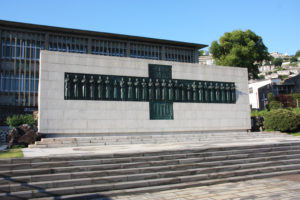 |
The 26 Martyrs of Japan were a group of Catholics who were executed by crucifixion on February 5, 1597. The Twenty-six Christians, were arrested in Kyoto and Osaka on the order of Toyotomi Hideyoshi, the National ruler, for preaching Christianity. They were marched 800 km through the snow to Nagasaki and crucified in front of large crowd on Nishizaka hill on Feb. 5, 1597. |
The 26 Martyrs Museum in Nagasaki
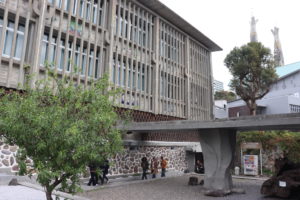 |
The museum behind the monument is devoted to the memory of the martyrs and to Christianity in Japan in general. Its interior is reminiscent of a church with stained-glass windows, making for atmospheric viewing of the exhibits. On display are artifacts related to Christianity in Japan, including old documents, statues and jewelry. |
St. Andrew’s Seminary at Dejima, in Nagasaki
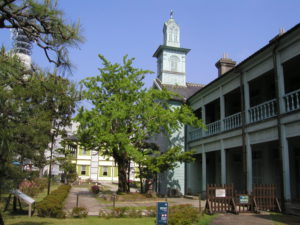 |
After the ban on Christianity lifted in 1873, Burnside who was the British Church Missionary created a cram school at his home to teach the English Bible. In 1877, the school was moved to the Dejima English-Japanese School building at Dejima, and St. Andrew’s Seminary was opened. It was then used as the Seminary until 1886. |
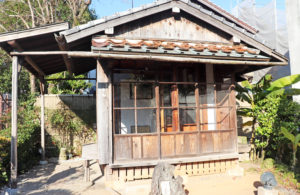 |
Dr. Nagai Takashi (3 February 1908 – 1 May 1951) was a Catholic physician specializing in radiology, an author, and a survivor of the atomic bombing of Nagasaki. His subsequent life of prayer and service earned him the affectionate title “saint of Urakami”. Nyokodo, which is adjacent to the Nagai Takashi Memorial Hall, is Dr. Takashi Nagai’s hospital room and study. This 2-tatami building was built as a new home for the doctor, with the generosity of the people of Urakami and fellow Catholics who were left penniless by the atomic bombing. |
Unzen jigoku Martyrdom, in Unzen
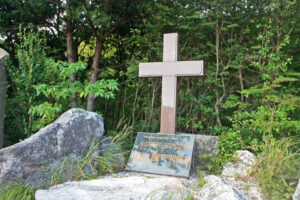 |
When Matsukura Shigemasa became the new federal lord of Shimabara in 1616, many people were Christians. Initially, he acquiesced in Christianity, because he needed people’s cooperation to build Shimabara Castle. However, this situation was known to Tokugawa Shogunate, and he strongly commanded Christians in Shimabara to convert. |
Hara Castle ruin, in Minami-Shimabara
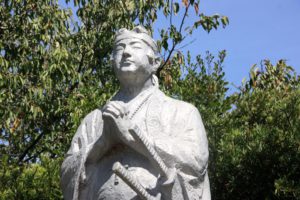 |
The Christian pilgrimage site, registered on UNESCO’s World Heritage Site as Hidden Christian Sites in the Nagasaki Region. The site is located in Minami-arima in Minami-Shimabara City and the Battle field of Shimabara Rebellion which was a peasant uprising against bakufu’s persecution of Christians under the leadership of Amakusa Shiro in 1637. |
Hory Mary-Kannon of Hara Castle, in Minami-Shimabara
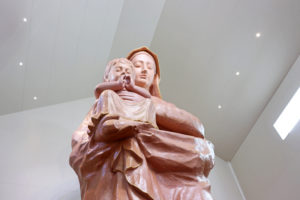 |
The world’s tallest wooden Holy Mary statue, with 10 meters in height. This statue was made by sculptor Oyamatsu Eiji over a period of 40 years and was completed when he was 90 years old. The statue is located in Minami-Shimabara City, 10 minutes drive from |
Arima Christian Heritage Memorial Museum, in Minami-Shimabara
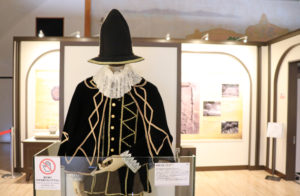 |
The museum is a guidance facility showcasing the history of Christianity in Minami-Shimabara City, centered around the Hara Castle Ruins, a component of the “Hidden Christian Sites in the Nagasaki Region,” which was registered as a World Heritage Site in 2018. |
Page 1 2
 WhatsApp: Chat with us