
-
-
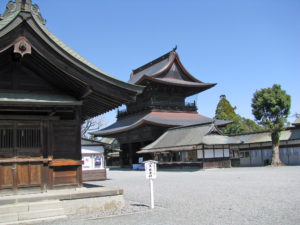
Aso Shrine
2026/06/14
Aso travel guideAso Shrine is one of Japan’s oldest and most prominent shrines, said to have been founded in 282 BCE before the accession of Emperor Jimmu. It is widely worshipped for its blessings, including protection against traffic accidents, warding off evil (exorcism), matchmaking (marriage), and academic success (learning). The shrine is located in the center of the Aso Caldera, which is famous for being one of the world’s largest inhabited calderas. Hiburi-shinji Festival
-
-
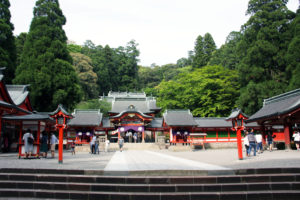
Kirishima Shrine
2026/03/20
Kirishima travel guideOne of the most beautiful shrine in Kyushu, and is surrounded by forest. The Shrine buildings were constructed in 1715 and designated as Important Cultural Property of Japan. Exploring Kirishima Shrine precinct 1st Torii Gate Torii Gate in the precinct Approach to the Shrine Shrine Shrine buildings Shrine main buildings Guardian deity 800 years old Sacred tree Sakamoto Ryoma
-

-
Kirishiama Onsen
2026/04/09
Kirishima travel guideLocated on the lower slopes of the Kirishima Mountain with a distant view over Kagoshima Bay and Sakurajima below. The area is made up of over a dozen Onsen, of which the largest and best know is Maruo Onsen. With its high concentration of hotels and central location, Maruo Onsen is the representative resort town of the entire Kirishima Onsen area. The hot spring towns around Kirishima Onsen are dotted with Ryokan and hotels of various sizes
-
-
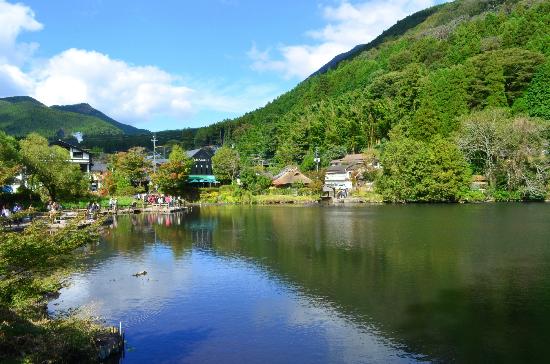
Kinrinko lake
2026/06/09
Yufuin travel guideKinrinko lake is the landmark in Yufuin. Hot water gushes from the bottom of the lake, and hot steam rises from its surface on a cold day. The lake is located at the end of the town’s main walking route, about a kilometer and a half from the Yufuin station. Walking paths surround the lake as well as more small shops and cafes, and there is a small shrine located at the lake’s southern end. Shitan-yu Floral Village Coffee restaurant Shopping Street Kamenoi Besso Rickshaw
-
-
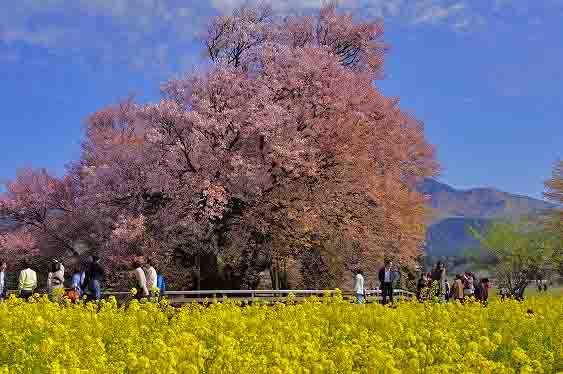
Issingyo big cherry tree
2025/12/13
Aso travel guideThis Tourist information is created by Japan KYUSHU Tourist for enjoyment of your travel. We are a Travel Agent in Fukuoka specializing in Kyushu. When you have an idea or a plan for traveling in Kyushu, Japan, please contact us by sending an Enquiry. Make an Enquiry Issingyo big cherry tree located in the caldera ofMount Aso and provide one of the most beautiful cherry blossoms in Kyushu. Age : 400 years, height : 35m, branch tension: 26m. Best season to see beautiful cherry blossoms is at the end of March to in the middle of April. General information Address Oaza-nakamatsu, Minami-Aso-village, Aso-gun, Kumamoto-prefecture Access 15 minutes walk from Nakamatsu Minami Aso Rail way station 40 minutes by a vehicle from Aso-city 60 minutes by a vehicle from Kumamoto-city 50 minutes by a vehicle from Takachiho 2 hours and 10 minutes by a vehicle from Fukuoka-city 2 hours and 50 minutes by a vehicle from Kitakyushu-city Home Exclusive Private tour Christian Pilgrimage tour Golf tour What our Customers have to say About us Contact us Terms and Conditions Privacy Policy Make an Enquiry
-
-
Fukuoka Tower
2026/04/03
Fukuoka travel guideThe highest coastal tower in Japan. Fukuoka tower is the 234 metre high and is covered with 8000 two way mirrors. The observation room located at a height of 123m offers a breath taking and spectacular 360 degree panoramic view of Fukuoka-city and Hakata Bay. View from observation room, 123 meter high Lover’s Sanctuary
-
-
Kawachi Reservoir
2026/04/01
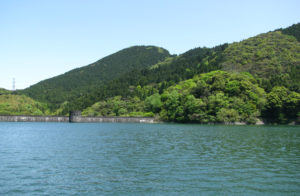
Kitakyushu travel guideThe first-class civil construction heritage, the triggered the registration of World Cultural Heritage of Sites of Japan’s Meiji Industrial Revolution The Kawachi Reservoir was constructed for the industrial water supply to Yawata Steel Works. The dam was constructed at the Okura River and upper stream of the dam was expanded and making the 7milion cubic metre reservoir. Specification of the dam ・completion year : 1927 ・height : 43.1 metre ・Width : 189 metre ・Water storage capacity : 7,000,000 cubic metre ・Owner : NIPPON STEEL In the construction of the dam, the unprecedented design in the world has been applied in order to harmonize with nature and to save the construction cost. The stones come out from the mountain when the river was expanded have been utilized for construction of the dam. All stones are cut into sizes and shapes by the stone technicians according to the place of use. The large size stone were used at the main construction of the dam and the small size stones were used for other places as per size and shape. Construction was started in 1919 and was completed in1927 by 900 thousand total number of workers. Minami Kawachi-bashi bridge The only remaining lenticular truss bridge in Japan ( lens type truss bridge), located at the south side of Kawachi Reservoir and it was designed by Hisanori Numata. This shape and color really harmonize with nature and become a symbol of …
-
-
Dejima
2026/04/05
Nagasaki travel guideDejima was a fan-shaped artificial island in Nagasaki Bay that was used as a trading port during Japan’s period of national isolation in the Edo period. In 1636, Dejima was constructed to confine the Portuguese living in Nagasaki and to prevent the spread of Christianity. In 1639, trade with Portugal was banned, leaving Dejima temporarily uninhabited. In 1641, the Dutch trading post in Hirado was moved to Dejima, marking the beginning of trade with the Dutch as Japan’s sole gateway to Europe. Until 1853, numerous European technologies and cultures were introduced here through the Dutch. Entrance of Dejima Fan-shaped artificial island, was built in 1636 Dejima used from 1641 until 1853 A project to restore Dejima is underway. In 2000, five buildings including the Deputy Factor’s Quarters were completed and opened to the public. Dejima International Club Building of residence, cooking room, warehouse The old Dejima seminary, a Christian theological school In the spring of 2006, the restoration was finalized for several key structures, including the Chief Factor’s Residence, the Japanese Officials’ Office, the Head Clerk’s Quarters, No. 3 Warehouse, and the Sea Gate.
-
-
Martyrdom of the 26 Saints of Japan
2026/06/17
Nagasaki travel guideNishizaka Hill in Nagasaki is the site where 26 Catholics, including Paulo Miki, were crucified on February 5, 1597. Arrested in Kyoto and Osaka by order of Toyotomi Hideyoshi, they were forced to march 800 km in the snow to their execution From the cross, Paul Miki declared: “All of you who are here, please listen to me. I am Japanese by birth and a brother of the Society of Jesus. I have committed no crime; the only reason I am being put to death is that I have taught the doctrine of our Lord Jesus Christ. I am deeply happy to die for this cause, and I see my death as a great blessing from the Lord. At this critical moment, when you can be assured that I will not try to deceive you, I want to emphasize and make it unmistakably clear that man can find no way to salvation other than the Christian way. Since the Christian law commands us to forgive our enemies and those who have wronged us, I declare here that I forgive Taikosama (Hideyoshi) Then, they all ascended to heaven with the happiness of giving their lives to Christ. Nishizaka hill, the site of Martyrdom in 1597 The martyrs said that ” All people, bless God ! ” The 26 Japanese …
-
-
Confucius Shrine
2026/06/26
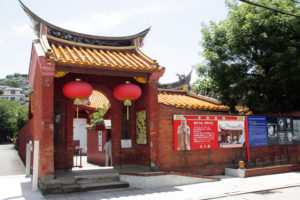
Nagasaki travel guideThe Nagasaki Confucius Shrine is the world’s only Confucian shrine built outside China by Chinese hands. First constructed in 1893 by Chinese residents of Nagasaki with the support of the Qing Dynasty government, the shrine was designed to serve as a place of worship and learning for the Chinese community, housing both a Confucian sanctuary and a primary school. The buildings were severely damaged by the Atomic bomb explosion on August 9, 1945 and were not restored and opened to the public until September 1967. The shrine was extensively renovated in 1982. Standing outside the shrine are 72 statues representing the 72 followers of Confucius. A building at the rear of the shrine houses the Museum of Chinese History and Palace Museum. It features large illuminated photographs of the old Silk Road and models of early Chinese inventions such as the world’s first seismograph. Displayed on the second floor are more than 80 treasure-class articles of varying antiquity on loan directly from the Chinese National Museum and Palace Museum in Beijing.
 WhatsApp: Chat with us